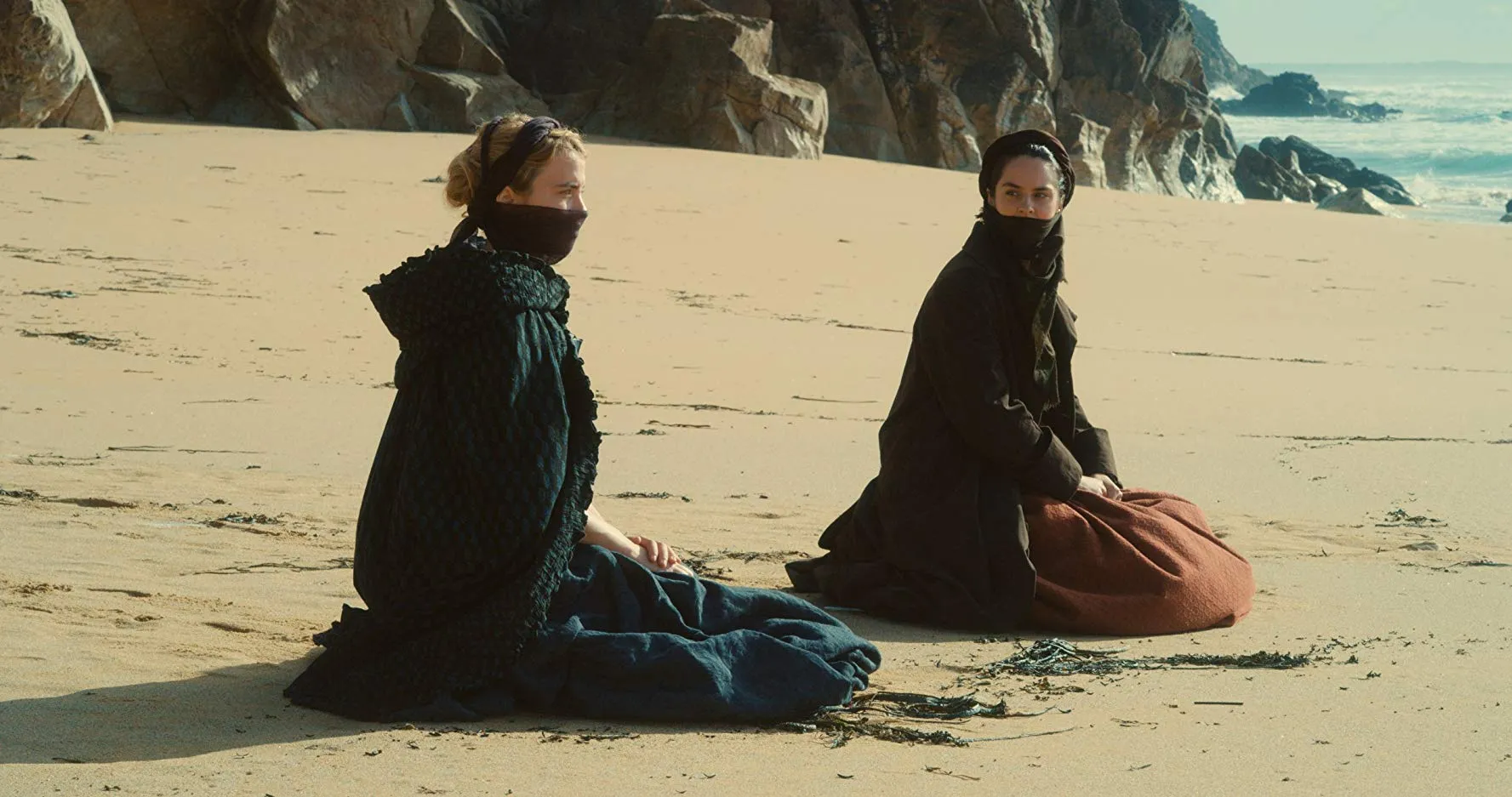
I defy you to hit pause at any time watching this movie and not land on a frame worthy of painting. I considered it a personal victory when, in June 2025, The New York Times released its 100 Best Movies of the 21st Century list, compiled from a poll conducted among Hollywood pros, and Portrait of a Lady on Fire (Portrait de la jeune fille en feu) landed at no. 38. This and Sinners are the evidence I need that there is hope for filmmaking. This love letter to art, to stolen glances, to female community is meticulously crafted and quietly bombastic, exploring how much art and memory are truly a comfort when one doesn’t have control over one’s own life.
Portrait of a Lady on Fire introduces us to Marianne (Noémie Merlant), a painter who, near the end of the 18th century, travels to a remote island in Brittany to paint the wedding portrait of Héloïse (Adèle Haenel)– but without the subject’s knowledge, as she refuses to pose for it. Under the guise of being a hired companion to walk with her along the tempestuous shoreline, Marianne carefully studies Héloïse’s features, but finds her to be a subversive and challenging muse. Eventually, the truth is revealed, but Marianne ruins the first portrait, saying she will start again. Héloïse’s mother (Valeria Golino) is shocked when her daughter agrees to pose for Marianne’s second attempt, forcing her to let the painter stay. The mother departs for the city, and the two young women are left to their own devices, the matter of the portrait becoming an increasingly charged dance because of their growing attraction to one another. Marianne and Héloïse also aid housemaid Sophie (Luàna Bajrami) in ending a pregnancy and socialize with other women on the island.
In a different story, how Marianne and Héloïse might have physically stayed together would have been the point. But a sadness hangs over Portrait of a Lady on Fire, as the characters never earnestly debate ways to escape their consigned fates. It is heavily concerned with the parts of women’s lives not found in history books, as they exercise agency within a patriarchal system, but they are ultimately still beholden to that system. Héloïse’s tired mother is a surprisingly delightful character who still tries to connect with her resistant daughter through childhood rituals of affection; Marianne faces roadblocks as an artist and sometimes submits her art under her father’s name; Héloïse’s previous best option was to live in a convent, before her sister took her own life, and she became the bride-to-be who would secure her family’s future.
Art and memory are a lifeforce. Héloïse’s mother comes across as simply resigned to marrying her daughter off. She is, however, eager to share the pleasures of life in Milan (where they will go for the marriage) with Héloïse. Héloïse says the thing she misses most from the convent is the music, prompting Marianne to play a piece on harpsichord, and tell her that there will be orchestras and other such marvels in Milan. Héloïse, however, responds with a reserved spitefulness, “You’re saying that, now and then, I’ll be consoled.” It’s a complex statement, which asks if such consolations are worth being sold in marriage; but also, when the film adheres to Héloïse having no choice but to be married, embracing her access to such art, and believing in its power, is critical. The gorgeous final scene, courtesy of a brilliant performance by Haenel, illustrates exactly what a concert can mean to a person.
Where the film really discovers its power, though, is in the space it creates before Héloïse and Marianne go their separate ways. They are in a world of women and equals and art, and in this world, things that might have been the subject of drama and scandal in a different period piece are not so. Sophie would have to be very oblivious not to know that Héloïse and Marianne are lovers, but she expresses no discomfort with it. Any class divides between the lady and the painter and the maid dissolve, and the former two helping the latter get an abortion is a straightforward task, just what is necessary for Sophie’s health and security. They preserve pieces of the romance and sisterhood, Marianne sketching a self-portrait in a copy of Orpheus and Eurydice for Héloise; Héloise and Sophie posing for Marianne to paint the process of Sophie’s abortion.
The film takes its name from the iconic scene that pans slowly over a group of local women, hauntingly singing a capella around a bonfire, before ending with Héloïse’s skirt literally on fire, standing proud in the dark night. Marianne creates another memento of their time together, inspired by this moment. The masterful mise-en-scène of Portrait of a Lady on Fire is all about female gaze, capturing women’s powerful spirits and emotions through paintings made in the shadows and firelight.
Portrait of a Lady on Fire
2019
dir. Céline Sciamma
121 min.
Screens Wednesday, 4/1, 7:30pm @ Coolidge Corner Theatre
Part of the repertory series: Calling the Shots