Paddington and Paddington 2 are both deliciously tongue-in-cheek in their villains and humor, extraordinarily heartfelt, blissfully profound in their simplicity, and sentimentally irresistible for all ages. Paddington Bear (Ben Whinshaw) is a delightful presence in manners; his adoptive family—the nurturing and witty Mary Brown (Sally Hawkins), her slightly bullheaded, self-deprecating, but well-meaning husband Henry Brown (Hugh Bonneville), their kids Judy (Madeleine Harris) and Jonathan (Samuel Joslin), and crazy housekeeper Mrs. Bird (Julie Walters)—is amusingly British in their hospitality or resistance to it; and every kerfuffle involves vibrant brick-reds and sky-grays of London and extravagantly costumed, big-ego villains.
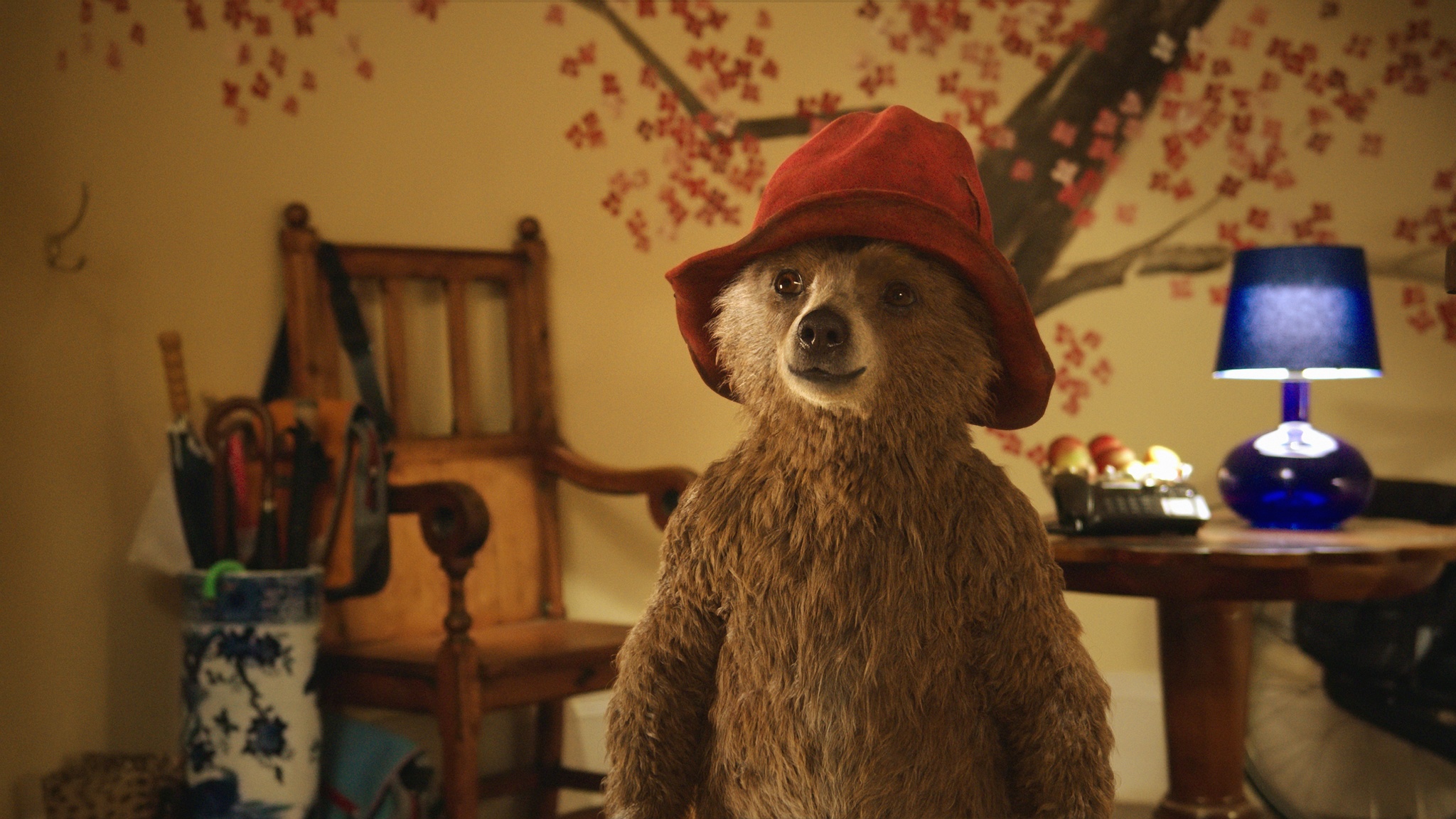
Paul King’s Paddington begins in 20th-century Peru, where a British explorer named Montgomery Clyde (Tim Downie) discovers two intelligent bears of an unknown species, whom he names Lucy (Imelda Staunton) and Pastuzo (Michael Gambon). Discovering they’re each capable of speech and obsessed with marmalade, he departs, promising the bears a heartfelt welcome anytime in a romanticized London, leaving his hat and plenty of their favored fruit preserves. 40 years later, Pastuzo and Lucy live in a tree home with their orphaned nephew (Ben Whishaw)—before an earthquake sinks their home and crushes Pastuzo, ruining their way of life. Aunt Lucy, now retiring to the Home for Retired Bears nearby, sends her nephew to London, hopeful for a hospitably charming English city and a gracious host in the explorer. The titular bear instead arrives in an almost hostile atmosphere. Treated initially as a lazy, helpless homeless person by most, the kindhearted Mary and Brown family eventually find him and—even though husband Henry is reluctant—fall for his kindness, manners, and dedication to goodness. Through a series of mishaps, hilarious covert operations, and new connections between two not-so-different species, the family names the bear Paddington and attempts to locate Montgomery. If only they knew his wealth-crazed, manipulative, borderline sociopathic, social climbing daughter, Millicent Clyde (Nicole Kidman), wanted Paddington to make bank on a species discovery.
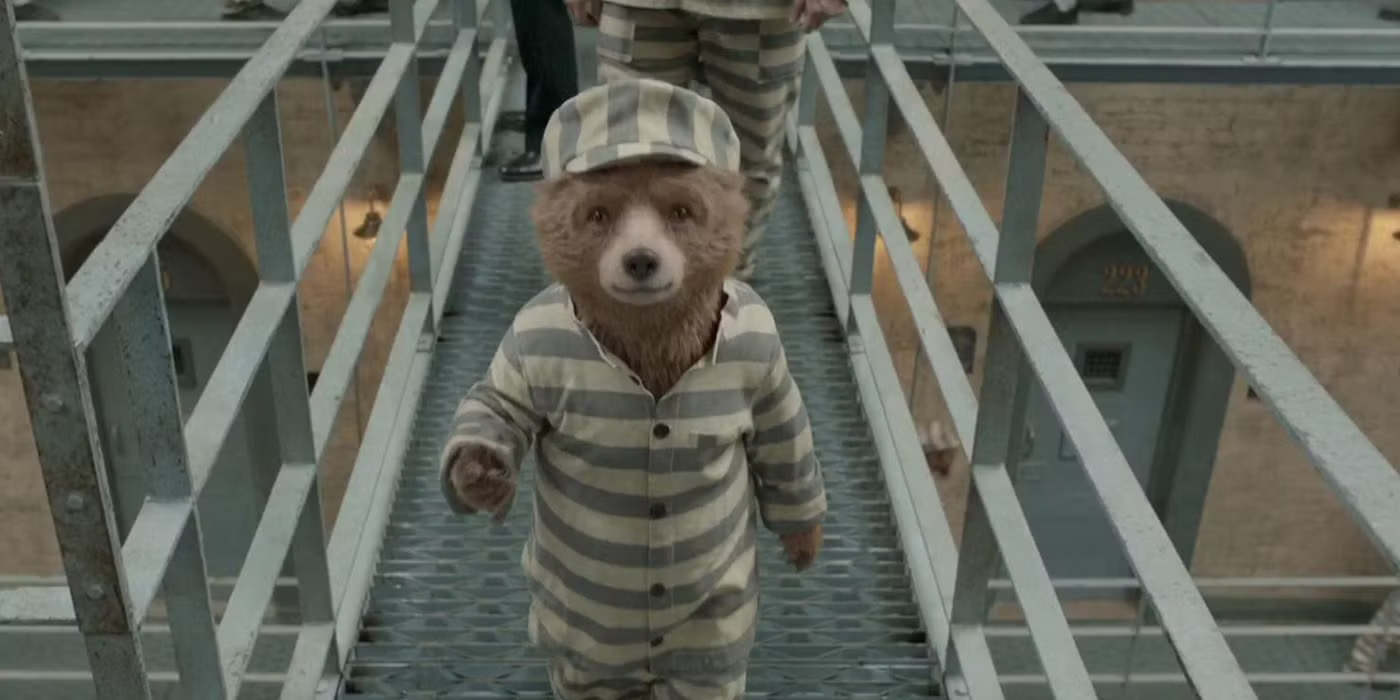
A couple of years later, Paddington has settled into his new British life and family: he does chores and laughs with the Browns, enjoys hobbies, and does what he can to simply care. With Aunt Lucy’s birthday approaching, Paddington decides to buy her a birthday present: a pop-up book of London’s iconic landmarks, as displayed at the antique shop of fellow twice-film-starring owner, Samuel Gruber (Jim Broadbent). However, before he earns enough honest wages through window cleaning, it gets stolen in front of him! Watching the thievery, Paddington chases the perp before he literally disappears into thin air—and elsewhere removes shaggy hair and beard to reveal he’s an actor Paddington meets earlier in the film, who’s also the Browns’ neighbor, Phoenix Buchanan (Hugh Grant). With no trace and nothing but a ‘the perp went up in smoke’ alibi, Paddington gets framed, and Phoenix gets away with it. However, as only Paddington can do, he turns prison into paradise; yet again, his lovely presence and undying kindness pay off, capping off director-co-writer Paul King’s Paddington duo with another chipper, expertly delivered essence of endless love’s limitless benefits as Paddington and the Browns stop another selfish criminal.
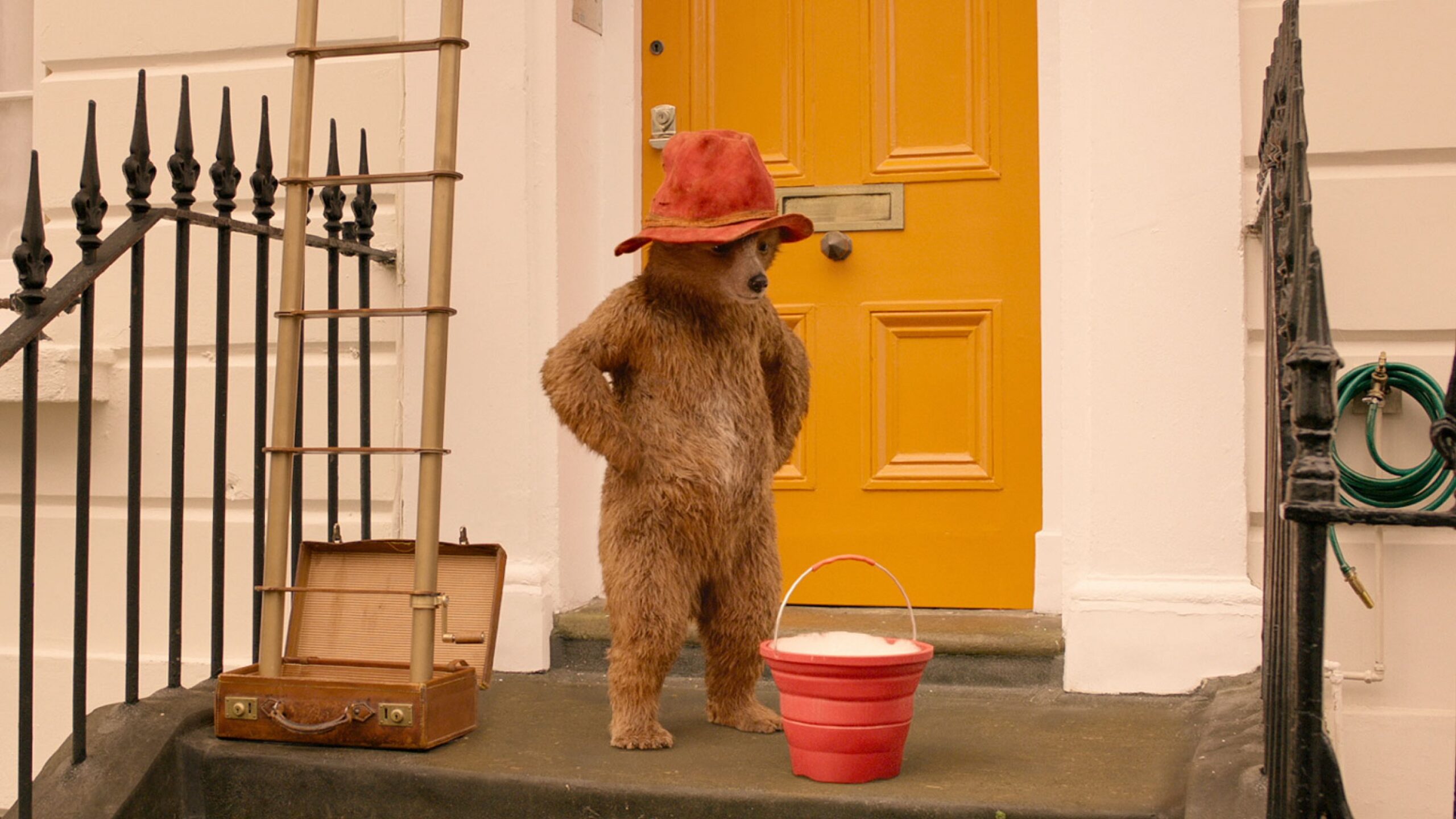
If the way these films are described above sounds corny, they’re almost anything but. While both Paddington films feature oddly disruptive endings, just about everything else is cozy, poignant, and happy-tear-jerking. From the get-go of both films, King establishes an upbeat tone as Paddington Bear kindly greets British passersby with a “Good evening” despite their rude reactions; the titular hero, no matter how hopeless his situation gets or how much he pouts over the seeming loss of hope or belonging, returns to his kindred self, helping those around him for no reason at all, as when he feeds pigeons his emergency marmalade sandwich. As Aunt Lucy herself remarks in Paddington 2’s opening flashback, “If we raise him [Paddington], he will go far [in London],” because it’s hard to resist Paddington’s soul-opening smile and gestures even for the most grisly, traumatized of characters. Even as Paddington makes horrid mistakes, such as getting tangled in tape or knocking bathroom faucets loose, he “go[es] far” in building a new life because he always “finds the good in all people,” even where he shouldn’t. Of course, that’s in no small part thanks to Mary and the Browns, who reinforce his goodness with a bit of their own.
Mary’s gushy side oozes in many ways throughout both films, like when she obsesses over Judy’s new boyfriend, Tony (Jude Wright): “When do I get to meet him?” she asks Judy for the umpteenth time, eliciting rolled eyes and an embarrassed scoff from her teenage daughter. Her love for her family—which cleverly isn’t her entire personality, just her goal, ensuring Mary doesn’t become another solely motherly female figure and a living, breathing individual—is unmatched as she nitpicks over family members’ outfits, reassures them of their lifelong dreams, or makes sure the kids get all their hygiene done before school. She simply wants everyone, even crazy ol’ Mrs. Bird, to be happy. Thus, her stumble on the defeated Paddington at a train station is a match made in heaven: even as Henry tells her, “He’s probably trying to sell us something…. No thank you,” she wanders back, peering into Paddington’s soul with curious, warm eyes as she asks: “Um, hello…. Um, I hope you don’t mind me asking, but, shouldn’t you be at home?” Prompting Paddington to retell his entire life story as politely as he can, from his parents’ death when he was small to his sneaked-in-to-London-on-a-lifeboat story, both Mary and her kids immediately fall in love with the bear’s pure heart, taking him home. Even if London isn’t all that fuzzy and reassuring, at least one family is.
Henry, meanwhile, is another story. Once a laid-back, adventurous biker in his youth, Henry was changed by parenthood from one day to the next. Hopping off the back of his bike, a very pregnant Mary asks, “We’re not gonna let this change us right?” Though the response is “No way” from the red-leathered, long-haired, ’70s rockstar-looking Henry, the next day he arrives with short hair, a station wagon, and in typical dad clothing: “It’s a carbon-neutral color, could you get in?” he tells Mary, after he carried their baby out asking everyone to “please step back” to protect baby Judy, receiving a shocked face from Mary when no bike is seen. That protective, uptight nature continues in the present day, as Henry refuses to trust Paddington for most of the first film. He simply doesn’t believe Paddington won’t make their lives harder, or at the very least more annoying, with all the damage he causes around the house. Fortunately, it only takes time, experience, and a covert op requiring Henry to dress as a maid—where he gets hit on by comedian and Horrible Histories/Ghosts actor Simon Farnaby, cameoing as security guard Barry—to see Paddington’s through-and-through golden nature. Paddington’s place within the Brown family can finally be cemented, and viewers’ hearts will surely melt as he does nothing but encourage the kids’ dreams, like Jonathan’s of becoming an engineer, respect their parents, and feed them a boatload of marmalade.
With nothing but charming, mildly socially critical British banter, chuckle-inducing mishaps usually caused by Paddington’s ignorance of the human world, and loving makeups or demonstrations of loyalty, both Paddington films are smashingly cozy watches. Millicent can try her damndest to get in this loving family’s way for wealth, and Phoenix can hope to act his way out of stealing from them. But the strength of these new familial bonds will determine whether a wealth-obsessed, upper-class wannabe and a pompous actor can get what they want, or if kindness is enough for them to face justice—balancing this bear-starring duo with much-needed action, anger, and negativity for the optimism to fight against, even if slightly corny endings disrupt the otherwise robust buildup. Nevertheless, for fantasy comedy lovers, fans of Michael Bond’s Paddington book series, smart children’s flick enthusiasts, and those looking for a dapper time of polite humor and genuine goodness, Paddington and Paddington 2 are sure to exceed expectations.
2014
dir. Paul King
95 min.
Screens Monday, 3/23, 4:00 p.m. & 6:00 p.m. and Tuesday, 3/24, 4:00 p.m. @ The Brattle Theatre
Double Feature w/ PADDINGTON 2
Part of the ongoing repertory series: Special Engagements
2017
dir. Paul King
104 min.
Screens Monday, 3/23, 8:00 p.m. and Tuesday, 3/24, 6:00 p.m. & 8:15 p.m. @ The Brattle Theatre
Double Feature w/ PADDINGTON
Part of the ongoing repertory series: Special Engagements