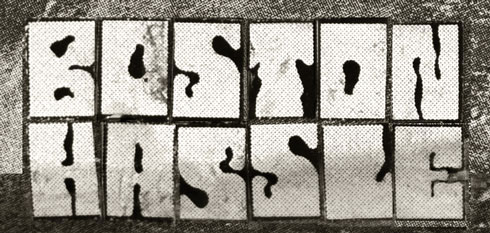
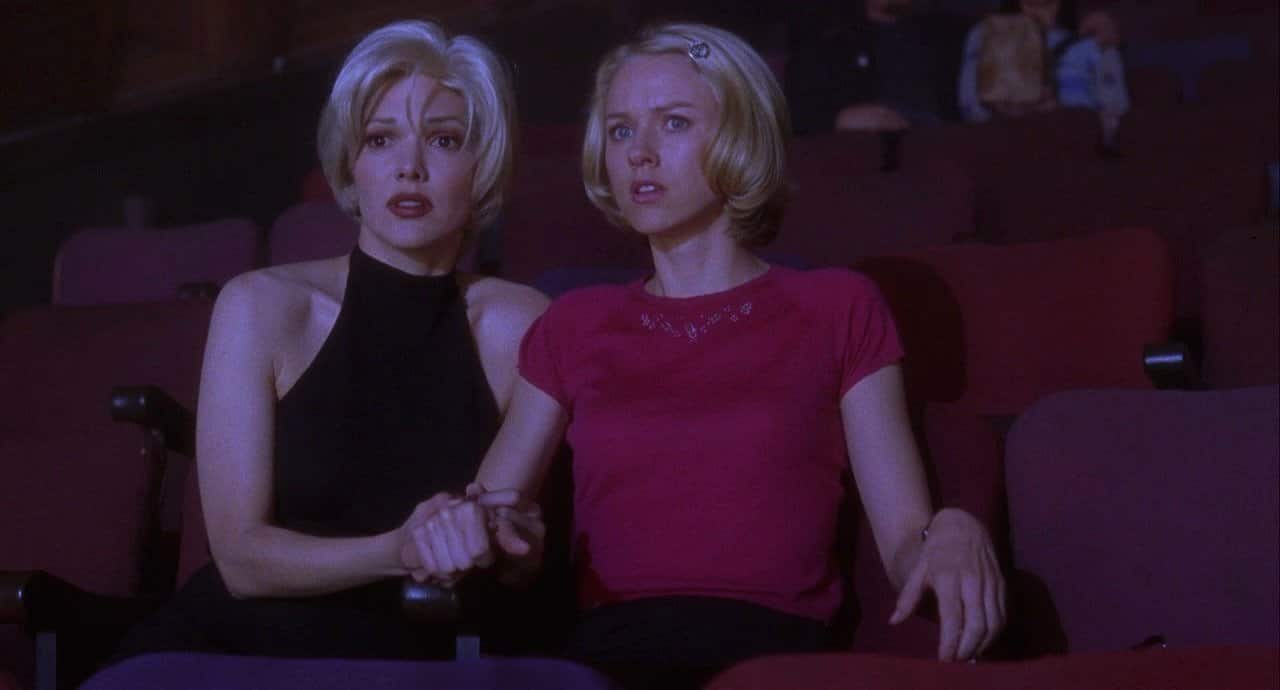
It might appear hyperbolic to claim that a single film can, and has, changed one’s life. But the impact Mulholland Drive had on me was so transformational, and the way it continues to fascinate and intrigue me, makes no other statement seem remotely appropriate. I first heard about it on some nondescript old Tweet, where it had been mentioned as an LA movie. Wanting to bask in a Hollywood fantasy from my laptop, I decided I would watch it as I painted my nails (a task perfectly accompanied by watching a movie, because of how much sitting and waiting it requires). I was awestruck – I didn’t understand it, narratively, but I was moved nonetheless. It was unforgettable and I was immediately obsessed, and every subsequent viewing only further deepens my love for it. I struggle to elaborate on my feelings about Mulholland Drive in person, capable of only gesturing wildly and jumping up and down. Perhaps this is part of the reason why Lynch refuses to explain his films to audiences; there’s a certain quality in them that transcends language, that must be experienced firsthand. Regardless, this is one attempt to describe Mulholland Drive and why everyone everywhere must watch it, and likely one of many.
Like most of Lynch’s films, the narrative of Mulholland Drive is not the most important thing to pay attention to; the film’s power, as in the rest of Lynch’s filmography and particularly his Los Angeles trilogy, is in the endless mystery, the overwhelming yet indescribable emotion, the sorrow and the beauty alike. For the sake of this piece, I’ll explain that Mulholland Drive is a tale about Hollywood fantasy and romance enveloped in a mystery of identity. The film further explores Lynch’s obsession with duality and doppelgangers as models of desire, in both universal longing and the Los Angeles-specific dream of success and stardom. Betty (Naomi Watts) has come to Hollywood with stars in her eyes, set on being a famous actress. She meets Rita (Laura Harring), a woman with amnesia following a car accident, who takes refuge in the Hollywood apartment which Betty has just moved into. They attempt to uncover the mystery of Rita’s accident and identity, while Betty hopes to really make it as a Hollywood star. Alongside the primary narrative, various subplots emerge, some which intertwine with Betty and Rita, and some which stand on their own. Monsters emerge from diner exteriors, a man botches a murder and subsequently shoots a vacuum, and a director’s wife sleeps with Billy Ray Cyrus. Mulholland Drive is a fractured mosaic of everything Hollywood is and everything Hollywood is supposed to be. There is talent and there is corruption, the line blurring between them. The love is as palpable as the horror, the loneliness and desolation as potent as an ingenue’s dream.
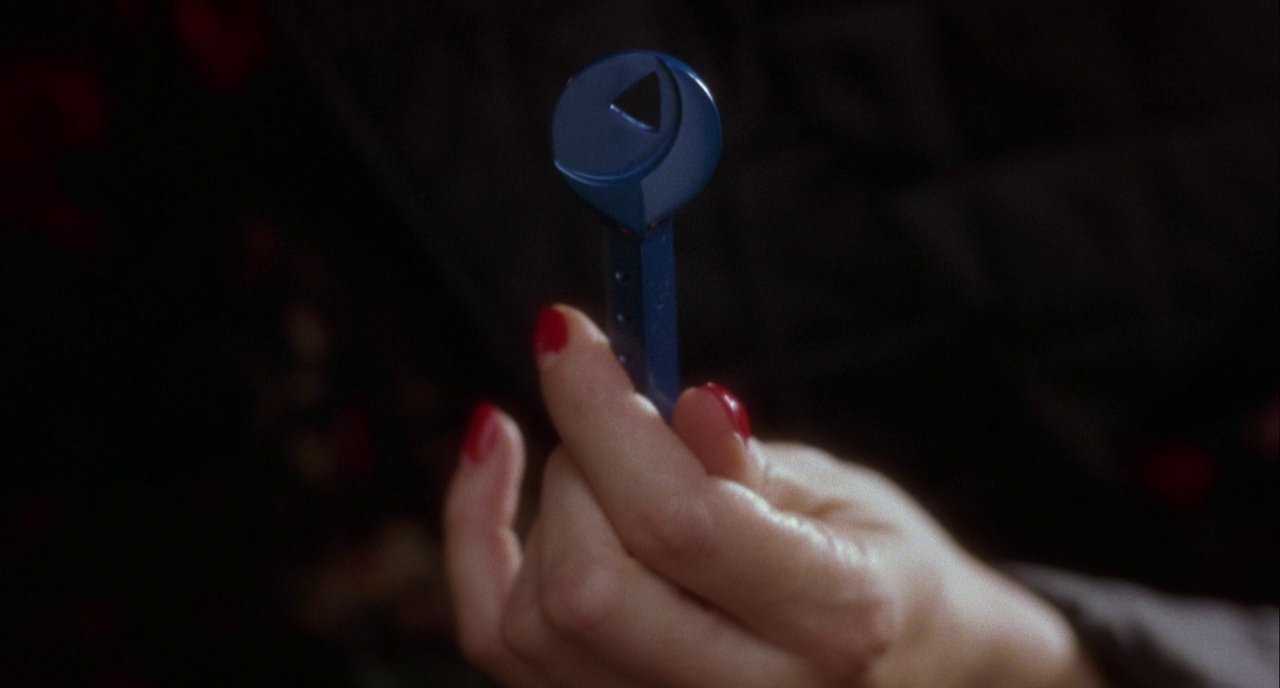
Mulholland Drive was originally intended to be a TV pilot, but was cancelled by executives and subsequently rewritten and transformed into a feature film. In marrying the remnants of the scrapped pilot with the dual narrative, Lynch makes a dreamlike sense of confusion into an exploration of the capabilities of cinema. Every scene is both visually stunning (Lynch’s painter roots never left him), and emotionally captivating. The narrative isn’t a möbius strip like Lost Highway, it doesn’t waver from reality to supernatural planes and dreams like Twin Peaks, nor is it as abstract as Inland Empire. It is imbued structurally with the scraps of the TV pilot and thematically with Lynch’s feelings on it, and it carries both a dreamlike and a nightmarish quality throughout. The essence of the film’s structure is truly up to interpretation, it can be uncovered in countless ways, taking new shapes and meanings every time.
There is a common interpretation of the events of the film and the meaning of it, but examining the nuances of the story within this interpretation, or dreaming up ones outside of it, further extends the power of the film. Mulholland Drive does not end when the film ends, and it does not end when you read about or surmise just one interpretation of it. You could spend your life rewatching Mulholland Drive and never fully grasp it – but the capability of the film to encourage this obsession and fascination, to create a mystery that prolongs so intensely, which remains an emotional and moving piece of cinema that doesn’t adhere to narrative conventions, wields an insurmountable power nonetheless. There are few other films as powerful as this. I could argue that any one of Lynch’s films have a life-changing capacity, but this is the one that changed mine.
Mulholland Drive
2001
dir. David Lynch
147 min.
Screens Tuesday, 3/25, 7:00 @ Coolidge Corner Theatre
Introduction by Dr. Robert Stickgold, Professor of Psychiatry and founder of the Center for Sleep and Cognition at Harvard Medical School
Part of the ongoing series: Science on Screen