
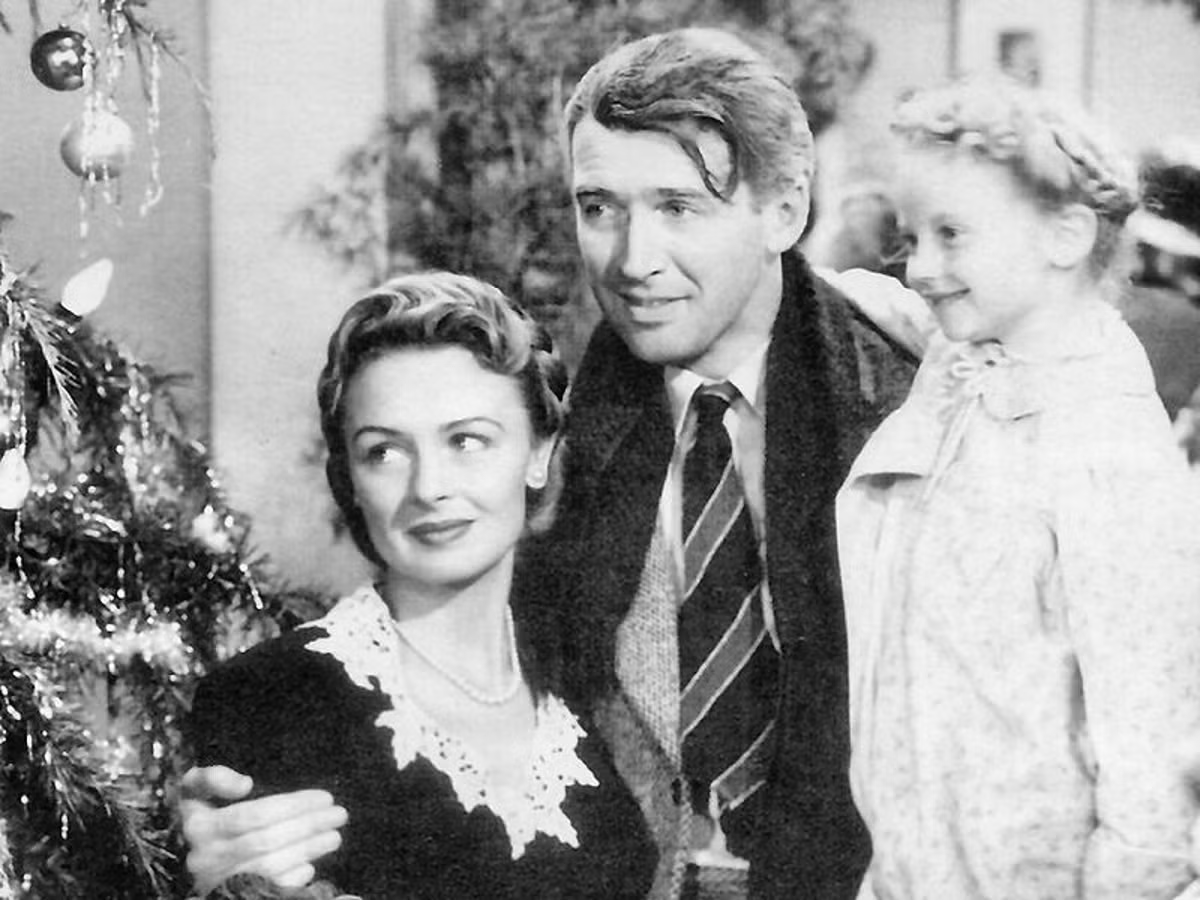
It’s a Wonderful Life is a deep, compassionate, retrospective Christmas story about why life is always worth living. Following Building and Loan owner George Bailey (James Stewart), Bailey contemplates suicide on Christmas Eve. Hearing his personal prayers as well as those from his friends and family, angels discuss how to handle him before sending down Angel second-class Clarence Odbody (Henry Travers) to save him. Dotting his life through flashback, viewers and Odbody see George act selflessly for his entire life, starting when he saves his little brother Harry from drowning in ice when they were young—leaving George’s left ear deaf. As he grows and dreams, his life quickly molds against his wishes; though he dreams of traveling and going to college, George must settle down on account of his father’s dying, forcing him to own the Building and Loan business. While he meets the love of his life in Mary Hatch (Donna Reed), who’s loved him since childhood, and grows a family, he dedicates his life to the service of others at huge personal cost. Building and Loan stands against the rest of the town in Mr. Potter (Lionel Barrymore), the rich and greedy owner of literally everything else, leaving Bailey and the Building and Loan as the only sanctities of hope for easier living. As a wingless angel, Odbody must convince Bailey why life is important, and specifically show him how many lives his existences effects positively—because Bailey himself doesn’t understand how valuable he is.
What makes Wonderful Life so earnest and raw is its lack of Christmas focus. Excluding the last half hour, basically the entire film dots Bailey’s life. Every selfless decision, every major life event, and every new dynamic he encounters/experiences gets put on display. It allows viewers to understand how Bailey’s been shaped, as extenuating circumstances continue forcing him to think of others (even as the likes of money-hungry Mr. Potter would do the opposite). For example, when stocks start plummeting and prices rising during the Great Depression, he convinces his clients to keep their money invested so they don’t need to “crawl their way to Mr. Potter for half of what you’re owed,” as Potter offered 50¢ on the dollar for every share locals owned. To ensure they can continue living, he breaks down his personal $2000 in honeymoon funds for he and his wife, simply because the town needs it. This sets up two different ideas: anti-capitalist rebellion and a true example of a man with Christmas spirit (even if Christmas itself isn’t a part of his heart-filled nature). Director Frank Capra establishes an early example of pro-community living by providing a protagonist who’s mostly a kind, selflessly respectable human being.
Showing him struggle yet continue to think of everyone else as the world takes from him, viewers see both a new perspective on life even today not taught as the norm (life is for giving and being with others, not taking and self isolating) and a natural example of how people can easily plummet to their lowest. It also shows how no one truly knows how much their lives affect the world around them; Odbody lets Bailey sees the corrupt, miserably poor town of Potterville that would exist if Bailey were never born. “Let me live, I don’t care what happens to me,” Bailey says after seeing such horrors; potential horrors we could all leave in wake by merely not existing. By ending with Christmas and its most important message—giving and caring goes much farther than money—Capra closes out with a much needed hopeful glance at how people give back to Bailey; what goes around, comes around. It caps off the rest of the film’s relentlessly considerate nature with grace, and gives the kind of ending deserved for the kind of kind man Bailey is. While typical racist tropes and backwards norms do litter the film, Stewart often mumbles incoherently and it’s 2 hour+ runtime can drag, It’s a Wonderful Life is a namesakefully wonderful extrapolation of how people should live and treat each other. For Christmas fans, old cinema fans, James Stewart/Donna Reed fans, or those looking for something that earns the joy, Wonderful Life is sure to please.
1946
dir. Frank Capra
130 min.
Screens in 35 mm at 3:30 pm Friday, 12/13, and in 4K DCP daily from Saturday, 12/14 until Monday, 12/16 @ The Brattle Theatre