The very first screen version of The Phantom of the Opera, starring Lon Chaney in the titular role, is both a refined adaptation of the original 1910 novel by Gaston Leroux, and a gothic, sympathetically shocking, funny, and poignant early cinematic fright about an outcast desperate for love and redemption. In the 1890s, noblemen Vicomte Raoul de Chagny (Norman Kerry) goes to the Paris Opera House with his brother for a performance of Faust, in which his girlfriend, Christine Daaé (Mary Philbin) may potentially sing. Meanwhile, behind close doors, management of the opera house changes hands, to which the old owners warn of the Opera Ghost, a paranormal presence which haunts every show and who is “the [sole] occupant of box No. 5.” Madame Carlotta (Virginia Pearson), the show’s main singer whom Christine is the understudy of, receives a letter from the ghost who, referring to himself as the Phantom, threatens, her if she doesn’t allow Christine to sing. Christine, in her dressing room, hears a mysterious voice command her to sing and focus entirely on her career and her “Master,” the Phantom. Even after Christine tells Raoul of her current unknown requester, she sings at the next show, pleasing the Phantom. After they meet and she reveals his dauntingly distorted face (brought to vivid realization by the star Lon Chaney’s own makeup skills), his demands only increase as Christine’s fear—and the follow-through on the Phantom’s promise to unleash earth-shaking abilities—intensifies. With no clear way out, Christine and Raoul must stop the Phantom before he kills everyone or, perhaps worse for them, destroys their precious stage.
Being different from everyone else, even without others’ reactions, leaves one feeling vulnerable and excluded. Whether the difference is physical, mental, or otherwise easily discernible, such differences are easy to get hung up on—and then there’s how everyone else looks at you. Historically, such dissimilarities have driven a large number of recorded conflicts, tragedies, and longstanding immoral practices, such as slavery and the Nazis of World War II Germany; hatred is a helluva drug. In an increasingly divided U.S. of America, with the current presidential administration driving hate and tearing down all progress towards true equity between all groups, it’s vital to remember what such a film as the original Phantom of the Opera elegantly demonstrates: fear over difference and action against those different leads to lifetimes of needless torture and eventual violence. Director Rupert Julian’s first adaptation of the 1910 novel portrays the Phantom as an empathizable victim of uncontrolled differences, forced to live in the shadows of a cryptic opera house.
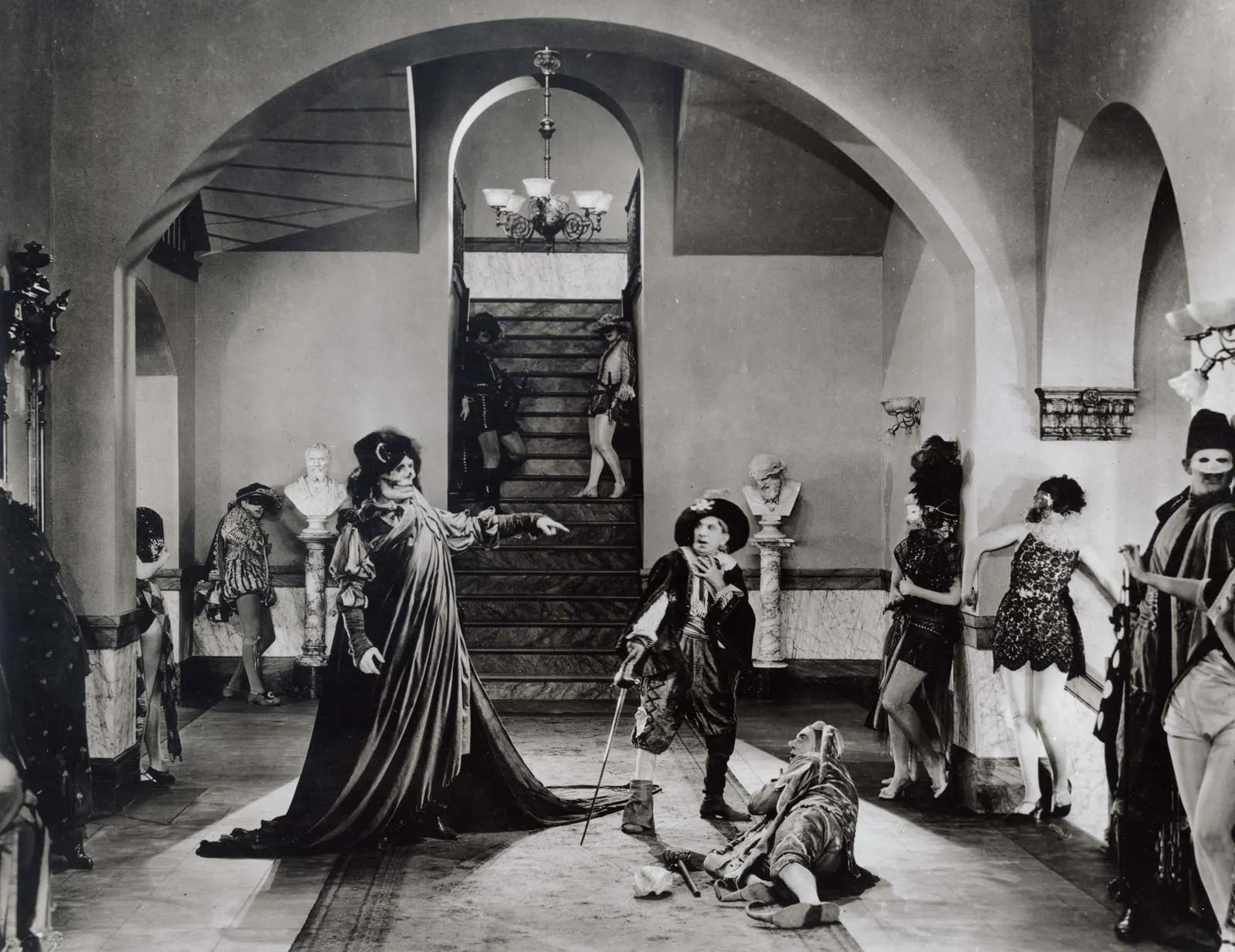
Beginning with the Paris venue’s management swap, the old managers urge the new managers not to underestimate their unwelcome but ever-present guest: “It is barely possible you may hear a ghost, a Phantom of the Opera…! The attendant of Box Five will not laugh when you ask about the opera ghost!” While the new managers laugh off the ridiculous idea of an “opera ghost” at first, upon slogging down the ancient-seeming marble halls, enveloping columns and endless empty spaces of darkness and dust in the opera house’s many massive corners, they find a black-cowled figure with slicked back hair loitering in that very same fifth box they were told of—only for him to suddenly disappear upon a second look! In such a near-dystopian maze of refined decor littering an otherwise oversized and easily overlookable space, it’s hard not to assume the place’s paranormal potential even if the ghost wasn’t there. As he starts leaving threatening letters and ominously talking inside people’s heads, it becomes increasingly clear he has purely malevolent intent. Not to mention how others describe his face: “his eyes are ghastly beads in which there is no light,” a man who’s seen the Phantom up close describes, “like holes in a grinning skull! Then Christine meets the true man behind the mask with the “holes in a grinning skull,” Erik.
After luring Christine to the Phantom’s lair—a stoned basement, forgotten out of the prying eye’s of others’ judgements—she takes his mask off, revealing a bulbous nosed, pit-eyed, and disfigured jaw. The Phantom reveals his true intentions to Christine as she’s shocked by his appearance: “If I am the Phantom, it is because man’s hatred has made me so…. Men once knew me as Erik, but for many years I have lived in the cellars, a nameless legend.” Alive or dead, the Phantom is forced to wander the halls of a cryptic opera venue alone, becoming “a nameless legend” the most to himself of all people. It’s hard not to imagine how “many years” of such societally imposed isolation can dehumanize anyone in their own heads. While, given it was 1925, the filmmakers may have overlooked larger social implications for such feelings rooted in legal systems and norms, The Phantom of the Opera nevertheless demonstrates how division over meaningless, unshared traits only angers and harms both individuals and communities. While his innate turn towards violence is still inexcusable as chandeliers crash and grounds shake at his will, seeing Erik’s tragic circumstances—especially as he turns towards love for redemption, believing “If I shall be saved, it will be because your [Christine’s] love redeemed me—makes him an impeccably complicated villain.
Thus, with The Phantom of the Opera emphasizing visual theatricality, such as romantically lavish sets and costumes, a skillfully silent cast, nerve-wracking humor, and a clever highlighting of the need for mutual respect among all, it still holds up as a deft horror-dramedy 100 years later. The over-reliance on intertitles sludges things, and the lack of sound for a premise based in an opera house is discombobulating, sure. But with stellar themes applicable to today’s increasingly hostile sociopolitical atmosphere, refined atmospheric manipulation, and accompanied music from the dedicated band the Invincible Czars as part of their Phantom 100th anniversary celebration tour across the U.S. and Canada, who’ve been “keeping it weird” since 2003, The Phantom of the Opera is a refined fantasy horror of silent scares and tragic truths.
1925
dir. Rupert Julian
93 min.
100th Anniversary Special Screens Monday, 10/13, 7:00 p.m. @ Coolidge Corner Theatre
Live music Onstage at the Coolidge performed by the Invincible Czars
Part of the ongoing repertory series: Flick ‘r Treats