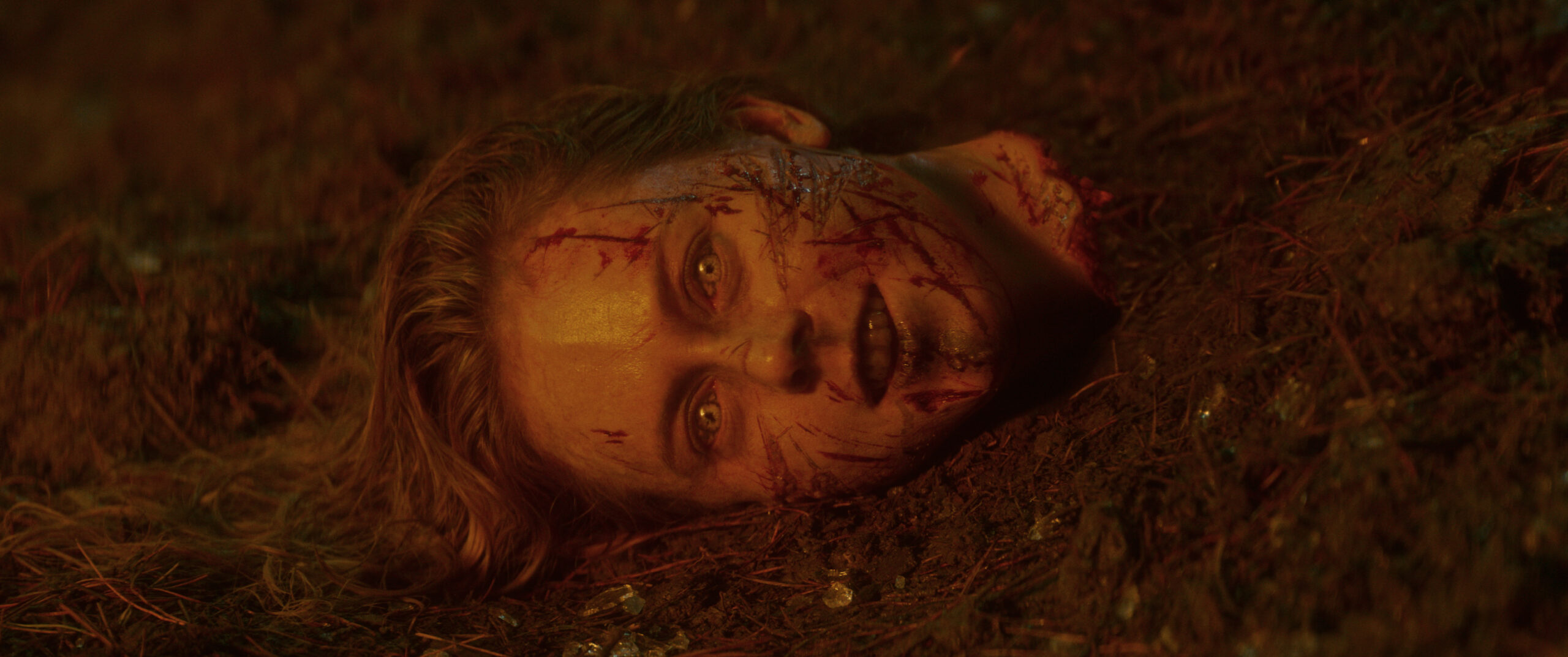
Guts. Weed whackers and chainsaws. Guts. Familial strain and family trauma. Guts. Evil slaying. Blood. Demonic, hilarious mockery followed by the nastiest kills… and some more guts. Since the ’80s, the Sam Raimi-birthed Evil Dead saga has been presenting hours of horror, humor, and really weird heart as dead-possessing demons have pillaged different lands and times (on both big and small screens, too!). Amid its unwieldy uptick in violence, the franchise’s latest entry, Evil Dead Burn, is a viscerally bloody, sharply directed/edited continuation and a terrifyingly unique flick in its own right. While Evil Dead Rise may be fleshier in character and tonal balance—though, for some, neither 2020s film holds any weight against Sam Raimi’s original The Evil Dead or Evil Dead II—Burn is the franchise’s darkest of all, surpassing the weaker-willed Army of Darkness and 2013 Evil Dead requel in its stoop to new gut-explosive depths. The film is nail-biting from beginning to end despite slightly thinner characters, awkward one-liners, and a few underwhelming points.
In recent years, Evil Dead has centered around emotionally scarred families, and Sébastien Vaniček’s Burn is no different. The Price family—Joseph (Hunter Doohan), his brother, Will (George Pullar), their parents, Susan (Tandi Wright) and Edgar (Erroll Shand), and their grandmother, Polly (Maude Davey)—is a nasty bunch. With an angry father, a dementia-ridden grandma, and a cold mother, Joseph and Will didn’t have much beyond each other and some awful coping skills growing up. Their grandfather, Benjamin, once obsessively studied the nature of Evil Dead‘s Deadites and their treacherous literary summoner, the Necronomicon/Naturom Demonto. Intrigued by the manuscripts his parents desperately tried ridding themselves of, Joseph continues where Benjamin left off; reading the book’s passages, he accidentally summons not just any Deadite, but Evil Dead Rise’s Deadite Jessica (Greta Van Den Brink) to chase after him and a dagger Benjamin’s recordings promise can kill the Deadites. Later on, as Jessica slays nearby fishermen, Joseph, Will, the former’s girlfriend, Thya (Luciane Buchanan), and the latter’s wife, Alice (Souheila Yacoub), have a celebratory dinner at the restaurant where Will works with Alice. Alice and Will quickly get into a nasty dispute that ends in Will punching dents into his car—pathetically excusing himself and a burn mark he “accidentally” left Alice sometime before by hollering, “See? I’m not like this when I’m not with you; you bring it out of me…. If you would just talk to me, none of this would happen!”—and drunkenly driving off directly into a fiery accident with the Deadite Jessica. As Alice gets forced to unite with the unstable Price bunch, answers to why Will was physically abusive arise as his loved ones unravel, just as the Deadites finally locate their main target in Joseph. Family-style butchery ensues.
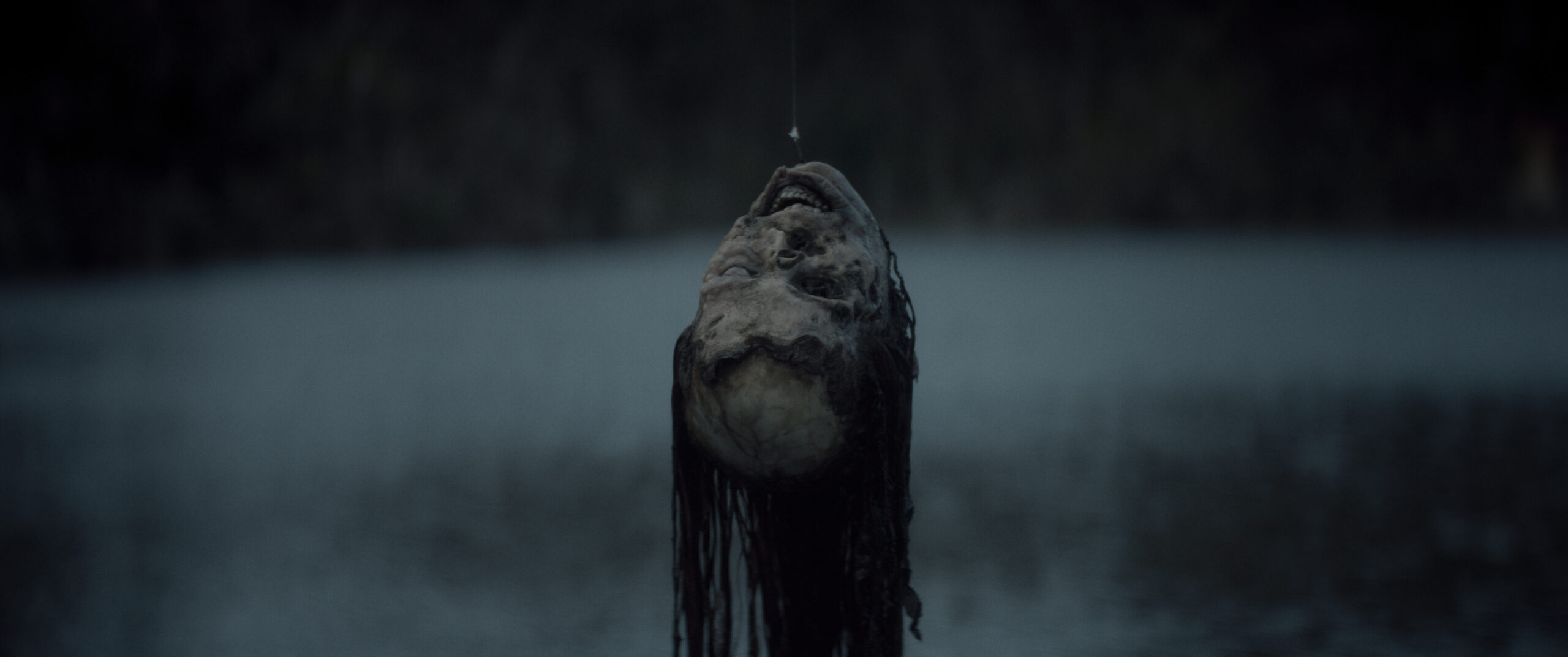
Generational trauma is a real bitch. For many, there’s simply no escaping what’s passed down to them. People either rebel against their parents’/guardians’ dysfunctional beliefs and behaviors, developing their own along the way, or they mirror them. Some escape it through therapy, meds, or sheer dumb luck, but not many. Evil Dead Burn, both like and unlike Rise, deals with a family riddled with passed-down, uncontrollable—and perhaps unrealized or denied?—negativity and abuse. Will is a near mirror image of his father, behaviorally speaking. While the younger speaks more than dear ol’ Dad, they deal with their anger the same; Edgar, too, punches tables and counters when enraged (he presumably hits Susan, too, given the scars Will’s left on Alice’s torso). Both appear just a notch below boiling mad at all times; such repressed, pointless fury makes them perfect vessels for the hate- and viscera-mongering Deadites. Joseph, the pacifistic and seemingly warmest-hearted of the Price bunch, reveals his true, cowardly and secretly, similarly violent nature as different loved ones attack each other: “You couldn’t shoot your own father when [he murdered me]…. But killing me? That’s easy,” Joseph’s Deadite-turned girlfriend mockingly questions, referencing Joseph’s failure to shoot a Deadite Edgar to save Thya from a brutal death. None of the Price men are exactly saints, but that’s common in a tradition-heavy, emotionally repressed family. As such, even their mother is distant, although for different reasons. Susan’s more preoccupied with the lack of love she receives from her husband, kids, memoryless mother, and her long-since dead, Necronomicon-focused father: “Why didn’t you love me, Mom?” she begs Polly at one point; “Without this family, I am nothing,” she solemnly tells Alice at another. Despite some vocal bigots’ backward shouts, Burn demonstrates the numerous, lifelong miseries that a forcefully heteronormative structure instills upon generations of people who might otherwise live more blissful lives if allowed to choose for themselves. If so, perhaps Deadites wouldn’t have easily manipulated all the Prices with a single, false promise: “The whole family could be reunited.” Maybe in Hell, Susan, maybe in Hell, but only after a crap ton of unsettlingly combined intercuts between different normal-to-insanely-violent scenes that see your literally household rip itself apart.
Alice knows firsthand what Hell looks like before even encountering the Deadites. Unlike the American family she’s married into, her Hell revolves around a man who entirely controls her life: Will. Since Alice is both married to Will and employed at his restaurant, she’s partially caught by that same heteronormative trap Will’s now personally enforcing; if she doesn’t do just as he says, rage spills. In flashbacks, every fight they get into involves something “bad”—frankly silly things, like Alice’s smoking a cigarette—being Alice’s fault. “You always do this,” Will sneers, supposedly only reacting to the situation at hand (like father like son, so Susan’s seemingly dealt with this too). When faced with the other Prices, they merely repeat what Will grilled without hitting her or smashing wall holes; they’ve all accepted their family-wide, trauma-induced misbehavior as normal, and expect Alice to do the same since she married in. It’s clear why the Deadites chose the Prices, Thya (whom Polly hilariously and probably truthfully claims to be a thief), and Alice: the price you pay with this broken bunch is loss of goodness and grip on your own destiny, especially if you’re a woman. It’s all a massive control fight that’s the perfect weakness for Deadites to infest. Cross those fingers and toes that Alice won’t roll over and accept that hellish fate.
Though Burn‘s aforementioned themes flatten out when verbally thrown around—especially since the cast struggles to convince under the film’s complicated emotional weight (when still alive, as those who turn are deeply chilling as Deadites)—and some repetition later on hampers an otherwise classically batshit crazy Evil Dead ending, Evil Dead Burn has enough uniquely gruesome kills, scares, and general understanding of what generational trauma can do to entire families to frighten memorably. May we all be able to scream “That’s not enough” and crush whatever obstacle we face, even if that’s a demon-turned version of our abusive husband who now pleads “I love you” to survive and continue harming. For age-old and recent Evil Dead fans, gory horror fans, and those hoping for some slightly poignant critique in their scares, Evil Dead Burn will quench that blood-thirst.
2026
dir. Sébastien Vaniček
109 min.
In theaters now—get tickets @ Alamo Drafthouse Cinema Boston Seaport, Apple Cinemas Cambridge, Cinema Salem, and all local AMCs