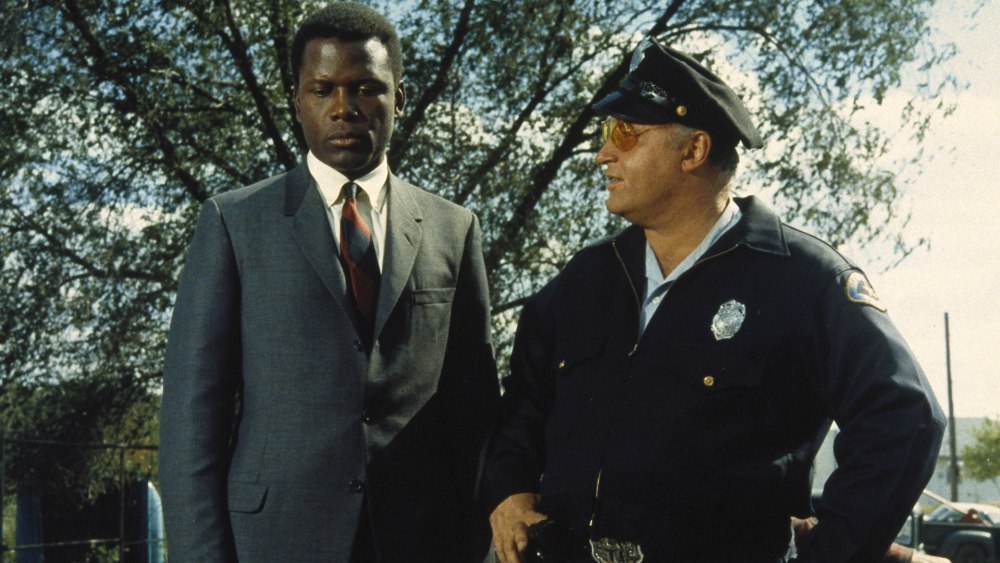
In the Heat of the Night is an embroiling, vintage, and unsuspecting murder mystery paired with racial over- and undertones. One night in small town Sparta, Mississippi, on his nightly patrol through the streets that includes an openly naked woman (Delores Purdy) walking around her kitchen, Officer Sam Wood (Warren Oates) stumbles upon the body of up-and-coming industrialist Phillip Colbert, who was planning a new factory that would economically boost Sparta. Alerted, Wood finds Black man Virgil Tibbs (Sidney Poitier) in the nearby train station with a fat wallet of cash on him, thoughtlessly pinning the murder on him. Upon taking him into Police Chief Bill Gillespie’s (Rod Steiger) office and searching him, Tibbs reveals himself as a Philadelphia-based cop and homicide expert simply visiting his mother down south via his wallet-stitched badge. Though all the cops—whiter than paper—scrutinize, threaten, racistly curse at, and undermine Tibbs, he quickly outsmarts them all. Tibbs deduces that the other main suspect found with Colbert’s actual wallet, Harvey Oberst (Scott Wilson), couldn’t have killed Colbert because of his being left-handed and Colbert’s fatal blow being only deliverable from the right. Thus, though reluctant because everyone is racist, Gillespie and Tibbs pair up to solve the crime once and for all. Tibbs quickly realizes the killer isn’t the only threat though: racism arises fatally, whether that be a rich man’s feeling disrespected enough to shoot a Black man or a group of vile rednecks chasing Tibbs out of town or into the ground.
The southeastern USA has a dark history; even though slavery ended in 1865 and Black civil rights were won over almost a century later, various ex-Confederate states remained the same in practice. Sparta, Mississippi, is no different. Throughout Tibbs’ stay, regardless of his ability or character, he’s reprimanded for being black. From Chief Gillespie to the mortician who conflicts with his death-time findings, he’s reminded of his place in their piggishly demented neck of the woods: “Virgil, eh? A funny name for a [n-word] boy from Philadelphia, what do they call you up there?” Gillespie degradingly asks Tibbs. Restaurants won’t serve him; the town’s run by a cotton business owner who has Black workers picking for hours out in fields; his supposed brothers in blue detest him. But Tibbs—thanks partly to Sidney Poitier’s sobering presence, in the way he swings from a tough, un-knockable pro to a comfortingly ordinary man you can get vulnerable with on a dime—simply does what he’s supposed to: find the murderer. Even as he gets cornered by confederate flag license plate-toting assholes—”You get the message now, Tibbs?” Gillespie hollers after very reluctantly saving Tibbs from a lynching—he continues to seek justice. Director Norman Jewison demonstrates how humanity prevails even in ruthless circumstances, and Sidney Poitier ensures the human spirit’s adaptability translates boldly. “They call me Mr. Tibbs!” Tibbs shouts.
Another way to see this is specifically in Tibbs and Gillespie’s dynamic. For most of the film, Gillespie condemns him, even when he admits his need for Tibbs: “No colored gets paid that, that’s more than I make…! Because I’m not an expert, Officer.” Because he’s still racist, he can’t get past the idea of any Black man being as good if not better than he is; the very idea is a threat to his existence and power. But as the case unfolds and he watches Tibbs make connections no one else could, he slightly softens—as does Tibbs, eventually. But even then, Gillespie keeps his guard up: “Ah well, don’t get smart with me, Black boy,” an until-then depressed, drinking Gillespie barks after asking if Tibbs shares his loneliness in the field. Woke complainers, watch and learn: there’s no instance where people are praised for the color of their skin or given advantages because they’re already societally discriminated against. Tibbs simply does his job—and does it damn well—as everyone continues to threaten and call him the n-word, unprofessional, lazy, or incapable. In seeing that and bonding in other small ways, even Gillespie changes: “Virgil, you take care now, you hear?” Gillespie says to a departing Tibbs, who smiles surprised in return. Combine that with an unpredictable—albeit a tad messy—murder-mystery anchor, a boatload of convincingly idiotic performances, a vintage mix of blues, browns, purples, blacks, and whites across the board, and a tight grip on relational nuance, and In the Heat of the Night makes for an equally impactful, intentional, and remarkably fun time.
1967
dir. Norman Jewison
110 min.
Screens in new digital restoration Sunday, 2/9, 2:00 pm @ Coolidge Corner Theatre
Part of the ongoing repertory series: Icons