
For many years, High Fidelity occupied a place in my mind not unlike Rob Gordon’s list of Top Five Desert-Island Breakups.
When I first encountered the film as a college freshman disc-digger, it represented the dream: a world in which pop cultural minutiae is currency and one could while away the hours surrounded by stacks of used vinyl (I even for a time followed its protagonist’s lead and filed my CDs in “autobiographical order,” much to my roommates’ chagrin when they wanted to borrow an album). Eventually, against all 21st-century odds, I made this dream a reality: I got a job in Harvard Square’s venerable Planet Records, where I occupied a stool behind the counter for nearly eight years. It was, indeed, a dream job, and I could tell you enough stories of the Wild Vinyl West to fill a screenplay of my own.
But a funny thing happened to my relationship with High Fidelity. In my mind, it went from aspirational ideal to my own personal Portrait of Dorian Gray, the prospect of revisiting it filling me with dread. For one thing, once I’d transcended from record store customer to record store clerk, I found myself looking down on those who revered it like I had, whether they were daytrippers looking to spend a few minutes in a High Fidelity Disneyland, or honest-to-god freaks hoping to so impress me and my coworkers with their musical knowledge that we’d invite them into our fold. But there was something else, something darker. Now that I was living this life, I worried that High Fidelity would hit too close to home, like taking a PTSD-wracked vet to see Rambo III. That’s the thing about abysses: they tend to gaze back.
I reluctantly left the record store for more lucrative climes several years ago; now, when I paw through the crates, it’s as a civilian. When I heard that the Coolidge was screening High Fidelity as part of their long-running Cinema Jukebox series, I decided it was probably safe to blow off the dust and give it another spin. As predicted, it hits differently from this vantage point, but I’m happy to say that it’s magic endures.
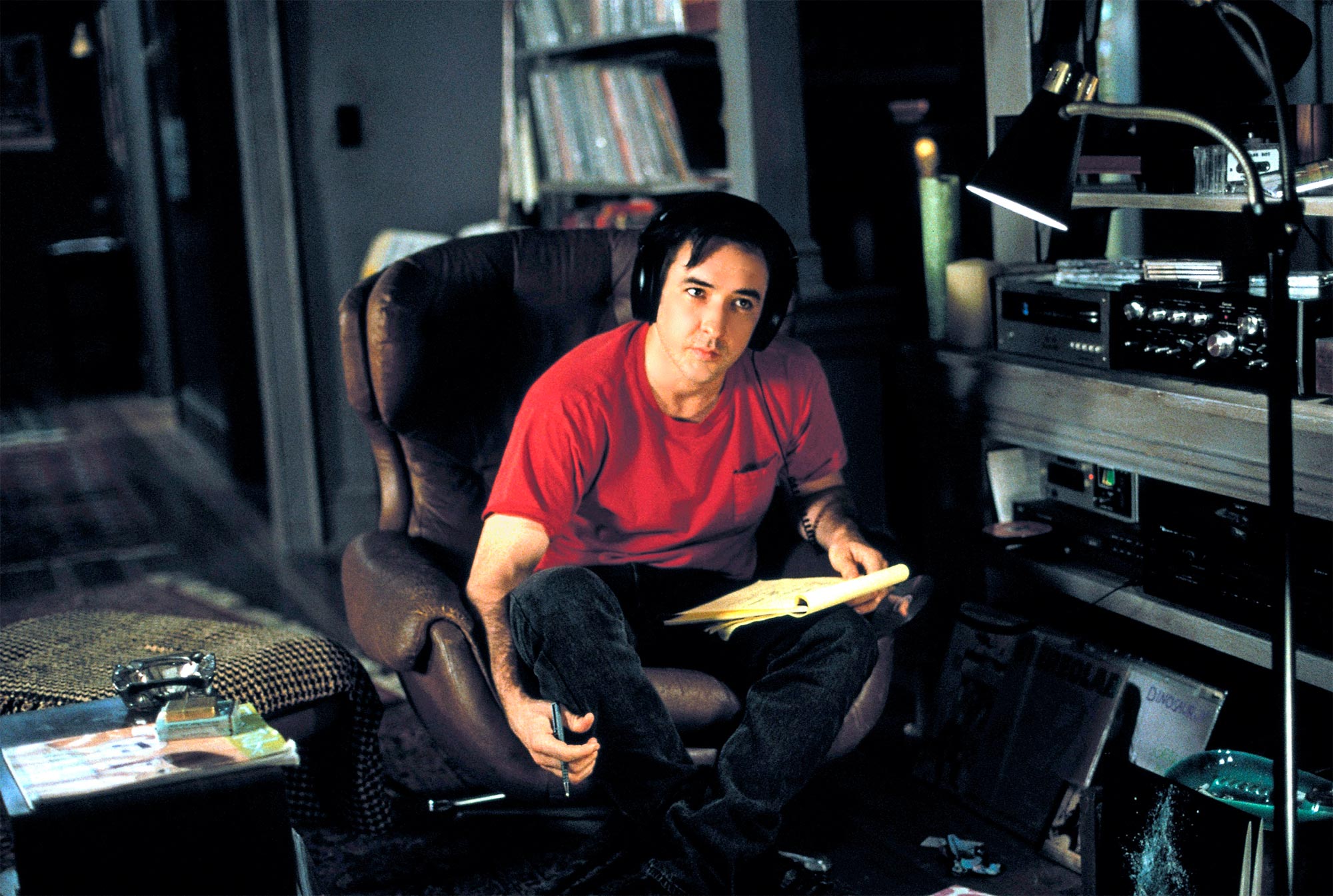
First things first: as a music obsessive, I’m critical to a fault of the “accuracy” of movie characters’ supposed tastes, and High Fidelity is perhaps the most musically “correct” film about music lovers I’ve ever seen. The posters and records in Rob’s apartment all track with his character: concert posters for Pavement and Guided by Voices, framed LPs of Tonight’s the Night and Goo, Before and After Science lying around on both vinyl and CD. The needledrops are perfect, running the record-snob gamut from the Velvet Underground and Nilsson to the Vaselines and Ann Peebles (one caveat: it is impossible, and I believe illegal, for “Walking on Sunshine” to play in a used record store without one of the clerks informing the others that Katrina and the Waves’ guitarist Kimberley Rew previously played in the Soft Boys with Robyn Hitchcock). Crucially for a film about record store geeks, it’s clear that the filmmakers are record store geeks themselves.
The culprit here is likely star and co-writer John Cusack. Cusack made his name as a sort of thinking person’s Brat-Packer, imbuing his best films with an honest-to-god indie cred, from the dirty Clash t-shirt in Say Anything to the music-industry in-joke fantasia of Tapeheads (his love interest in Grosse Pointe Blank, a hipper-than-thou radio DJ played by Minnie Driver, could easily live in the world of High Fidelity). To preserve the pedantic rock-crit flavor of the beloved source novel by Nick Hornby, much of the film is framed by Cusack breaking the fourth wall and spieling out his inner monologue directly into the camera. In the hands of just about any other actor of the time– a Zach Braff, say– this device would be unbearably cloying, but Cusack manages to make it sound not only funny and engaging, but natural. This is an actor as fully in-tune with his character as any work of autobiography. They say a great performance is rooted in an actor finding the truth of the character within themselves; I sense Cusack didn’t have to dig terribly deep to identify with this inveterate rock snob, but the character’s angst feels undeniably real and earned.
And, yes– it’s not much of a stretch for me to relate either. Revisiting High Fidelity as an actual thirtysomething ex-record store clerk, I can now see clearly that these characters aren’t “cool”; Rob is just as emotionally stunted as his cartoonish employees (hilariously played by Todd Louiso and, in a persona-crystalizing performance, Jack Black), filtering his relationships through the lens of anal-retentive listmaking and using his immaculate taste to deflect from his own vulnerability. But this is a feature, not a bug: Cusack, Hornby, and director Stephen Frears all clearly know this guy because they’ve been this guy, and they document his baby steps toward adulthood with affection. And yet, even looking at it through the eyes of a seen-it-all veteran, High Fidelity still captures the thrill of seeking, discovering, and obsessing over dusty old records and shiny new CDs (remember those?). On any list of Top Five Record Store Movies, High Fidelity is number one with a bullet.
High Fidelity
2000
dir. Stephen Frears
113 min.
Screens (on 35mm!) Thursday, 4/6, 7:00pm @ Coolidge Corner Theatre
Part of the ongoing series: Cinema Jukebox