

Clueless is a sharp, satirical, and hilarious comedy about a teenage girl navigating past the superficialities of conventional, overconsumed LA streets, school corridors, and house parties. It cleverly follows a wealthy American blonde named Cher Horowitz (Alicia Silverstone)—whose father, Mel (Dan Hedaya), is a successful litigator—as she juggles what the average American high school kid may well prioritize: looks, getting good grades easily, and popularity. Used to getting her way thanks to her skillful persuasion skills passed down from dear old Dad, she and her equally well-endowed best friend Dionne Davenport (Stacey Dash) shop, gossip, and find new ways to better themselves, like forging a romantic relationship between two teachers to relax their grading standards on the teenage pair.
However, Cher has one thing that Dionne doesn’t: a heart. As Clueless as she is and acts, she means well, and wants a boyfriend like Dionne has, but who isn’t carefree and sexually focused. She wants to help those around her, caring for things and people where she can, and be cared for by somebody in return. When her somewhat estranged yet close ex-step-brother Josh Lucas (Paul Rudd) comes back around to help Mel with some bigger legal cases and to attend college nearby, she sees changes in her perspective, focusing more on how she can use her popularity for good, for example. However, as dynamics rapidly change with her values, she becomes simultaneously more compassionate and more excluded from her old life. To cope, she must discover what makes her most content and what makes her friends, dad, and high school—and, most importantly, herself—Clueless to what life and joy are really about.
Clueless clues in on a lot of different issues with an impeccable comedic tongue. Anchored by the kinetically sharp-minded Silverstone as the ignorant, sheltered, privileged Cher (named after none other than the same-named singer and actress), Clueless throws both its protagonist and viewers down a rabbit hole of different situations ranging in real-world gravity. Starting her day most unusually, even if she protests otherwise—“But seriously, I actually have a way normal life for a teenage girl. I mean, I get up, I brush my teeth, and I pick out my school clothes,” she says, airing enthusiasm as she uses a touch screen computer to pick out 3D models of her clothes in the ‘90s—she faces the same problems most “normal teenage[rs]” face. As mentioned, being the most popular girl in school, she knows all the gossip and details about even the most unpopular kids. Instead of using any information against them, however, she uses it for their (and often her) benefit. For example, while it doesn’t ultimately pay off, after failing an oral over Haitian sociopolitical issues, she attempts to soften her teacher by covering for her classmate to make herself look good: “Mr. Hall, the buzz on Christian is that his parents have joint custody, so he’ll be spending one semester in Chicago and one semester here. I think it is a travesty on the part of the legal profession.” While Christian’s (Justin Walker) issues don’t get discussed again, and Mr. Hall (Wallace Shawn), as Cher herself admits, “doesn’t budge,” this kind of inadvertent, self-help do-goodery is sprinkled throughout. She simultaneously backs others without hesitation, whilst showering herself in feigned social awareness, applauded in the very same “legal profession” she criticizes. Director-writer Amy Heckerling writes up an intelligent ditz that Silverstone brings home.
Other moments, such as when Cher tells her father, “You need to eat better, Daddy,” or when telling Dionne, “We have to use our popularity for good” before popularizing a new transfer student, show her capability for compassion more overtly, of course. Yet it’s the briefer instances where her kindness and purity appear most consistent. Even when her virginity gets tossed about like an insult, she defends her altruistic actions and thought-out values: “You see how picky I am about my shoes and they only go on my feet,” she says, before springing into conversation with up-and-coming transfer Tai (Brittany Murphy) about getting with good-looking dunce cap Elton (Jeremy Sisto). The more she opens her heart, listens to how she can help others like Tai, and finds what she really wants—to do good and get a boyfriend who really cares for her—the more she sees her own vanity and shallow priorities.
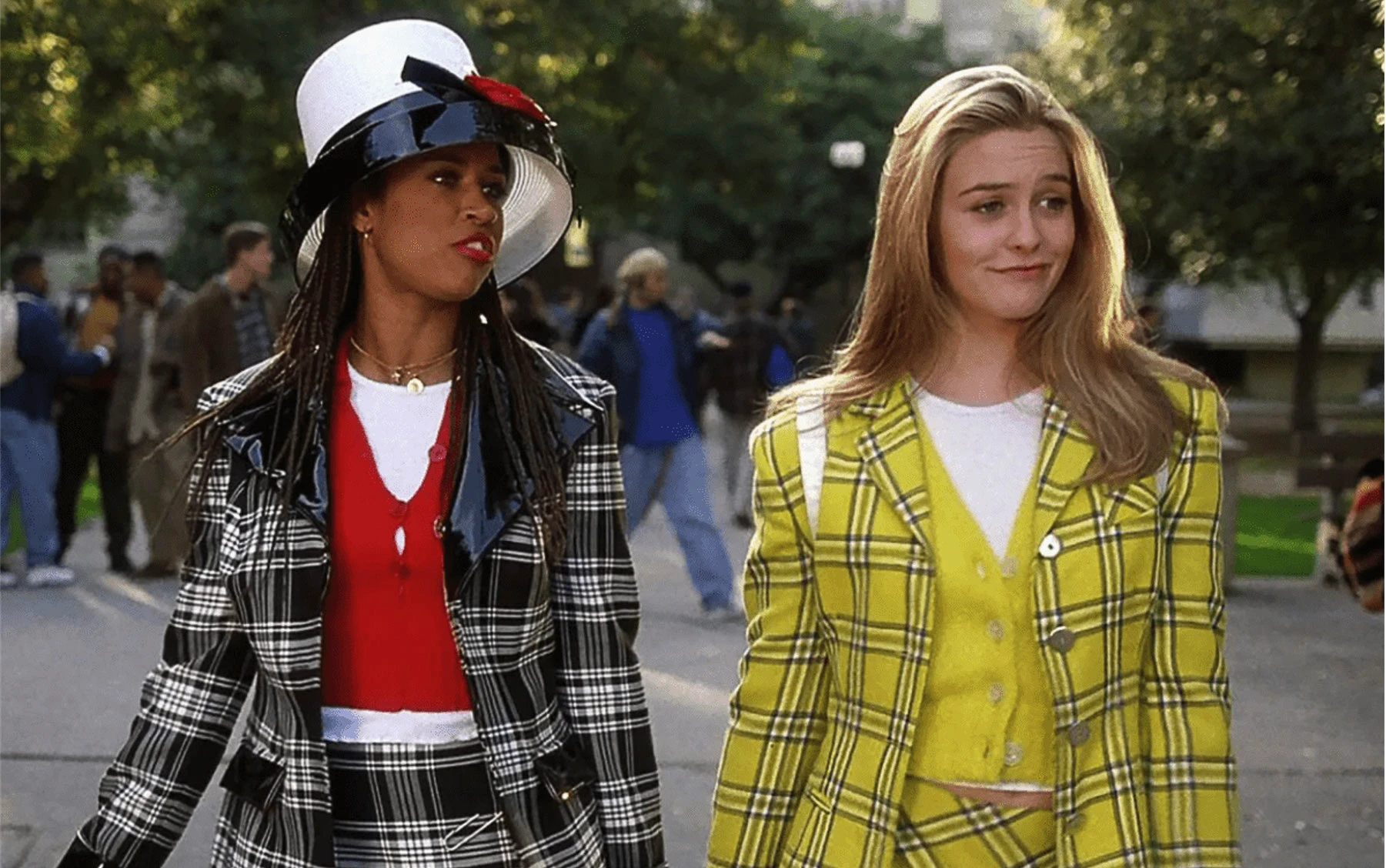
Despite Cher’s potential for good, she’s still a sheltered, privileged kid whose entire world has fallen into the conventional consumerist traps. She goes shopping whenever and for whatever she wants; she doesn’t worry about money; she gets jealous over others’ happy relationships and protests against high school boys; she drives recklessly; she argues her way through just about everything (“…I figure these grades are just a jumping off point to start negotiations,” she relents to her father about her improved grades); she likes attention and being popular; she’s even so Clueless that going into shady LA alleys at night isn’t an automatic no. Just about everything good she does for others is meant to benefit her, and she doesn’t realize the consequences she leaves in her wake for others. That is, not until she has some wake-up calls, experiences dynamic shifts, and realizes what she’s truly struggling with. That’s where her ex-step-brother Josh comes in.
Josh is the steady hand that Cher needs throughout to feel she can stabilize her woes. Reintroducing himself into her life initially as her step-brother, she maintains a steady boundary: “You’re not my brother!” Thus, as close friends, they poke fun at each other—”You look like Pippi Longstocking,” Cher spouts with a smile, to which Josh warmly replies with, “Well you look like Forrest Gump”—criticize where they should, and show their true selves to each other. Instead of hiding behind the popular girl persona Cher often does at school, she shows her more compassionate and funny side with Josh because he himself is more empathetic and put together, as demonstrated by his legal passion: “Yeah, I think I want to do environmental law,” he says straightforward before shutting down Cher’s followed banter with more eco-passion and continuing to help Melvin with work for more experience. He talks to Cher about her issues exactly how they are, without insult: “If I ever saw you do anything that wasn’t ninety percent selfish, I’d die of shock;” “I’d like to see you have a little bit of direction.” They’re comfortable with being vulnerable with each other, which Cher only later realizes drives her eventual increase in do-goodery. As she sheds her old life of popularity and looks partly not by choice, voluntarily spends her time at food shelters and helping others, and explores romantic avenues with a gay man before realizing his homosexuality, she discovers an insane truth: that she is “majorly, totally, butt crazy in love with Josh!”—and seemingly for morally good reasons.
Altogether, along with top-notch bits of fear-based camaraderie (eg, she does the worst you can on a driver’s test, a result every license-savvy kid fears), a hilarious ensemble cast and set of characters, Heckerling’s Clueless is deft, layered, and intentional without losing its humor or aim. While the ethicality of Josh and Cher’s feelings for each other is hazy (they were step-siblings at one point!), some engendering social norms like women as caretakers are unfortunately still enforced, and not every scene blends as smoothly as hoped, Clueless is a heartfelt, iconic, zesty classic coming-of-age tale. For comedy fans, cast fans, Heckerling fans, and those looking for a light but impactful romp, Clueless is a great pick.
1995
dir. Amy Heckerling
97 min.
Screens Monday, September 15, 6:00 p.m. @ The Brattle Theatre
Craft-welcome screening co-presented by gather here