The best thing I can say to convince you to see Casablanca on the big screen is to admit this: I am incapable of stringing together a series of words good enough to do this film justice.
At its core, Casablanca is a warless war film. It’s set in bars rather than battlefields. It’s a film that explores how relationships wither and warp under an authoritarian arm, how war can join people together and how war can just as easily take them away. Genreless, Casablanca offers so much. Known for its romance, the film might sweep you off your feet just as easily with its tales of espionage, waves of political thrill, middle fingers to the Nazi party. You’ll fail to find 103 minutes more worth your time.
Casablanca is a film with answers. Eighty-three years since the film’s 1942 release, fascism has once again found populist footing on a global scale. Militarized federal officers round up political scapegoats. People disappear. Communities are terrorized. Fear rains. And those with just enough privilege to not be rounded up themselves are often paralyzed: left wondering what you could possibly do when there’s somuch to do — and yet, it often seems insurmountable, Sisyphean.
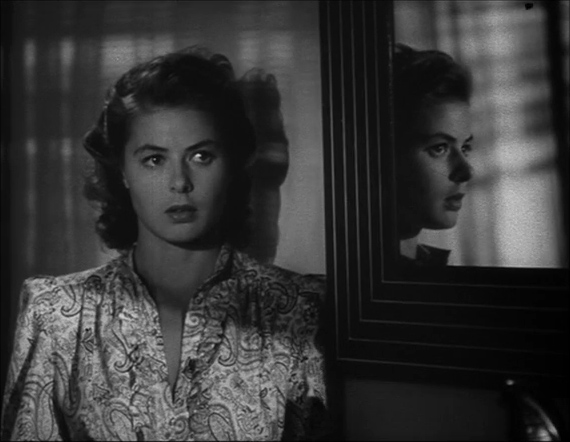
To this, Casablanca says the following: your duty is to do what you can, to help the people in your little corner of the globe. Help the young couple hoping to acquire exit visas. Allow La Marseillaise to drown out Die Wacht am Rhein. Make the sacrifice, help those around you, but don’t wall yourself off from life. Go to Paris. Fall in love with Ingrid Bergman if you have the chance. But when you’re on the tarmac and a Nazi Major is en route to arrest you, don’t forget that the problems of three little people don’t amount to a hill of beans in this crazy world.
A couple weeks back, I found myself in Los Angeles with a dear friend. He blocked off his calendar, and said, “We’ll do whatever you want for as long as you’re here.” I’d arrived in L.A. unspooled. Personal crises mounted. My friend, the type that anybody is lucky to have, insisted on my visitation, offered me his time, his couch, repertory screening after repertory screening. We bounced from AMCs in Burbank to Vidiots in Eagle Rock, and even a matinee at the New Beverly. Eventually, our exploits brought us to the Museum of the Academy of Motion Pictures. We meandered around the exhibitions, found Porgs (yes, the adorable little Star Wars birds), and a wonderful room-sized collection of the great Bong Joon Ho’s storyboards. Bong’s detail enamored me. It’s art that inspires. From the Bong exhibit, I began to meander off on my own. Soon I stumbled into a room — a world — that I knew all too well. An enormous mural on a wall. There’s that certain shade of grey. Shadow contours a jawline that could only belong to Ingrid Bergman. There’s a globe — the — globe! In this world I became immersed. It’s a world I’d seen a thousand times on film. But now I’m able to step inside it.
And then I pivoted around. Against the wall, protected by glass, sat Sam’s piano. The one on which he plays “As Time Goes By.”
You must remember this
A kiss is just a kiss
A sigh is just a sigh
The fundamental things apply as time goes by
And it all comes back, all those memories you associate with your favorite movie, the emotion, the love, the feeling of warm nostalgia, of comfort, of understanding. Before I knew it, tears filled my eyes. Unthinking, I ran though the Academy Museum, past the costumes from Barbie, through the world of Bong. Back to Eduardo. Reaching out, I pulled him back to the world of Casablanca — feeling a deep need to share the experience of such strong emotion with somebody else.
A film that can stir up all that is certainly a film worth watching.
Casablanca
1942
dir. Michael Curtiz
103 min.
Screening Tuesday, 11/25, 7:00pm @ Capitol Theatre
Part of the repertory series: Capitol at 100