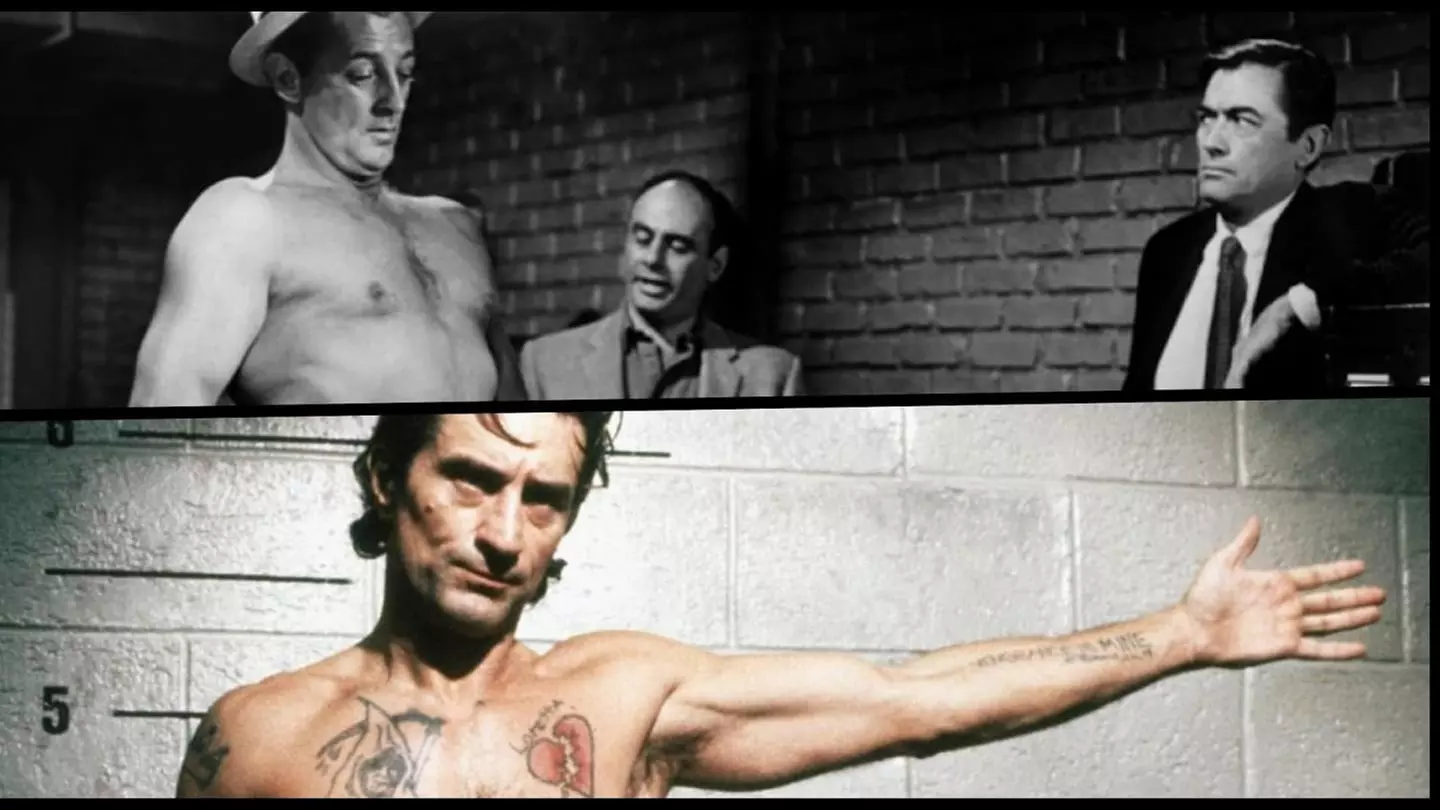
Both Cape Fear flicks are extraodinary displays of revenge and the variety of effects it throws at its victims. Directors J. Lee Thompson and Martin Scorsese mesmerizingly illuminate the minds of monsters in the smart psycho Max Cady (Robert Mitchum in the original, Robert De Niro in the remake), providing audiences—especially in the ’91 version—with a boatload of chills, thrills, and genuine fright from a man who toys with his prey instead of tortures them. They both follow the same premise: a lawyer named Sam Bowden (Gregory Peck in ’62, Nick Nolte in ’91) goes about his rounds in the courthouse, when he’s randomly approached by a recently freed ex-convict Cady, who he represented years prior. Slick-spoken and coyly angry, Cady makes clear to Bowden that he plans to get his revenge after being locked away for years, which he follows up with smartly woven crimes against the Bowden family that the law cannot intervene in. Eventually, with the law increasingly against him thanks to Cady’s strategies and years of studying law in prison, Bowden and his family must take the law into their own hands to stop Cady from killing them all, or worse.
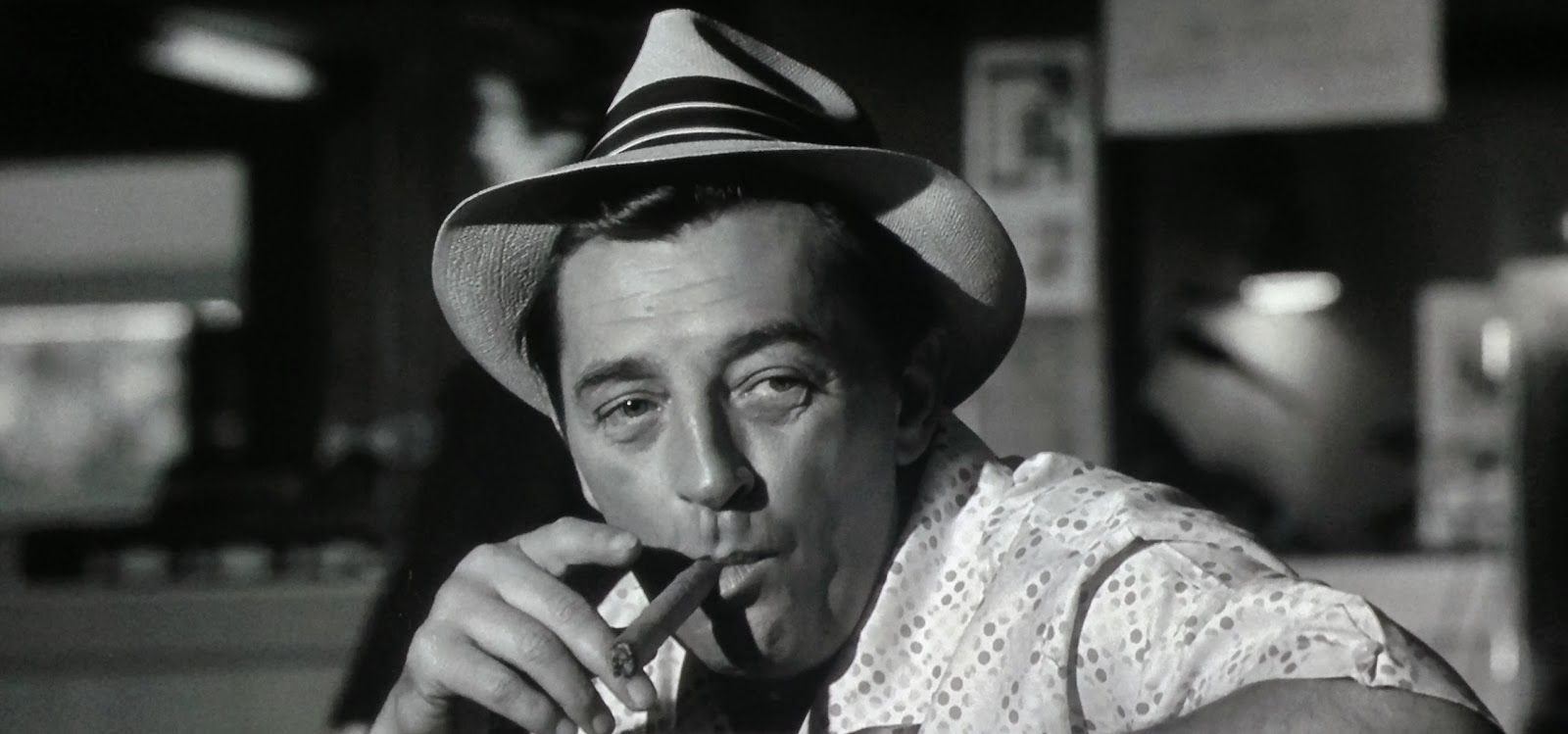
Both Cape Fear films toy around with the usefulness of the law, heightening the danger the Bowden family finds itself in and upping the creepiness and terror of everything for viewers. The original, with embellishing performances from Peck and Mitchum as the respective lawyer and once-defendant, an environment filled with potential Cady hiding spots, and sharpened dialogue that enhances the duo’s respective ferocity and intelligence, questions the law’s ability to stop crimes. The ’62 film establishes Cady as a smart, womanizing killer who doesn’t care about anyone standing in his way: “I’m gonna give you just one hour to get rid of your friends,” he says to a girl in a bar, trying to pick her up as he’s getting escorted by police outside for questioning. Cady knows exactly how the law works and what it encourages and discourages, using it to his fearless, selfish advantage when and where he can. For example, when he’s taken in for questioning, Cady insists he’s a cooperative guy and abiding by the law: “I suppose you expected me to object to a strip search, didn’t ya, Chief? No, siree, not me. Like I said, I’m a cooperative guy.” By maintaining his being a “cooperative guy” in front of the police, he discredit’s Bowden’s case and illustrates to the cops he’s either too smart for them or just a harmless creep and blabber mouth—allowing him to stalk Bowden, break into his home, and attempt to rape and mutilate Bowden’s family all he pleases. Even as Bowden pleads to officers and the chief of police that Cady is a madman, he gets reminded that there’s nothing the law can do: “You can’t put a man in jail for what he might do [or might’ve done].” In setting up a sharp-tacked serial killer in Cady and illustrating how such a man can do whatever he wants if he knows the rules and how to get around them, director J. Lee Thompson’s Cape Fear scarily highlights at least the U.S.’s legal pitfalls and how easy it is for those with a crooked will to find a worse way. “Well that’s a hell of a note, isn’t it? Either we have too many laws or not enough,” chief of police Mark Dutton (Martin Balsam) remarks in response to Bowden’s complaints about his being abandoned by the law. While not every scene sparks, and the polished old cinema feel can dampen the overall tension, the ’62 Cape Fear is an enticing look into the law and a psycho’s almost animal-like mind.
That’s where director Martin Scorsese’s Cape Fear comes in. Taking the original concept and set of characters, Scorsese and screenwriter Wesley Strick beef everything up. Cady (De Niro) is now a racist, confederacy-loving, God-fearing sexist and rapist whose time in jail has left him angered at Bowden for all his lost time. With tremendous help from De Niro’s show-stealing performance as Cady—who elegantly ranges from stern, self-confident and angered to deceptively kind and understanding at a moment’s notice—Scorsese’s Cape Fear adds religious themes, marital disputes, and coming-of-age vulnerability into the mix. Cady is much more racistly religiously inclined this time around; with iron crosses and different religious extremist quotes tattooed all over his body, and the film opening on framed photos of Hitler and Stalin above the tattooed Cady in prison, it’s clear he’s an extremist of hate. Once he starts stalking Bowden and the family, with De Niro slinging around a smooth southern charm in an attempt from Cady to disguise his otherwise cruel nature, religion gets thrown around everywhere. For example, at one rare point of panicked animosity towards Bowden, Cady reprimands the lawyer in the eyes of God while pointing a gun at his head and holding the man’s family hostage: “A counselor should zealously defend his clients under the rights of the law! And I find you guilty counselor! Guilty of betraying your fellow man! Guilty of betraying your country! Guilty of abrogatin’ your oath! Guilty of judging me and selling me out! And with the power vested in me by the kingdom of God, I sentence you the ninth circle of hell.” That ninth circle is reached several times over the course of Cape Fear, as Cady’s actions further and further deteriorate Bowden’s professional and personal life and is only reinforced as the cops and legal system also use God to excuse Cady and reprimand Bowden.
Bowden’s independent actions make this religious component and Cady’s treachery even harder to ignore, as unlike in the ’62 original he is a sinfully imperfect husband and imperfect father. For example, towards the beginning of the film, Bowden plays tennis with another woman. While they have fun, he tells her they have to stop because “My wife doesn’t even know you exist, which most certainly for the best.” Such adultery is not only used against Bowden by Cady as he rapes and beats this woman later on, but it also enrages his wife when she finds out from his calling the woman in front of her: “Well, I just don’t know what I hate more: that stupid tone or your stupid, sophomoric infidelities. Who was that, huh? The girl that got beat up…? And what, you’re fucking her?” Adultery is a widely known sin in the Bible, and Cady knows exactly what he did by beating the other woman up to meddle in the Bowden marriage. This marital trauma of course also affects Danielle, who’s forced to deal with the weight of her parents’ constant bickers without getting their support—another issue Cady acknowledges and uses to his advantage. As simultaneously the marriage gets worse and Danielle feels undervalued as an actual adult instead of a child by her parents, Cady swoops in and seduces her with kind words and statements of independence yearning: “… Your parents, they judged you. They got plenty angry at you didn’t they…? They punished you for their sins. And you resent that. And you should resent it. But Professor Do-Right has a little advice for you. You shouldn’t damn ‘em. Don’t judge ‘em. Just forgive ‘em, for they know not what they do.” Cady’s more personal manipulation of the Bowden family, along with the more fleshed out set of characters and De Niro’s overwhelmingly tense take on Cady, makes Scorsese’s Cape Fear an enthralling, sinister, and thematic remake that surpasses the original’s already well-done terror.
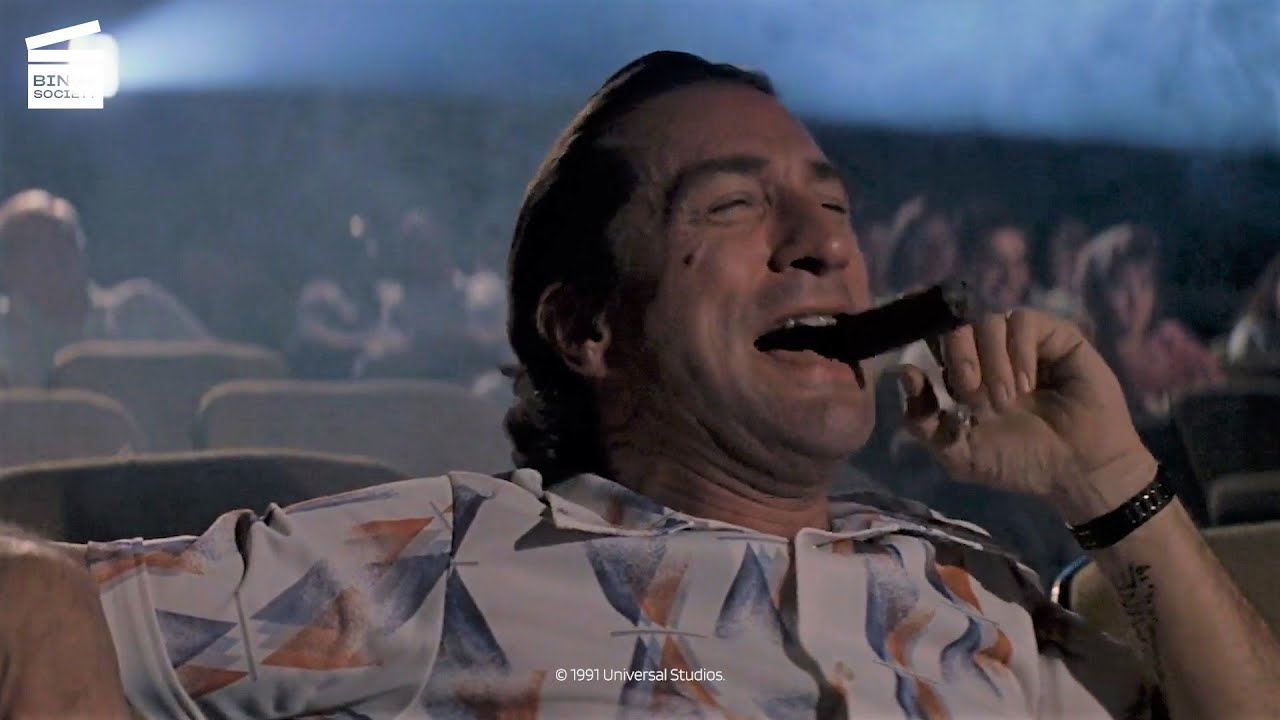
While both films make strong cases for U.S. legal loopholes, the ’91 remake eloquently changes the ending to deepen the toll Cady wrought and permanently left on the Bowden family. The original ends in Bowden reverting back to his lawful ways, deciding life in prison is better than death: “We’re gonna take good care of you. We’re gonna nurse you back to health, and you’re strong, Cady. You’re gonna live a long life in a cage. That’s where you belong. And that’s where you’re going. And this time, for life! Bang your head against the walls! Count the years, the months, the hours until the day you rot.” It’s a more holistic ending to a more polished, Hollywood-esque take on vengeance and lawlessness. Meanwhile, the ’91 remake just sees the entire family traumatized, with Bowden desperately attempting to beat Cady’s head in with a rock to no avail. “We’re just two lawyers working it out!” a body-burned, at-wits-end Cady screams as he returns the favor with a rock to Bowden’s face. While the original hints at Cady’s animosity as he prowls around the Bowden houseboat on all fours, the remake doubles down by making both Bowden and Cady savage, unrelenting animals trying to kill their enemies at film’s end. As Cady floats off and slowly drowns whilst death glaring at Bowden, a traumatized Danielle details Cady’s longlasting effects whilst huddled with her family in the mud: “We never spoke about what happened. At least, not to each other. Fear, I suppose, that to remember his name, or what he did, would mean letting him into our dreams…. Things won’t ever be the way they were before he came. But that’s all right. Because if you hang onto the past, you die a little everyday. And for myself, I know I’d rather live. The end.” Thus, the ’91 remake reinvents the ending to expand on the law’s pitfalls, a psycho’s devastating affects on victims, and how unimportant—but nonetheless felt—issues like marriage, affairs, and coming-of-age are in the face of terrorizing, relentless danger. Danielle blankly gazes into the camera almost the same way Cady does in the film’s opener and at other points, showing he succeeded in teaching the Bowden family about his pain.
Thus, while the original film suffers from occasional logical lapses and an overly polished narrative, and the latter suffers from occasional melodrama, a slow pace and a dreadfully flat performance from Juliette Lewis as Danielle (aside from her opening and closing monologues), the Cape Fear duo is a morally and legally provoking set of thrillers demonstrative of vengeance’s weight on all parties involved. De Niro’s mightily sickened take on Max Cady alone makes for a remarkably scary time at the movies, but for thriller fans, Mitchum, Peck and De Niro fans, fans of Scorsese’s directorial work, and those looking for smarter thrills, both Cape Fears are worth watching and squirming over.
1962
dir. J. Lee Thomspon
106 min.
Screens Monday, 8/25, 7:00 p.m. @ Somerville Theatre
Double feature w/ Cape Fear (1991)
1991
dir. Martin Scorsese
128 min.
Screens Monday, 8/15, 9:00 p.m. @ Somerville Theatre
Double Feature w/ Cape Fear (1962)
Part of the ongoing repertory series: The Great Remakes