Blazing Saddles is an uproarious and sharply meta, spoof of Western films and racism with more than enough heart and humor to satisfy. Though not as tacit as it probably should’ve been, Saddles shines thanks to boisterous performances, a firm anti-racist and pro-community undertone, meta criticisms, and an unrelenting laugh-out-loudness. In all its glitzy vulgarities, Saddles is arguably Mel Brooks’ best film, as it fourth-wall breaks, parodies, and modernizes age-old genres and stereotypes, poking fun at the stupidity of it all without abandoning solid characters, firm social critique, and effectively lighthearted performances.
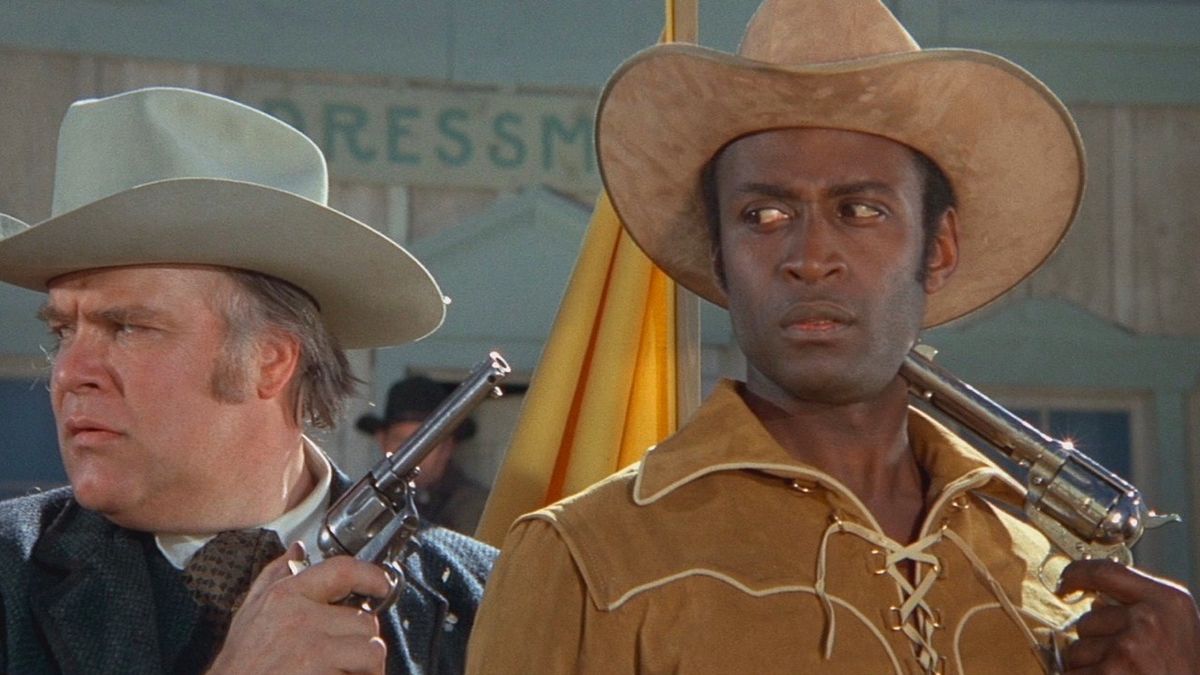
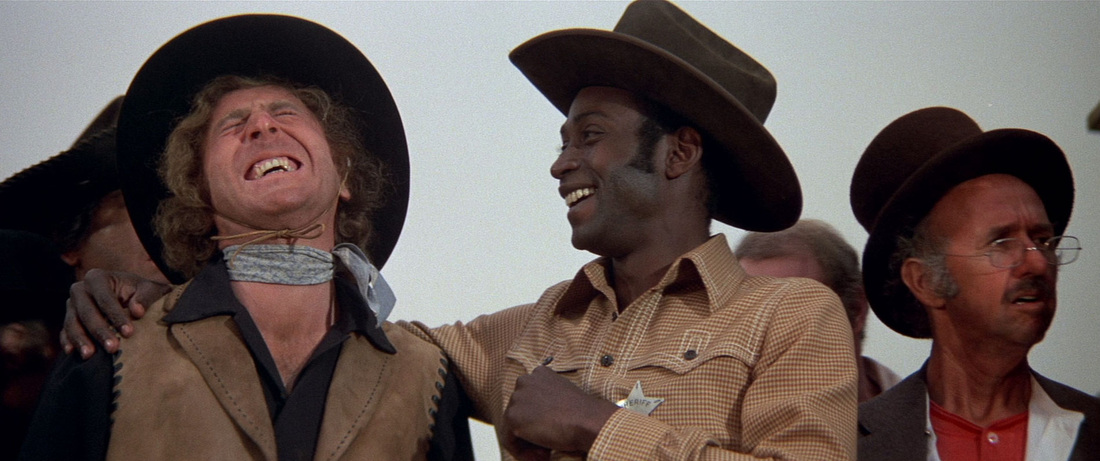
In the post-Reconstruction era of 1874, a railroad construction company—one that gives all hard work to legally freed Black laborers who get mentally whipped by their white, thuggish bosses at every chance—decides to reroute their current project through the nearby town of Rock Ridge to avoid quicksand. The territorial/state attorney general, Hedley Lamarr (Harvey Korman), discovers the millions of dollars in property taxes and revenue the tracks would bring to Rock Ridge, so he devises a plan to drive Rock Ridge’s residents out. After sending his band of white, racist railroad supervisors to kill Rock Ridge’s current sheriff, Lamarr devises a plan to replace said sheriff with one of his Black workers—a charming, upstanding Black cowboy named Bart (Cleavon Little)—to ultimately cause the all-white town to tear itself apart over their new Black authority figure. Met with hostility, Bart cleverly holds himself hostage into the sheriff’s station (because of course the town’s collective IQ is in the double digits) and teams up with the one unracist fellow around, a local drunk and former gunslinger called the Waco Kid, or Jim (Gene Wilder), to take down the town’s stupidest but strongest foe, the dim-witted Mongo (Alex Karras). Winning the town over, Bart helps both the town revitalize itself and Jim live up to his old, fastest-hands-in-the-West name through a series of gags, fourth-wall-breaking takedowns, and a classically satirical journey through racism’s ridiculousness.
Mel Brooks has had a long, varied, and mostly steady career in satire moviemaking. From hits like The Producers and History of the World, Part I to Saddles and his Star Wars spoof Spaceballs (which is finally getting a sequel well past the immortal Brooks’ 100th birthday!), he’s been known to make some of Hollywood’s most successful cinematic parodies. Blazing Saddles, one of his earlier works, is arguably his most significant. Unlike some of Brooks’ other works that parody for parody’s sake, Blazing Saddles parodies everything with intent. From specific actors or movie studios to genres, settings, racism, and white stereotypes of everyone else, Brooks makes a very basic (yet, unfortunately, still needed) point: racism is evil. By aiming his Brooks-typical, lowbrow, vulgar humor at disgustingly lower-brow behaviors, Brooks demonstrates that stereotyping is wrong, though it can and should be used against the unoppressed.
As cascading, crop-colored fields and dots of green trees contrast with the rustic browns and grays of their dirt-smeared railroads and pickaxes, their white, redneck supervisors approach their solely non-white workers laughing, saying as a stereotypical Chinese man faints, “Come on, boys, the way you’re lolly gaggin’ with them picks and them shovels, you’d think it was 120 degrees. Can’t be more than 114! Dock that [Chinese slur] a day’s pay for napping on the job.” They laugh off any cruelty their non-white workers endure, dressing far better than their piggishly infantile behavior deserves. Then there’s Bart, who merely stares them down with a smile as they immediately spit to their Black workers, “I don’t hear no singin’! When you was slaves, you sang like birds. Come on, how about a good ol’ [Black slur] work song?” Instead of getting violent or caving, Bart simply takes his hat off and begins singing beautifully harmonized Jazz, the likes of which their white trash supervisors have probably never even heard. When asked for a different song, Bart and co. act stupid to the point of making their supervisors break out in song themselves before their boss—Mr. Taggart (Slim Pickens), Lamarr’s henchman—shouts everyone back to their posts. As he later cares for his friends in camp, Bart continues to demonstrate his smart, refined appeal, as he’s both coolly resistant to his idiotic white supervisors but loyal and funny with others. Carrying that hard-earned, humble confidence, even with Blazing Saddles‘ boatload of gags, makes Bart a suave cowboy to root for as he gets thrown into an entire town of dumb bigots. Watching him help Jim rediscover his gunslinging spark and the town grow beyond racial hatred is both sweetly satisfying and stereotype-breaking in the most charmingly klutzy way.
Combined with Little’s wonderfully elastic take, Wilder’s deliberately uneven portrayal of the Waco Kid, a wacky ensemble of parodies and references (including Brooks playing several parts, like a parody of the French entertainer Le Petomane in the cross-eyed Governor William J. LP, whom Lamarr easily manipulates early on), loads of meta components amplifying the film’s freshness, and occasionally accurate takes on the pointlessness of stereotypes, and Blazing Saddles lives up to its title. Saddles does harbor some major issues—the gags can overwhelm, representations of women, gay people, and a few other minorities can feel like ol’ racist, sexist, or homo/transphobic caricaturization, and the meta ending can confuse. Still, it’s mostly a lighthearted satirization of Wild West movies, racism, xenophobia, greed, and governmental corruption. Even though Lamarr’s “… risking an almost certain Academy Award nomination for Best Supporting Actor” failed to get him or his actor even nominated, Blazing Saddles is a remarkable feat of laughing at evil. As the Trump administration continues riling up such hate across the U.S.—from Trump and other officials’ personal nasty remarks to policy choices outlawing trans and predominantly non-white immigrants—Blazing Saddles‘ core message is of utmost importance. Whatever you do, don’t stop making fun of and humiliating the often dim-witted individuals spewing garbage disposal-worthy bigoted nonsense. Bart didn’t, and he thrived. Blazing Saddles reminds us that laughter, solidarity, and genuine care for others take you much farther than hatred and fear, and that most of the time, the bigots are Blazing idiots in some way or another.
1974
dir. Mel Brooks
93 min.
Screens Tuesday, 4/7, 7:00 p.m. @ Coolidge Corner Theatre
Part of the ongoing Mel Brooks April centennial celebration series