Oh to have a Lester Bangs in my life.
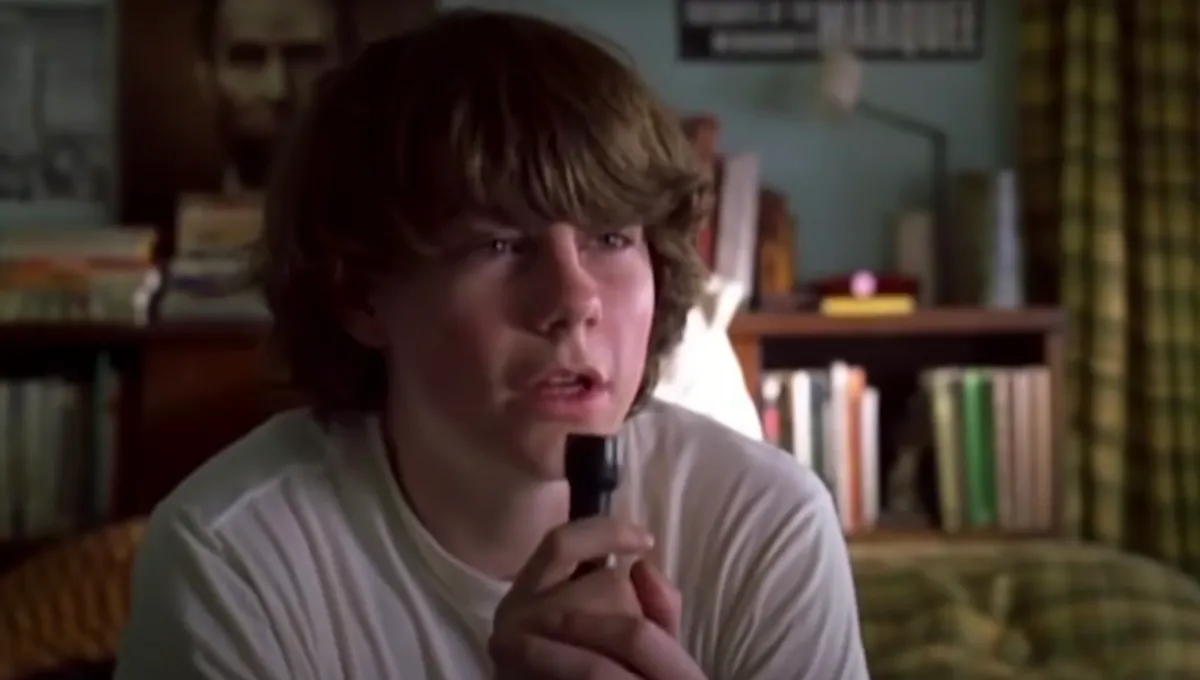
The Creem Magazine editor, played elegantly by Philip Seymour Hoffman, is something of a journalistic Gandalf for young William Miller. William is the protagonist of Almost Famous. He’s the audience surrogate, the viewer’s window into the world of early ’70s rock ‘n’ roll. The 15-year-old journalist attempts to write a Rolling Stone profile about Stillwater, a fictional, Led Zeppelin-esque band touring the country. Though Hoffman appears in just a handful of scenes, it’s him who I think about whenever I think of this movie.
William doesn’t fit in. He’s two years younger than everyone else at school. He’s too culturally curious for his mom to understand him. He’s too respectful for his sister to relate. When he’s with Stillwater, the band dubs him “the enemy” when they learn he writes for Rolling Stone. With Penny Lane and the “band aids” (not “groupies”), he’s too grounded in the real world, not detached enough. It’s as if William has one foot in two worlds while everyone else is swimming in a version of reality they’ve distorted to ease their own hearts and minds.
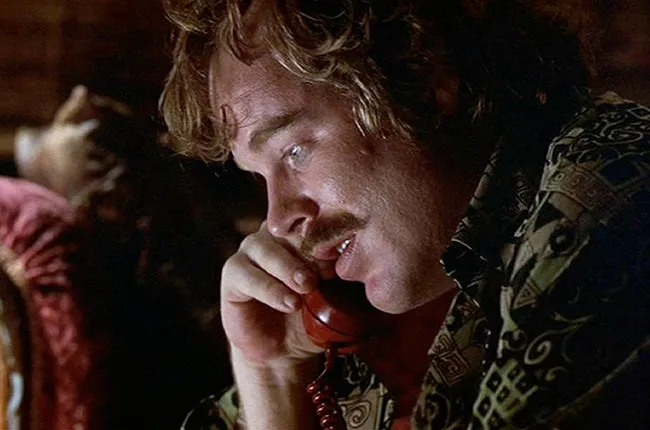
Except for Lester Bangs. We’re first introduced to the over-opinionated eccentric rock journalist as William watches him opine on an early morning San Diego radio show. He is quite possibly my favorite character in film history, with his only fault being a dismissive critique of Morrison Hotel: “The Doors?” he scoffs, “Jim Morrison? He’s a drunken buffoon posing as a poet.”
In Bangs’ world, liking Lou Reed is a prerequisite to taste. He wears shirts that say “Detroit Sucks.” He’s up late on his own, always writing, always listening to music. “I’m always home. I’m uncool,” he says to William later in the film. “The only true currency in this bankrupt world is what you share with someone else when you’re uncool.”
And so he shares it—everything—with William, all the musings he’s got. He sees something in this kid, perhaps a sliver of a younger self. Whatever it is, it’s enough for Bangs to take William under his wing, to protect him from the hurricane that is SoCal’s rock ‘n’ roll underbelly. “Fuckin’ nothing about you that’s controversial, man. God, it’s gonna get ugly, man,” he says. Then he bestows upon William something I’ve come to understand as Bangs’ journalistic north star: “You have to make your reputation,” he says to the 15-year-old across the table from him, “on being honest and unmerciful.”
This interaction with Bangs is the first in line of a whole slurry of advice-giving tête-à-têtes William has with the film’s ensemble cast. But for William, it’s the most valuable of all these conversations. His mom wants him to forgo the world of rock ‘n roll. His sister wants him to forgo his mother’s tight grip. Stillwater wants him to “just make us look cool.” Even Penny Lane, the leader of the band-aids with whom William becomes infatuated, offers him skewed guidance: “If you never take it seriously, you never get hurt; you never get hurt, you always have fun,” she says.
William is stuck in a place I think we’ve all been. You’re new in a space. You’re new in a world. And you really do admire those around you. Or at least you think you do. Perhaps it’s just a projected infatuation with the world in which they reside, but you’re captivated by them all. They’re telling you how to live your life while, all the while, you’re trying to figure out how you want to live your life. It’s a constant whirlwind, a maelstrom of inputs and pressures both internal and external.
It’s not that William needs to learn who to listen to, though that helps. Rather he needs to learn which guidance to hold close to his heart and which musings he can afford to let wash over him. William must decide for himself what counsel syncs with his sense of self. He needs to absorb it all, siphon some out, and take with him the pieces that mirror his heart.
Perhaps he can be honest without being unmerciful. Idealistic without being detached from reality. Perhaps he can love rock ‘n’ roll but not the sanctimonious artistic posturing of rockstars and musicians.
I see a great deal of myself in William. I too fell in love with the world of journalism and became all too infatuated by my subjects. It’s a job with two duties: you’re either speaking with someone or you’re writing—two things I properly love. But I don’t see myself as a true journalist. My compass doesn’t ceaselessly point north toward some elusive objective truth. I don’t really know where it points, but it doesn’t point to some closed off version of myself to present for interview subjects, and it certainly doesn’t point to the fact that I’m supposedly some neutral observer who hides behind a veil of objectivity to silo off my reporting from any opinions or bias I might have on a subject.
“You know all about us and I don’t know shit about you,” Russell Hammond, Stillwater’s “guitarist with mystique” says to William. It’s a one-off line, but in it, Hammond singlehandedly disarms the entire journalistic profession. To practice journalism by the book is to extract, to seek this thing called the truth at all costs, to be, as Bangs encourages, “honest and unmerciful.”
But William isn’t that. He’s honest for sure, but he’s also kind. He carries himself with a great deal of empathy. You could say he’s become too close to his subjects, I suppose. But is that really a bad thing? Two people connecting over a joint passion. Isn’t that the reason for it all?
Almost Famous
2000
dir. Cameron Crowe
124 min.
Screening Thursday, 2/26, 7pm @ Coolidge Corner Theatre
Part of the ongoing series: Cinema Jukebox
Presented in association with Emerson Colonial Theatre’s production of Stereophonics