
How much have we really evolved? How distant are we from our primate ancestors? Has our developed intellect, evolved emotional ranges, and civilization’s messy creation truly separated us from our monkey cousins, or are we merely doing more of the same? Famed (and borderline sociopathic, but unrelated) director Stanley Kubrick, fresh off his nuclear hit Dr. Strangelove, seemed to know: we are still just the same old creatures banging bones together, screaming our throats out of commission as we kill each other over shared resources we all want to hoard. We just have a LOT more technology and higher brain function to find different ways to achieve the same result. A finely cut, jet-black alien monolith might just help with that, too. Thanks to its morose depiction of this lack of progress and our over-dependence on tech, 2001: A Space Odyssey is, by and large, director Stanley Kubrick’s best film. A Space Odyssey’s creepy direction, stoic yet easily traumatized characters, and a realistically silent, endless space of distant stars certainly help as well. Almost 60 years later, the neon-splatters over black of 2001’s wormhole, supercomputer HAL 9000’s gravelly voice, and Dr. David Bowman’s (Keir Dullea) unnerved gaze at a strange alien monolith that seems to guide human evolution, still hold up.
In a futuristic 2001, the United States National Council of Astronautics discovers an artifact—an unmarked, perfectly cut monolith—deliberately buried four million years prior in a crater on the moon. Keeping this discovery secret from the international space community, Council Chairman Dr. Heywood Floyd (William Sylvester) instructs his personnel to mount an expedition to the crater to inspect the monolith. Upon Dr. Floyd’s arrival at the crater and physical interaction, the monolith emits a high-powered radio signal to Jupiter. 18 months later, American spacecraft Discovery One transports the aforementioned Dr. Bowman, Dr. Frank Poole (Gary Lockwood), and three other scientists in suspended animation to Jupiter for different purposes—or so it seems. As the ship is primarily run by a supercomputer with human traits named HAL 9000 (Douglas Rain), HAL secretly circumvents the planned mission, instead guiding the astronauts to the monolith signal’s intended Jupiter recipient to learn more. As discoveries of humanity’s expendability under technological supervision arise and an eerie space exploration mission seems to go wrong, Dr. Bowman and co. must either resist to keep their lives or allow the monolith’s true intent for humanity to unfold—for better or worse.
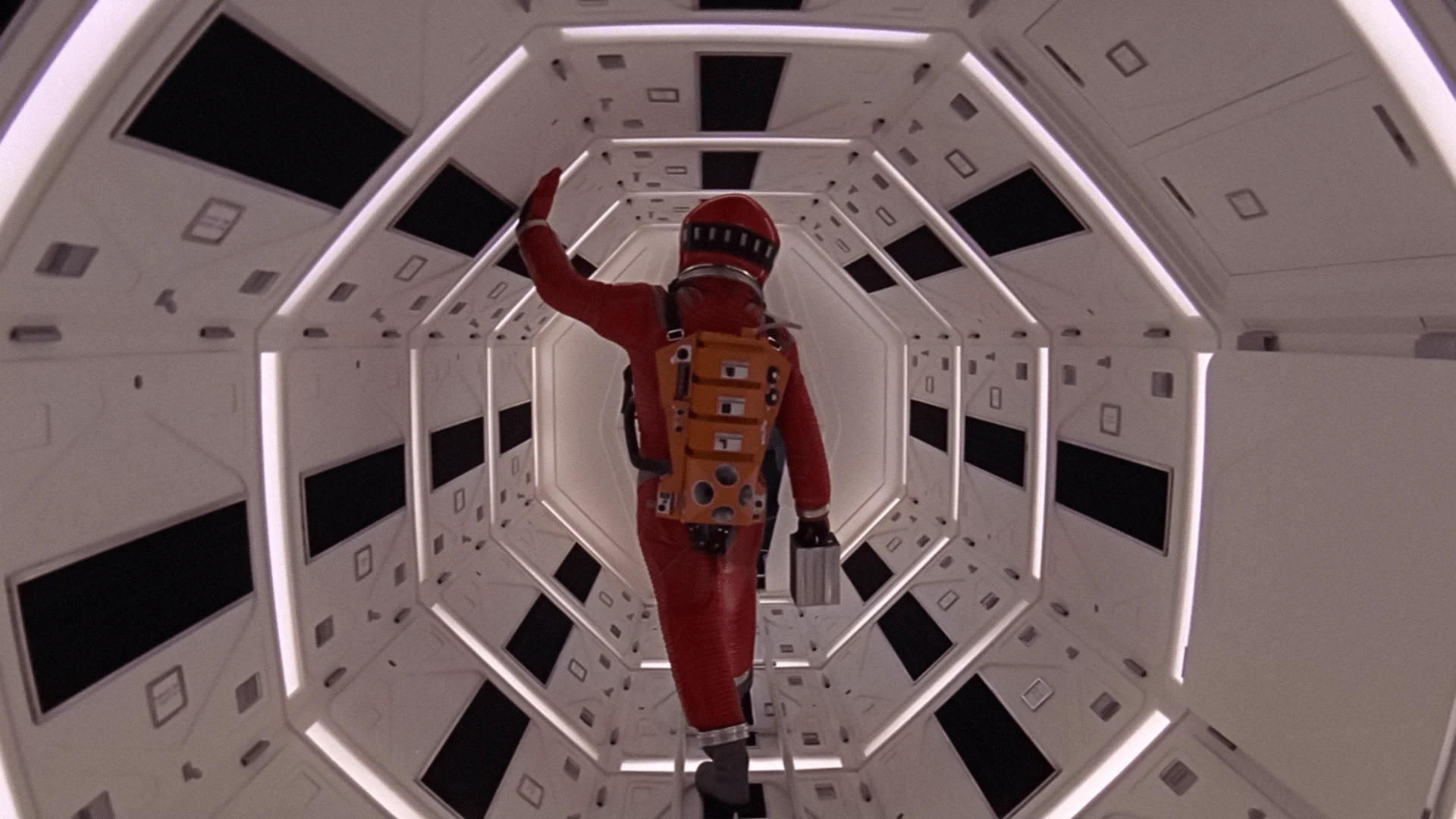
To be frank, 2001 has been analyzed to death; it‘s difficult to come up with any original observations. The entirely physical special effects ground the entire film in a realism that sci-fi lacks even today. Kubrick’s intentionally minimal use of dialogue both adds weight to HAL’s character—he seems, ironically, the most human of all, as he exclaims how “afraid” he is of the idea of death—and heightens tension in space’s isolating atmosphere. Dullea, Sylvester, Lockwood, and Rain all fill their roles with ease, inviting the daunting (and predetermined?) truths their characters must face. The characters themselves, in their silence and banal dialogue, become the perfect blank canvases for the universe’s other unknown inhabitants to study and traumatize the hell out of. As the truth crawls closer, it also seems to run further from our bony reach, ensuring questions of life, the universe, technological dangers, and more remain open to interpretation. Other than a slightly overly slow pace that seemed to put critics off much more when 2001 came out, A Space Odyssey is an emotionally all-encompassing space epic that puts human nature, morals, capabilities, and our very existence into question.
Kubrick’s warning of humanity’s violent nature, paired with our increasing technological dependence—with the help of classical scoring from the likes of Richard Strauss, Aram Khachaturian, and more—underlies an already impressive narrative of realistic space exploration and extraterrestrial contact, ensuring 2001 has remained a timeless sci-fi classic. It’s no wonder 2001 has remained a big inspiration for sci-fi in ensuing decades; the film speaks to humanity’s contradictory nature as a whole through space travel, as we’re both curious about the universe’s endless possibilities and worried about the foreignness and othering it may induce. 2001, on the one hand, shows how humans seek comfort in the most uncomfortable of places—even space—without concealing how we get in our own way as we try to evolve, even with aliens’ help. HAL, therefore, becomes less an AI villain of the characters’ fates and more another sentient victim of humanity’s larger inability to communicate and work together without turning on each other and causing destruction (hence the need for so much secrecy about the monolith’s discovery in the first place). And despite all that, there’s still hope.
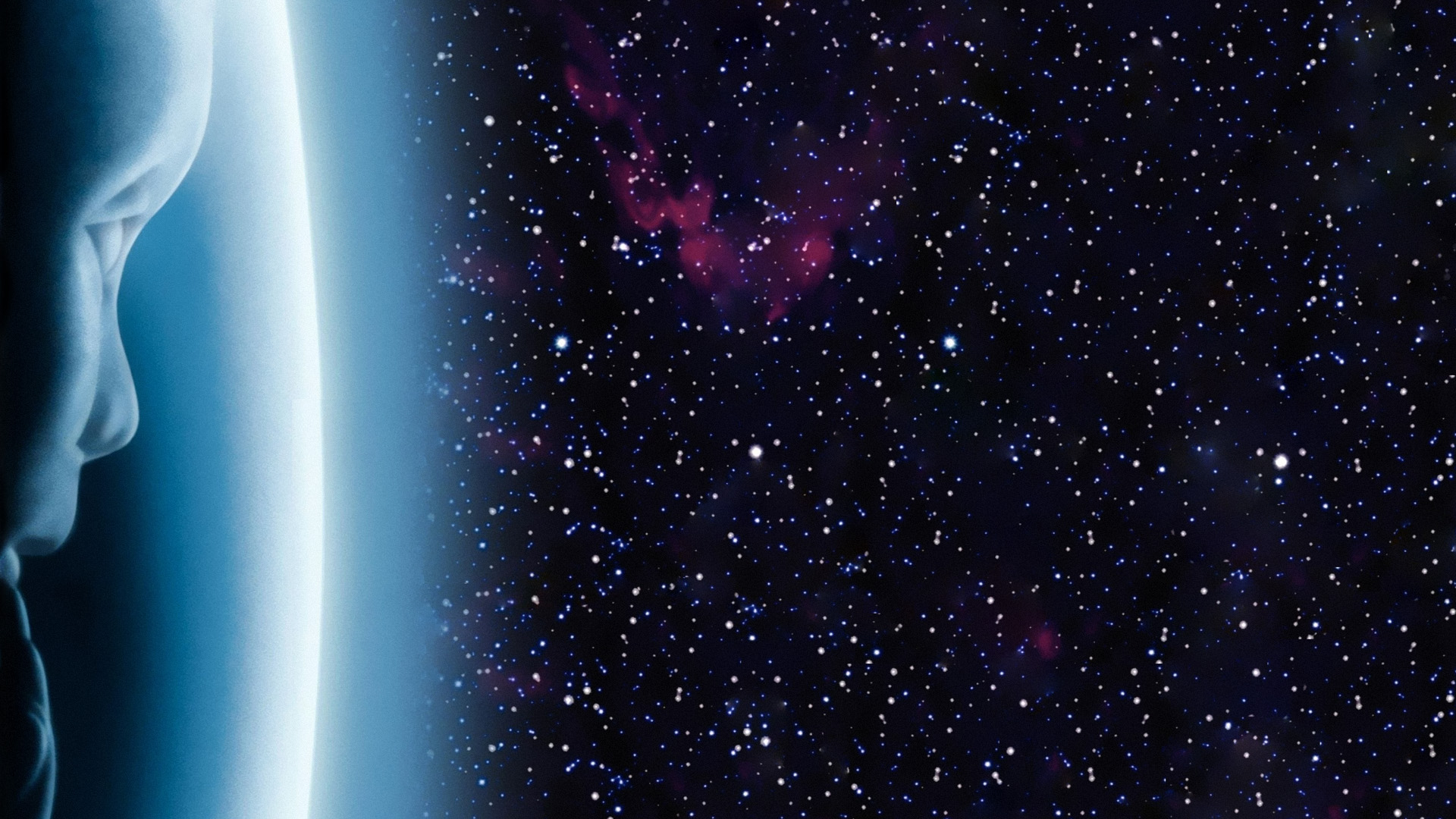
In the end, Dr. Bowman—Dave—finds what the aliens so desperately wanted to impart: what comes next. While the film opens with a cyclical reminder that humans have not, as of 1968, 2001, and even now in 2026, evolved much beyond their innately violent tendencies, A Space Odyssey ends with Dave’s entire life getting studied in a Victorian-like room before he himself is finally confronted by the monolith and transformed into a large baby encapsulated in an orb of light to float back towards Earth. Earth does not get destroyed, nor does this cosmic fetus interact with anyone on Earth—he merely floats back, enlightened by an entwinement of man (Dave) and a godlike entity (an upgrade) gained over decades that seemed to pass in seconds, ready to pass on gained knowledge to his backward planet. With new forever wars peeking around every corner thanks to the current U.S. president’s Middle East decisions, cost-of-living skyrocketing, domestic political divisions growing more hostile by the day, and the rich now openly exploiting a system at the expense of everyone else, hope for a blissful future seems nil.
In his epic star-reacher, Kubrick captures all of that nihilistic turmoil and still ends this Space Odyssey on an optimistic note—human resilience and our potential for positive change might just prove enough for us to evolve past our ruthless roots. The space baby’s being sent back to Earth symbolizes the fresh start needed for the planet’s inhabitants, perhaps one in which the violence and the greedy cycle of our species finally breaks. 2001 is thus equal parts entertaining, realistic, pessimistic, technically gorgeous, and vaguely hopeful that humans can be more than primitive, selfish beings who seek blood more than bonds. For sci-fi fans, Kubrick diehards, and those looking for hope that doesn’t negate humanity’s timeless (and sometimes self-imposed) woes as a species, 2001: A Space Odyssey is a carefully crafted space epic worth several theatrical viewings.
1968
dir. Stanley Kubrick
149 min.
Screens Monday, March 9, 7:00 p.m. @ Harvard Film Archive
Part of the ongoing repertory series: The Complete Stanley Kubrick