Diractors is an ongoing series in which Hassle writer Jack Draper examines films, new and old, whose directors are better known for their work in front of the camera.
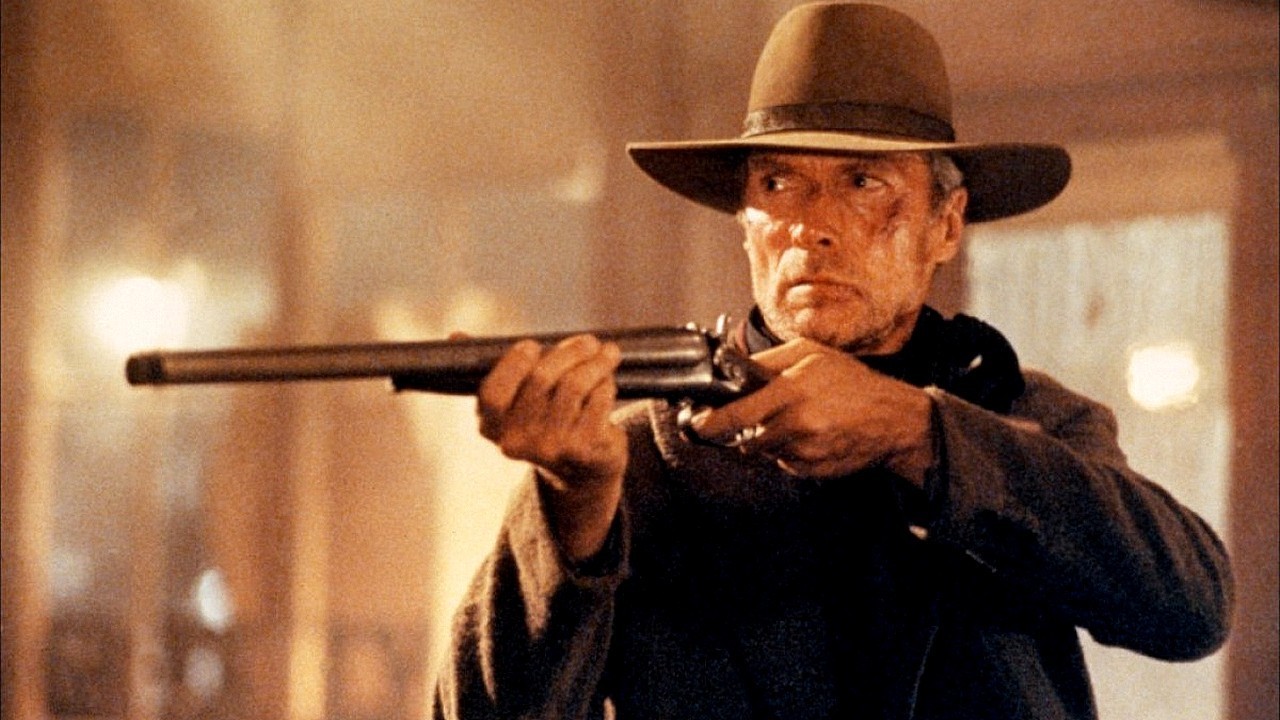
It’s a tired joke in 2025 to say that Clint Eastwood’s next project is his swan song, when his first true final bow was 32 years ago. Redefining the west simply unlocks something new to say for him, a final sentence to thirty years as a western hero on screen before this best picture win. As Roger Ebert details in his review, “If the Western was not dead, it was dying; audiences preferred science fiction and special effects.” What’s the heroic figure left to do? Would violence mean nothing? It’s a movie that’s got the weight of our lead character Munny already having the knowledge of how it’ll all end. No pleasure is taken for a second of what we see on screen.
You can go as far to say Unforgiven is not only the movie of Eastwood’s directing career, but the performance of his acting career. Munny lacks direction, only continuing through life doing what he thinks he should with no sense of purpose. Munny’s life comes into focus only when he hears about Ned (Morgan Freeman), who turns to Munny for a job against the men abusing a prostitute in Wyoming. The Schofield Kid (Jaimz Woolvett) alerts Munny to his help being needed to take down the wicked Sheriff Little Bill (the late Gene Hackman), which brings us to a meditation on morality, mortality, and legacy. And reader, its still so well plotted and paced that John Ford and Sergio Leone would be happy– thus the movie is dedicated to them.
What begins as a simple job becomes more personal as Munny is set on a course to avenge the death of Ned. A sequence of murders carried out by Munny and the Schofield Kid leads to the kid admitting to not being as ruthless of a killer he said. It’s this pivot that takes the movie from great to sublime. An excuse for violence and the act to reckon with it. A moment without much vigor but lots of conviction, a deep sense of melancholy and regret. It’s like the only place where Eastwood can go is beneath him from what he is best known for, famously. So much of what the movie has left behind is this idea of subversion and deconstruction. Ideas that permeate large amounts of film and TV that become the expectation for stories of heroism to be untraditional. Yet, like any other capital-G Great Movie, Unforgiven is stunning despite how clear its influence is on character and being in conversation with cinema of the past. Since this is a world without care for legacy or guilt, Eastwood feels freedom now to confront morality without much of a need to talk around something this vulnerable. Really, just a movie without vanity.
Only cinema’s great grandfather can achieve this first final chapter. This will be far from the last time we talk about Clint– truly one of the first people you think of when you think of a diractor– but there’s still more to discover. He has run the range of popularity: RNC chair incident, conservative filmmaker man, reclaimed by leftists online, synonymous with the western genre, handsome, grumpy and old. Like any auteur, his movies contain the same ideas, just in different shapes in order to say something new about America. In fact, incredibly successful movies for American audiences. This is seen as the most polished version.
Unforgiven
1992
dir. Clint Eastwood
130 min.
Currently streaming on Paramount+