
Diractors is an ongoing series in which Hassle writer Jack Draper examines films, new and old, whose directors are better known for their work in front of the camera.
When it comes to the most famous actors turned directors, there are a few names that come to mind As previous entries in Diractors have mentioned, Warren Beatty and Robert Redford are two classic examples of when a movie star grows into full creative control due to accrued cache. Reds and Ordinary People (both of which will be featured here soon) are considered some of the finest films of the ’80s, and both have a certain quality that requires them to be directed by these guys themselves, not just star them. Whatever people may think of Beatty’s and Redford’s debuts, the early ’80s were when we saw an increase in actors wearing multiple hats.
Another icon that was getting started around that same time is Rob Reiner. He is quietly one of the most famous diractors to do it, let alone directors, as he resembles someone intertwining acting and directing like Sydney Pollack. Reiner had an immaculate ten-year run, and near the end of it is Misery.
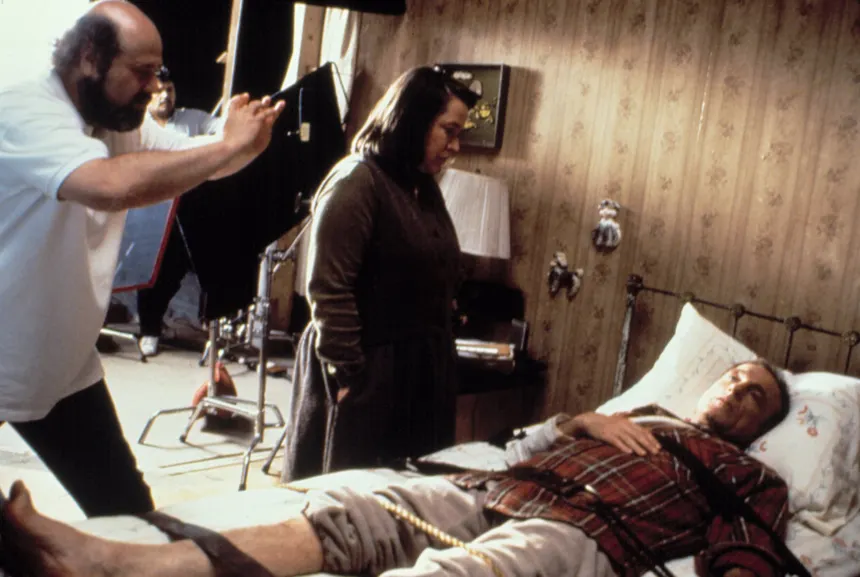
After already feeling comfortable in the world of Stephen King with Stand By Me, Reiner making Misery makes sense. Reiner has an easy, uncomplicated knack for storytelling, and Misery really hinges on its performances while telling you what its about. Reiner related deeply to King’s desire to reject himself as a “horror writer,” just as he was tired of just being known as the guy from All in the Family. Crucial are the performances of James Caan as Paul Sheldon and Kathy Bates as Annie Wilkes, who range from mouthpieces for ideas to complex people. The story of an author who gets into an auto accident and is subsequently rescued by a nurse is one that has had a pretty impressive cultural legacy, yet has taken on a different shape since its release 35 years ago. There’s such sadness within the movie, so much more than scares this time around. I hadn’t seen Misery for some time and what we remember from an iconic movie versus how it plays out is especially true here. There’s something else well observed from screenwriter William Goldman that people are incapable of talking to each other when things are simple.
Misery is so easy to apply to contemporary fandom that it is left ambiguous enough to not connect back to King. Pick any fandom and there’s an Annie out there that is even more protective about a creative choice than the original creator. The existence of online fan obsessives only enhances the series of consequences by stalkers than used to happen before then. The irony is that things have gotten so much worse by making everyone online have an equal voice. Annie is somewhat sympathetic and humanized by Bates, yet toxicity run by fandoms is expected. Baiting an audience can be even read as Paul’s pleasantries turned to self preservation to escape the desperation of when things were better. Real sympathy lies in Caan and the inability to maintain agency over your art to give into people that feed into your work. His performance really grabbed me this time; one of the reasons he took the role is how reactive he is, allowing Caan to be completely resistant. Even when Paul is at his most vexed of Annie, the lengths he goes without a sense of anxiety that Reiner carefully raises is superb.
Rob Reiner is a reliable filmmaker with an old school quality, despite leaning in on icon status from his acting. Like Ron Howard, his fluidity from genre to genre with movies that are famous to this day is really impressive for someone who was always putting actors first. We’ll cover the others one day, even though Reiner at his peak is in the what more needs to be said that hasn’t been said already category yet all of them prove he is a natural entertainer. Misery proves once more that Reiner is one of our great collaborators and brings a real humanity to one of the most depraved King creations.
Misery
1990
dir. Rob Reiner
107 min.
Currently streaming on HBO Max, AMC+, and Philo