Diractors is an ongoing series in which Hassle writer Jack Draper examines films, new and old, whose directors are better known for their work in front of the camera.
In a world of hot takes and clickbait, I don’t pretend to hold many opinions which are particularly creative or of substance. One that I’ve held secret for a long time, however, is that remakes are more important of a tool than we often think. As we all know, remakes are typically bad and misguided; knowing that so many go so wrong leads me to believe the bar has gotten so low that you can repurpose a movie to fit in a new decade. It’s not that the great American movies should be remade, but more the harmless, good movies that are easy to adapt to modern casting. Be Pretty and Shut Up, from Jeanne Dielman’s own Delphine Seyrig, is something that goes now beyond “This still resonates because the industry applies the wrong lessons and moves like molasses”; rather, it could easily be made again with very similar responses.
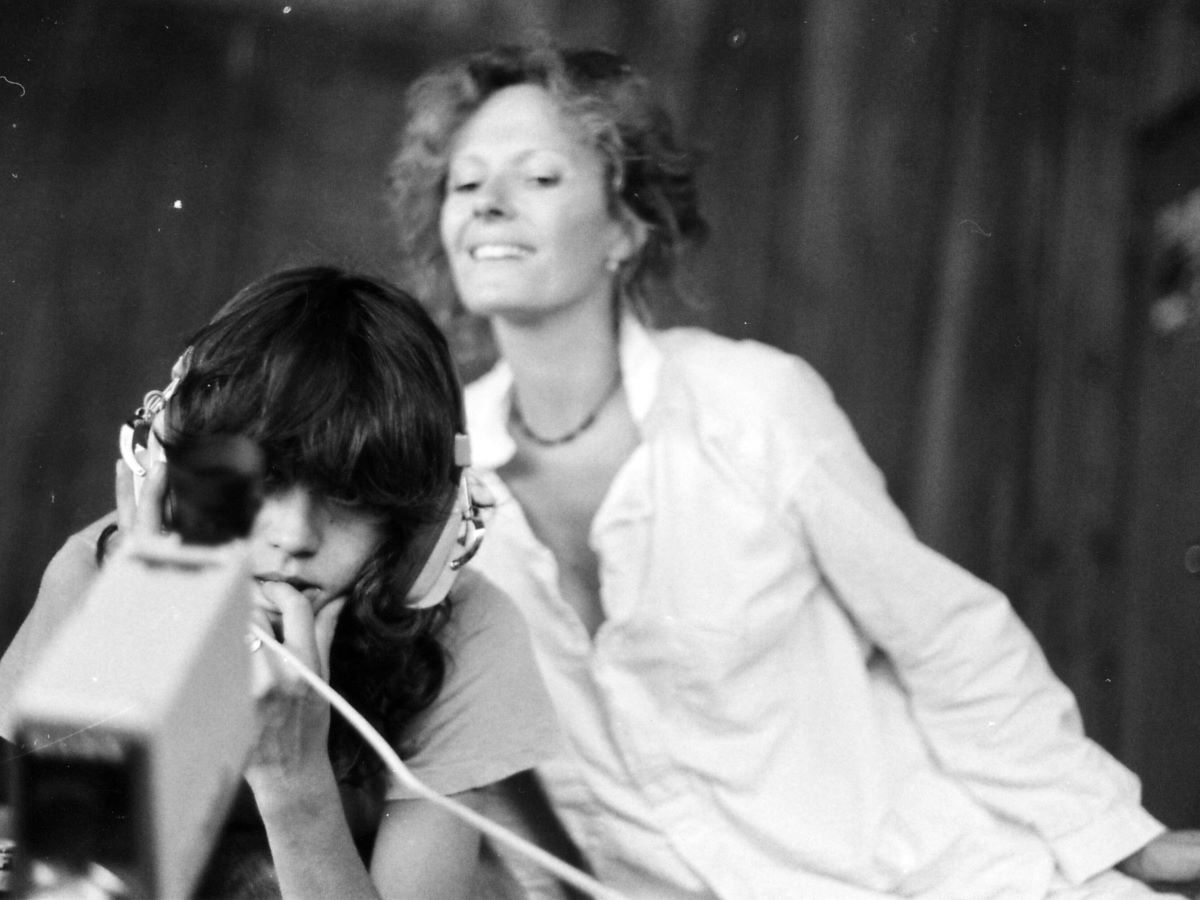
Be Pretty and Shut Up! is an interview film, consisting entirely of interviews conducted by Seyrig and filmed by cinematographer Carole Roussopoulos, a key feminist filmmaker. (The only exception is footage from French television featuring talk show host Michel Drucker interviewing Shirley MacLaine.) The interviews, shot in Hollywood in 1975 and Paris in 1976, include the actresses in medium closeup, with no reverse shots of Seyrig, no B-roll of décor or settings, no film clips, and, most importantly, almost no editing within the interview segments. Not to diminish Seyrig’s accomplishment, but it’s almost in the form of a video essay or long form podcast, just to consider how modern this feels. The participants are identified in a remarkably low-tech fashion, using still images put in front of the camera, by hand. Questions concerning female autonomy is within the audience’s view; Seyrig confronts them as a director. There is no intrinsic worth in such austerity; rather, the film’s uniqueness stems from Seyrig’s imaginative extension. She creates an austerity that is far from naked, relying on simple techniques and straightforward shapes to transmit floods of ideas and experiences.
It’s almost too much to chew; you’re left thinking about Be Pretty first holistically, and then in their individual conversations. The anger and authenticity that leak through the documentary are a big reminder that this generation of actresses hadn’t experienced much change even when participating in the greatest decade in the history of cinema, the 1970s. Participating in the boys’ club that was the New Hollywood, the roles for women behind the camera were limited; women wouldn’t even be hired as camera grips under the assumption that they couldn’t lift heavy objects. Women cinematographers were few and far between at the time of Be Pretty, but there was more of an open conversation that the female perspective would know how to shoot women, and especially women of color, better, with a certain eye that men wouldn’t instinctively have.
Marie Dubois, the star of François Truffaut’s Shoot the Piano Player, says that he and other men had recently told her that, in the age of feminist activism, “women end up scaring them. They no longer understand women”—if they ever really did—and “no longer know how to write for them. Truffaut agrees. He said that women have to take their destinies in their own hands.” As Dubois puts it, “One must be an auteur.” From what’s understood of this generation of actresses, their lovely relationship with each other offscreen would be best utilized onscreen.
Misogyny, stereotypes, or just ignorance are nothing new; they’ve just been reshaped since Be Pretty. This doc proves that speaking on what we are all thinking is just as a powerful investigation of any question that needs to be answered. If there are any questions in Be Pretty, they’ve already been answered and confirmed, which leaves the subjects with the audience to sit in these stories. Most essential, it’s a movie with no male involvement, and the creation of a safe space. As much of a check-in that the doc is within this generation of actresses, their relatability becomes something greater than just inequality but masochistic (as Jill Clayburgh puts it). Some notable interviews are Ellen Burystyn, Maidie Norman (the only woman of color), and Jane fucking Fonda– someone who has spent her entire life in Hollywood fighting tooth and nail for equality and unafraid to speak up about the lacy of agency that her peers experience. Her selflessness goes internationally now, when she is speaking French for Seyrig and crew when every other interview with an English speaking is dubbed over in French. Fonda is just as meaningful and seething as any other interview yet the ability to be bilingual is extra powerful.
Be Pretty and Shut Up!
1981
dir. Delphine Seyrig
110 min.
Screens Sunday, 2/23, 7:00pm @ Harvard Film Archive
Part of the continuing series: The Reincarnations of Delphine Seyrig