Sunday marked the close of the 2026 Boston Underground Film Festival, Beantown’s yearly orgy of cinematic transgression and midnight movie madness. Read below for the final dispatch from the Hassle‘s Oscar Goff and Kyle Amato (and catch up with their previous roundups here and here!)
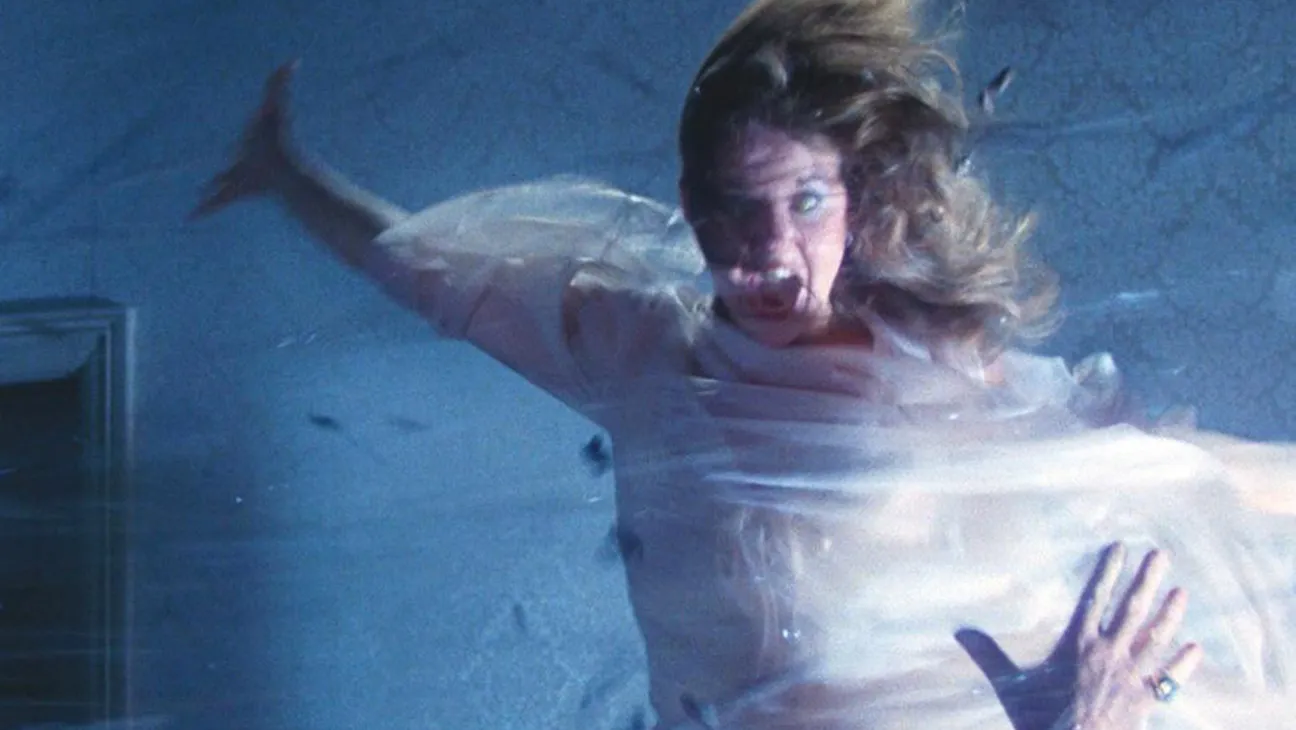
BOORMAN AND THE DEVIL (dir. David Kittredge)
Early on in Boorman and the Devil, John Boorman, the British filmmaker behind such outre epics as Deliverance, Excalibur, and Zardoz, recalls a piece of advice he once received from the great David Lean: “We all make failures; try not to make a famous one.” Boorman’s Exorcist II: The Heretic is, unfortunately, one of the most famous cinematic failures of all time. Director David Kittredge’s wonderfully entertaining documentary serves as something between an autopsy of an artistic disaster and a reclamation of a gonzo achievement. By the film’s end, it’s hard to argue with either assessment.
The heart of Kittredge’s film lies in its interviews with most of The Heretic’s principle players, including Boorman himself, stars Linda Blair and Louise Fletcher (the latter of whom has since passed away), and much of the film’s technical crew. There seems to be plenty of blame to go around: on budget restrictions which forced the globetrotting narrative to be shot entirely on soundstages; on the notorious unreliability of leading man Richard Burton (whose frequent bathroom breaks are dramatized in a hilarious animated interlude); on gonzo on-set script doctor Rospo Pallenberg, who was received with increasing hostility by the cast (“I don’t know who the fuck you are!” Blair recalls thinking); on the demonic presence of Pazuzu himself. At one point, filming had to be paused for five weeks as Boorman battled a lung infection brought on by the (indoor) sandstorm sequences. As Kittredge notes, most productions would have simply replaced the incapacitated director, but the studio assessed that only Boorman would have the “technical skills” to complete the film as planned. This cuts to the heart of Boorman and the Devil, which is as much a love letter to a bygone Hollywood which allowed auteurs room to make wild swings as it is an examination of a historic bomb. By the end of it, you may agree that yes, we did need to see Regan MacNeil tapdance after all. (Oscar Goff)
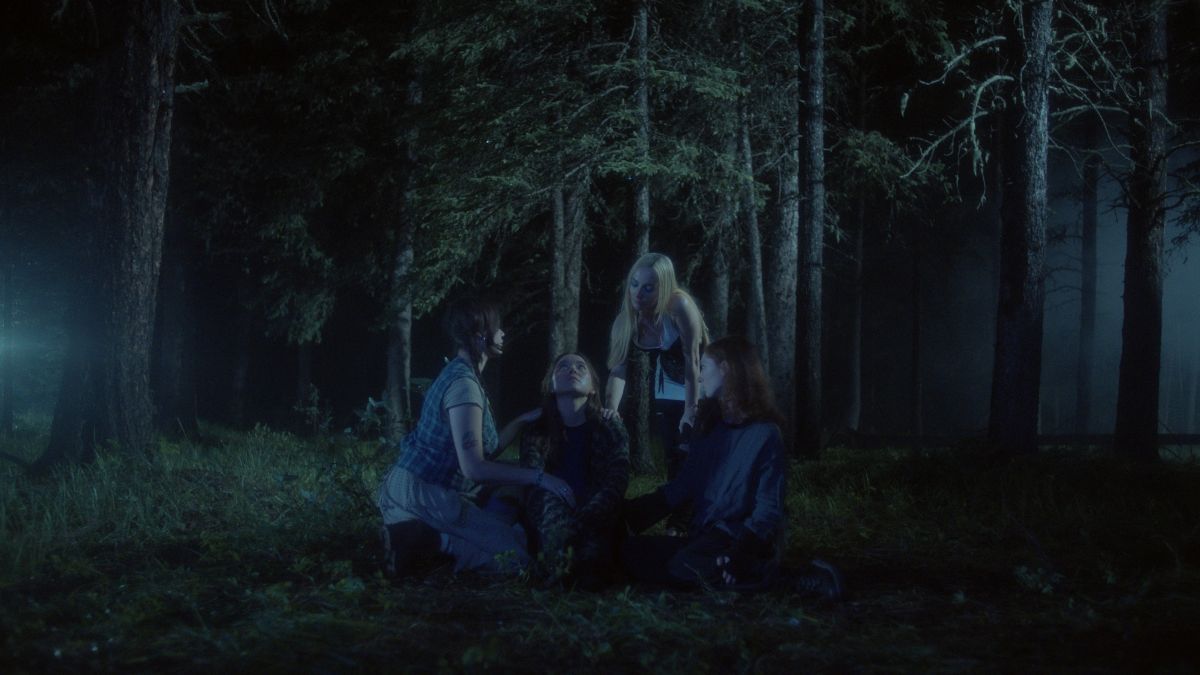
CAMP (dir. Avalon Fast)
After the accidental death of her best friend, a troubled young woman (Zola Grimmer) has no reason not to become a camp counselor up north for similarly troubled kids. The camp, known simply as “CAMP,” is a bit odd, but one could chalk it up to its vague religious undertones. Or so we may think. What starts as female bonding, empowerment, and hijinks becomes something far more sinister. Though Emily is welcomed in with the other counselors, what does she really know about them? What do they do in the attic after the kids have been put to bed? And why are there so many shooting stars in the sky?
Avalon Fast’s film cloaks itself in “healing” energies, while disguising its true motives. CAMP acts almost as a repudiation of belonging, a cautionary tale to those who perhaps latch on a little too quickly onto new friends. The young cast handles the dreamy tone with aplomb, putting the audience under the same spell as Emily. Melancholy and eerie at the same time, CAMP should be haunting its viewers until the end of summer… if it ever comes. (Kyle Amato)
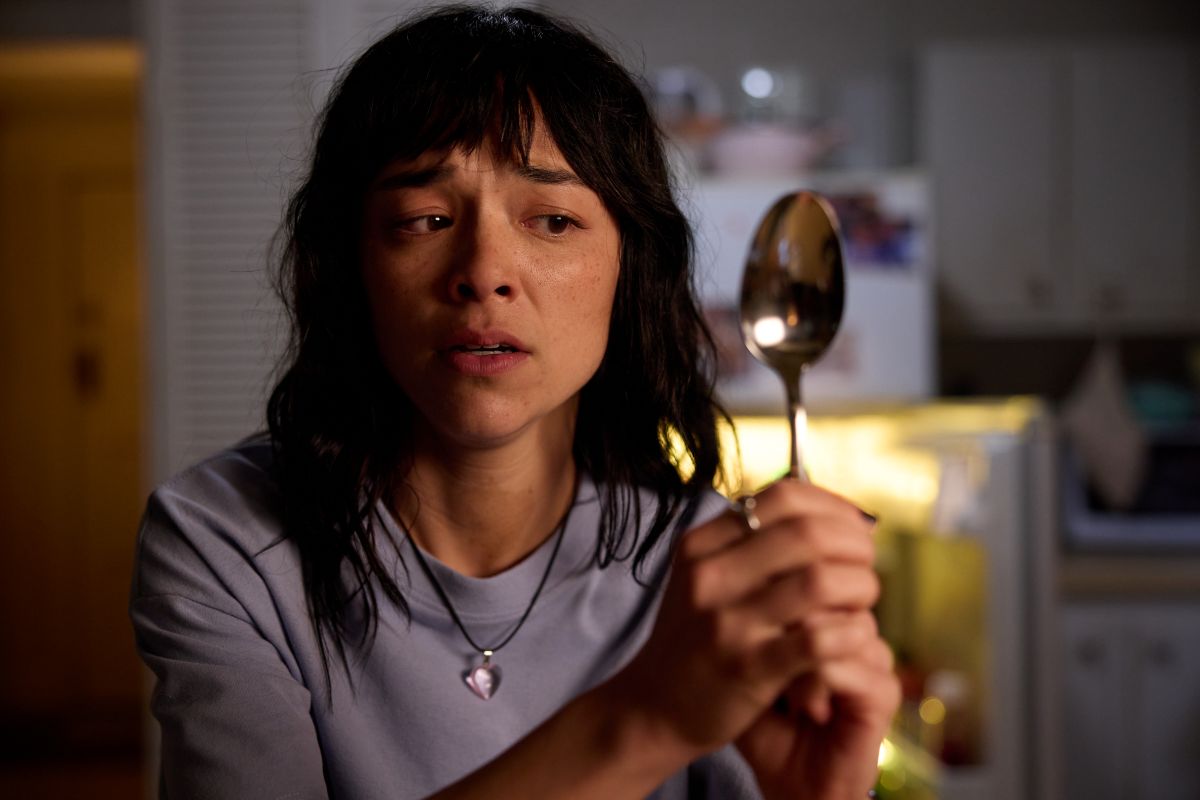
SACCHARINE (dir. Natalie Erika James)
Following the Rosemary’s Baby prequel Apartment 7A, Relic director Natalie Erika James returns to form with another original horror story. Midori Francis plays Hana, a med student struggling with body image issues. While out on the town, Hana encounters an old school friend who has lost an enormous amount of weight after taking a mysterious supplement called “Grey.” Doing her due diligence, Hana takes the capsule into the lab and, after some testing, determines that it is actually filled with human cremains. Still, the pills do seem to do their job, so Hana opts to save money by formulating her own Grey by cremating bits of an overweight cadaver the students have nicknamed Bertha. Unfortunately, it seems Grey comes with some steep side effects: Hana finds herself haunted by Bertha, whose hulking ghost appears in convex reflections— and seems to grow as Hana loses weight.
Like Relic, Saccharine is clearly drawn from a deeply personal place. There is a lot going on here in addition to body issues, from mental illness and inherited family trauma to queer longing and scientific ethics. The result is at times frustratingly unfocused, both plot-wise (I’m still not quite clear on the precise “rules” of the central haunting) and thematically. Still, once Saccharine gets going, there are thrills to be had. Francis in particular is a terrific lead, becoming more frantic and Jeffrey Combs-y as the stakes grow higher. James remains an exciting voice in horror, but I hope her next feature finds her narrowing her focus just a bit; like the leftovers devoured by Bertha’s spectral presence, there’s almost too much here to fully digest. (OG)
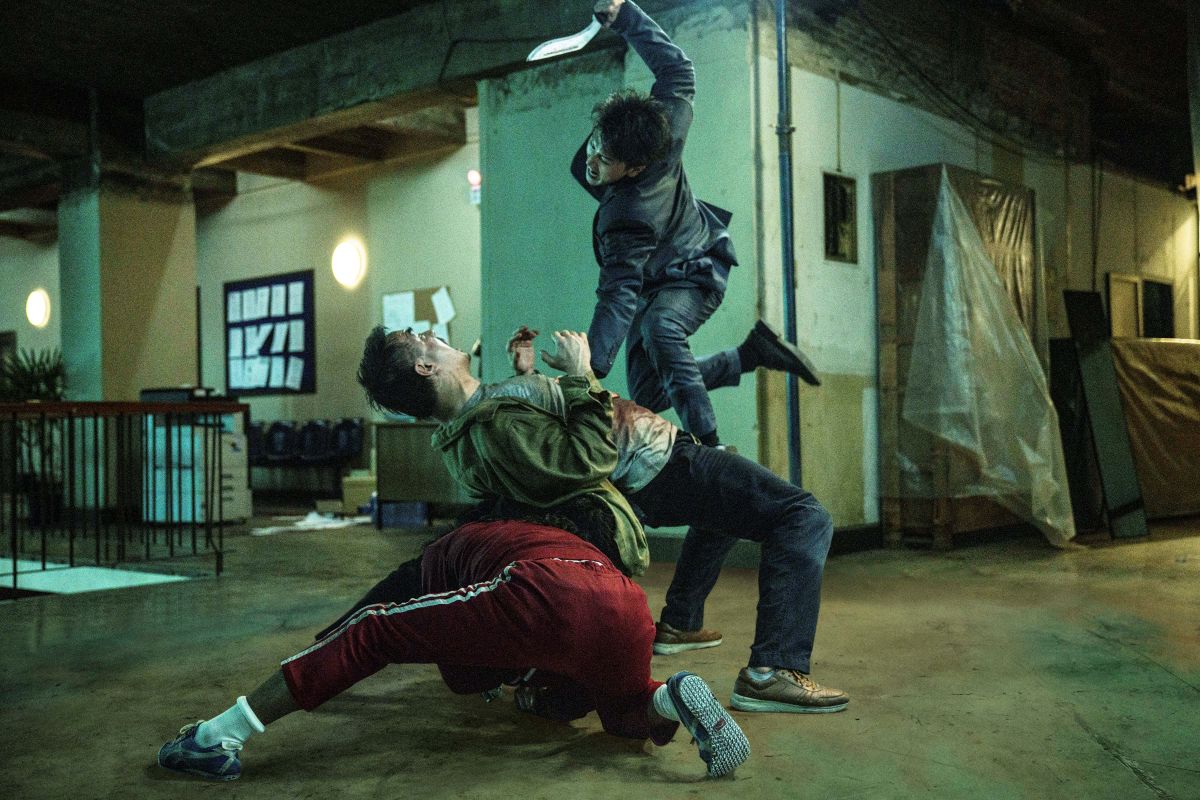
THE FURIOUS (dir. Kenji Tanigaki)
Traditionally, the BUFF closing night spot is reserved for a big, rowdy crowdpleaser (this makes sense; you can’t exactly send people buzzing into the night after five days of madness on, say, The Hedonist). Crowdpleasers don’t come much bigger or rowdier than The Furious, the new Hong Kong chop-socker from stuntman turned filmmaker Kenji Tanigaki, which is so outrageously over-the-top that the sold-out crowd at the Brattle spent the majority of the running time pumping their fists and hooting at the screen. The plot, such as it is, involves an international child-trafficking ring operated by the global billionaire elite (where do they get their ideas!). Moe Tse plays Wang Wei, a mute everyman training his daughter in kung fu to fight off abductors. Naturally, his daughter gets abducted within the first fifteen minutes, leading Wang Wei to team up with a similarly revenge-driven journalist (The Raid’s Joe Taslim) to rescue her and take down the operation once and for all.
That is the film’s plot, but I wouldn’t say it’s what it’s about. What it’s about is some of the most wildly brutal and intricately choreographed fight sequences since RRR. A few snapshots: two men, in the heat of combat, each pick up heavy-duty rideshare bikes and start swinging them at each other like cudgels; a hammer-wielding Tse dispatches wave after wave of faceless henchmen until he is standing on top of a pyramid of corpses; perennial martial arts scene-stealer Yayan Ruhian as a bow-wielding assassin, silently killing his way through an entire police station without breaking stride; and on and on and on, across two action-packed hours. Those with weak stomachs for depictions of physical brutality are advised to stay home, but fans of martial arts cinema will marvel at the invention on display. (OG)