The Boston Palestine Film Festival runs online from October 13 through October 22. The live component has been postponed due to the tragic current events in Palestine and Israel. Click here for the schedule and ticket info, and watch the site for Joshua Polanski’s continuing coverage.
REEL NO. 21 A.K.A. RESTORING SOLIDARITY (THE TOKYO REEL) (2022) dir. Mohanad Yaqubi
A collection of segments of 20 16mm films by transnational militant filmmakers from the 1960s-80s on the Palestinian struggle against the occupying Israeli state, Reel No. 21 A.K.A. Restoring Solidarity (The Tokyo Reel) is unlike anything I’ve ever seen before. And given the current threat of ethnic-cleansing facing the Palestinian people in Gaza, the film’s powerful insistence on the role of media in the face of tragedy and as a tool of memory preservation is the film of the hour.
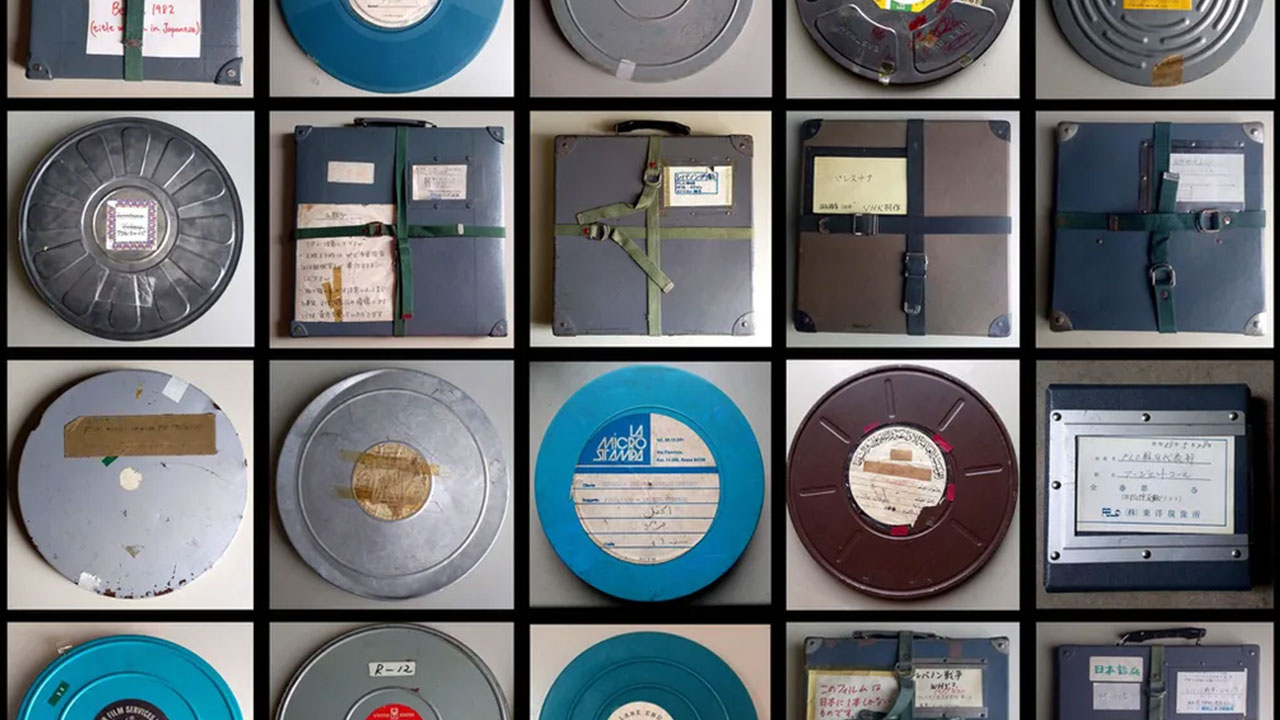
The films connect in as much as they share in the struggle of the Palestinian people. In form and content, they vary from tourism instructional footage to Palestinian Liberation Organization (PLO) agitprop. But the films are glued together through footage of the archival process itself: the editing, restoration, and digitization of the 20 films, most (if not all) of which were lost to history before director Mohanad Yaqubi (Off Frame aka Revolution Until Victory) acquired them from Japanese comparative literature professor Aoe Tanami in the late 2010s.
These films, the female narrator at the documentary’s conclusion clarifies, operate as a textbook of camaraderie for the Palestine solidarity movement in Japan, as the new left grew in prominence mid-century. The narrator calls attention to similar post-war trajectories of tragedy, colonization, and, struggle. The very archiving of these films is an effort to contribute to and provide a line of resilience to those still in the struggle against the Occupation. “These films provide us with a language for struggle, an image for political practice, a face of solidarity,” a narrator declares with undisguised Marxist intentions. The anti-narrative structure of Reel No. 21 proves an effective documentary experimentation with Bertolt Brecht’s alienation effect. By making strange the forms of documentary filmmaking, the creatives (both Yaqubi and the voices he uplifts) inevitably make room for stronger audience reflection on not the artificiality of the images but rather their permanence.
That’s not to say the film lacks moving visuals. A handful of images, ugly as they are (though that’s the point), linger: the empty bomb shells collected and grouped together (not unlike an archival process), a group of young children playing with what appears to be an unloaded RPG, and footage of a moving speech from PLO spokesman Kamal Nasser overlaid with the historical facts of his assassination by Mossad in 1973. The text freezes the image as the bullet reverberates into the present.
The restoration purposefully doesn’t remove the datage imposed by time on the 16mm film stocks. They’re marked up about as bad as 50-year-old 16mm prints can get, albeit ones not played with the utmost frequency. According to Yaqubi, “In militant cinema, the filmmakers were never looking for perfect images. The perfection of images is a Western bourgeois attitude toward producing images.” Armed with Yaqubi’s description of militant cinema, the images of the current conflict start to look familar.
I found myself especially interested in the film’s didactic conclusion about the Balfour Declaration of 1917, pinpointing the conflict’s catalyzing moment in which the British government promised a “national home for the Jewish people” in Palestine. Why not begin here? I’m still not sure but my only working theory is that the aesthetics of the Occupation makes its baffling origins in Britain more insidious. The human cost of that opportunistic piece of European policy is made plain in this decision.
Reel No. 21 concludes by returning to the familiar film lab with its pristine digital images from a handheld camera recording the reel of previous 16mm footage hitting its end. Time is cut into in several ways here: through the historical summary of 1917 (already coming from the past), the digital footage from the film lab—whose clear and neat images feel cut from another world—and through the narrator’s voice summarizing post-war similarities between the two countries. The laborious struggle was, is, and will be as long as Palestinian voices can tell their story.
And only in listening, and in remembrance, can solidarity can begin.
ERASMUS IN GAZA (2022) dir. Matteo Delbò & Chiara Avesani
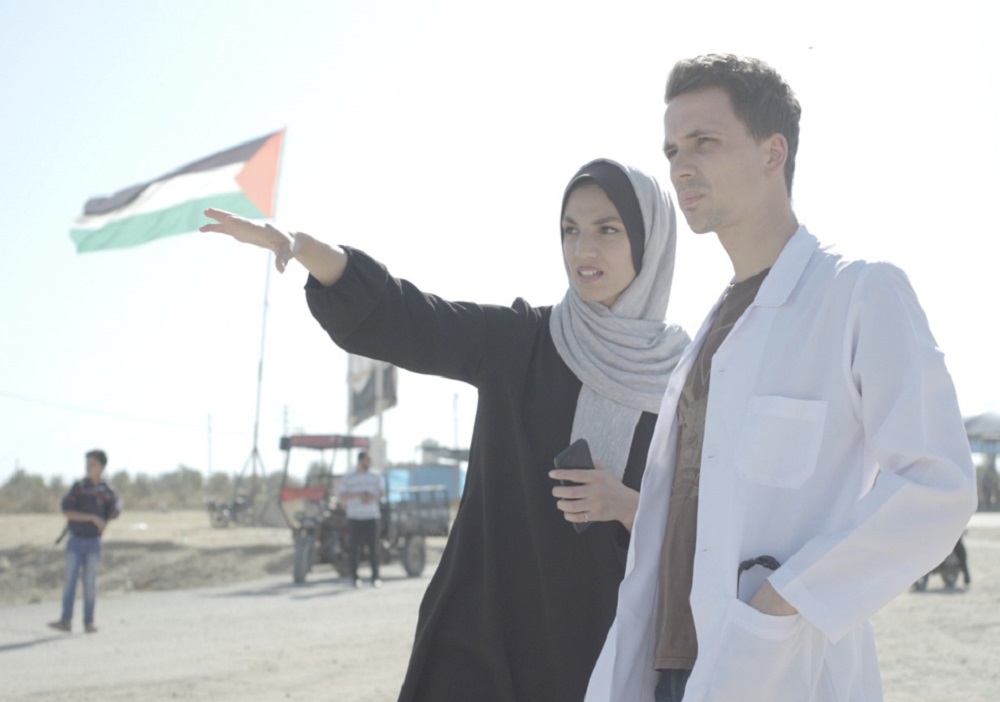
The 20th anniversary of the death of the last rockstar of academia, Edward Said, took place a few weeks ago. A Palestinian-American literary critic and academic, Said’s book Orientalism (1978) is one of the most important academic texts ever produced, at least in terms of its actual impact on the real world.* (Though he was by no means a flawless intellectual.) Given the gravity of the world’s most famous Palestinian academic and his cultural footprint, Erasmus in Gaza, a feature-length documentary about an Italian foreign exchange student in the Gaza Strip, is an anathema. The premise is moderately more interesting than the final version presented here, which effectively amounts to a travel diary.
Quite simply: this is a documentary without a primary audience. As a travelog, it’s certainly not made for Palestinians. The film’s subject, Riccardo Corradini, is “the first student in Europe to have chosen Gaza for his Erasmus,” a European-Union based exchange program. He doesn’t know much Arabic and is frankly naive about the culture. On one phone call with his family back home, Riccardo compares his hosts in Gaza to historical relics of the 19th century because of the way he is “treated like royalty.” The innocent jest isn’t all that innocent; his hosts and Palestinian friends are reduced to “historical” peoples, a culture uninitiated by progress. The documentary makes no serious effort to make clear the issues here nor to color its subject in any less than flattering shades, leading me to conclude that his opinion of ahistoricity must be shared by the filmmakers.
As the current crisis makes clear (and the film itself), Riccardo can leave whenever he wants to, whenever danger surfaces. Gazans lack the same liberty; they lack the very basic human liberties that enable and cultivate Riccardo in the first place.
The cinematography aesthetically re-duplicates the intrusiveness of the film’s subject. The camera pushes in so close and so many angles are used in individual scenes that one wonders just how staged these conversations are. The camera is more active than a passive journalistic observer, though the subjects act no differently when filming. And, in the documentary’s conclusion, a strategically placed camera gazes upon the city from a window seal as Israel bombs the city with missiles. Isolated from actual pain and Palestinian subjects, the destruction of Gaza is turned into tragedy porn. The victims of violence have no faces, no names.
*His thesis: Orientalism describes the way in which the West describes the East (or the Orient) with contempt, subordination, and exotification, and how these descriptions are inseparable from the imperialistic (and neo-colonial) societies that produce them.
Reel No. 21 A.K.A. Restoring Solidarity (The Tokyo Reel)
2022
dir. Mohanad Yaqubi
min. 71
Erasmus in Gaza
2022
dir. Matteo Delbò & Chiara Avesani
min. 88