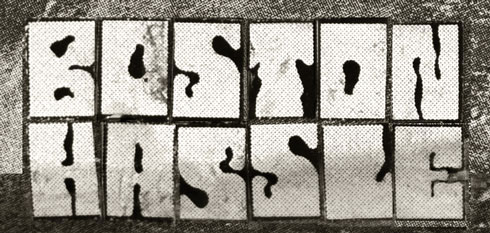
What’s a dinosaur rock band without multiple reissue campaigns?
The history of This Is Spinal Tap on home video is as circuitous as the saga of the fictional heavy metal band itself. In 1998, the legendary mockumentary became one of the earliest films released on DVD as part of the Criterion Collection (spine #12, meaning Nigel Tufnel has been in the collection longer than Jean-Luc Godard), complete with commentary tracks, an hour of deleted scenes, and as many additional special features as could be crammed into an old-fashioned flipper-disc. That disc almost immediately dropped out of print, becoming one of the first “holy grails” for DVD collectors; fortunately, it was replaced in 2000 with an equally lavish edition from MGM, boasting a new commentary track, a different program of deleted scenes, and even more extras, both archival and newly produced. Now, more than a quarter century after losing the rights, Criterion has rereleased its version of This Is Spinal Tap on blu-ray and 4K, at last giving this classic a definitive release worthy of the band’s legendary punctuality.
For the unfamiliar, This Is Spinal Tap positions itself as a fly-on-the-wall documentary about “England’s loudest band” on an ill-fated tour of the United States. Amidst a constantly revolving door of mortality-challenged drummers, the band’s core trio consists of charismatic frontman David St. Hubbins (Michael McKean), mercurial lead guitarist Nigel Tufnel (Christopher Guest), and dimwitted bassist Derek Smalls (Harry Shearer). With the film crew of commercial director Marty DiBergi (played by the film’s real-life director Rob Reiner) in tow, the band hits the road to promote the pending release of their seventeenth album, the provocatively titled Smell the Glove. Along the way, they encounter disaster after disaster, including creative disputes, gigs moved from arenas into Air Force mess halls, and a misproportioned replica of a certain Druidic landmark.
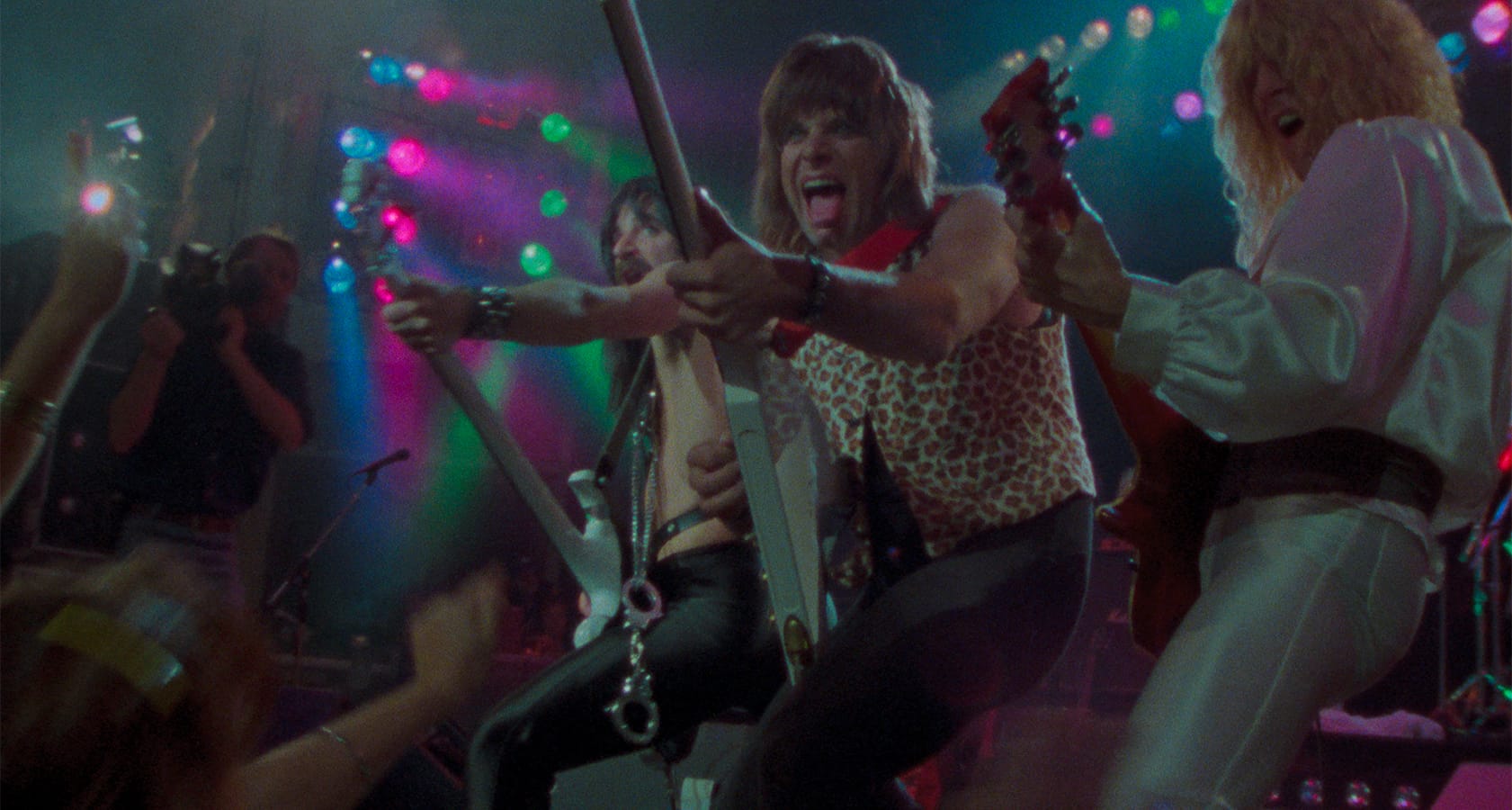
Forty years on, it’s easy to take the formal innovation of This Is Spinal Tap for granted. Its improvisatory, faux-documentary style has become a dominant mode for comedy in the 21st century; The Office, Arrested Development, Modern Family, and countless others would look very different without it, to say nothing of the latter-day directorial efforts of Guest himself (there’s even an argument to be made that its influence extends to The Blair Witch Project and its found footage descendents). Yet there’s still something undeniably special about the original article, a magic that cannot be easily replicated. Guest, McKean, and Shearer are all deadly serious about comedy, and while their dialogue is improvised, they clearly honed their comic beats through countless run-throughs, not to mention writing and performing all of the band’s songs (which, while deliberately stupid, are perfectly credible hard rock bangers). In a newly recorded conversation with comedian Patton Oswalt, Reiner reveals the meticulous, handwritten biographies the troupe prepared for the band and their characters, including all the countless name and personnel changes. To turn one of the band’s most famous phrases, the group remained at all times on the right side of the stupid/clever line.
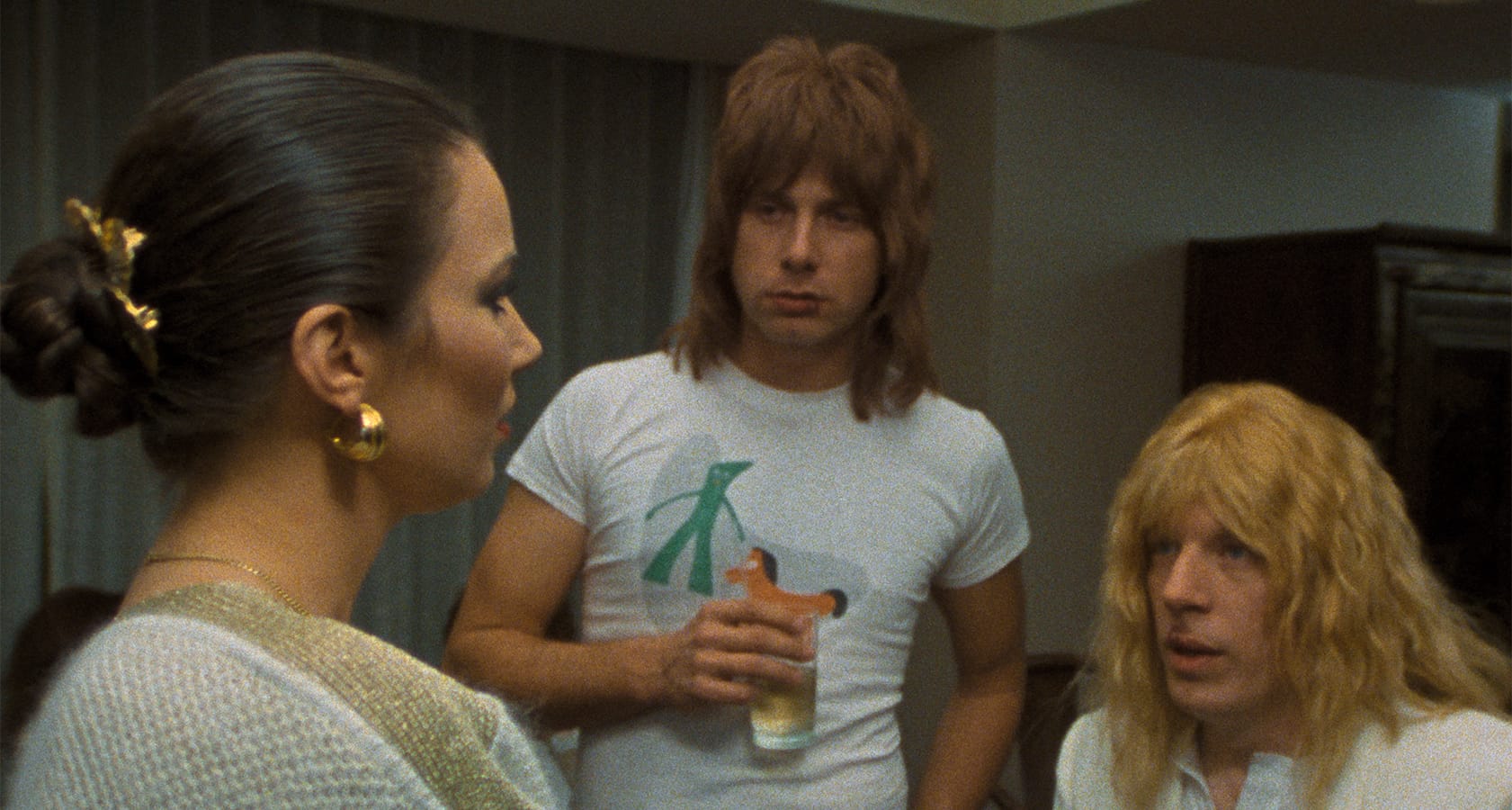
Then there are the performances themselves. It should be no news to anyone that Spinal Tap’s three leads are hysterically funny, but what’s easy to overlook is how raw and lived-in their characters are. Guest is particularly revelatory, embodying a character at once emotionally stunted, undeniably gifted, and deeply stupid (as Roger Ebert once mused, “Nigel has few ideas, but they are clearly defined and defiantly defended”). Unlike many of the mockumentaries that have emerged in its wake, there is actual dramatic heft here, real venom when the bandmates tear into each other over creative differences, true joy when they reunite on stage. It’s no wonder the trio have continued to regularly appear in character across various media over the past four decades; these are real people they’ve created, and it’s entirely believable that they didn’t stop existing when Marty DiBergi’s camera stopped rolling.*
As someone who bought Spinal Tap’s MGM DVD on day one as a budding teenage film snob and later spent his first full-time paycheck on the original Criterion edition on eBay, I feel like I’ve been preparing to review this release for my entire adult life. The new HD transfer is, predictably, gorgeous; Reiner shoots the performance scenes with all the flash and bombast of a real concert film, and the 1980s colors of the backstage footage pop off the screen. But the real test of this release, of course, lies in the extras. All of the original Criterion features are at long last back in print: both commentary tracks (one featuring the three leads, the other with Reiner, producer Karen Murphy, and editors Robert Leighton and Kent Beyda), all associated trailers and music videos, and the 1982 proof-of-concept short Spinal Tap: The Final Tour. That last one is a particularly fascinating watch; though the wigs and production values are chintzier (and the transfer appears to be sourced from a VHS dub), many of the film’s most well-known scenes are already more or less fully realized. Perhaps most interesting are the differences: keyboardist Viv Savage is played by a different actor (whose identity I can’t confirm anywhere on the internet), and a brief shot appears to show Richard Belzer in the role which would eventually go to Paul Schaffer in the feature.
Crucially, Criterion has also ported over the lion’s share of the features from the equally essential MGM release. The two discs’ respective programs of deleted scenes have been merged seamlessly into a single feature (which runs a good 15 minutes longer than the film itself), with newly added “chapter cards” which appear to be relics from the original shooting notes. Also included is the MGM release’s hilarious in-character band commentary track (a strong contender for greatest commentary of all time) and a similarly themed interview with Reiner as DiBergi (the only thing missing from the MGM disc are the audio skits in which the band tries to make heads or tails of the menus). Rounding out this release are the aforementioned (out-of-character) conversation between Reiner and Oswalt, an hour-long (in-character) interview featurette from the bonus disc of the 2009 reunion album Back from the Dead, a ten-minute excerpt from the 1992 concert film The Return of Spinal Tap, and a trailer for Spinal Tap II: The End Continues (which I have yet to see after the preview screening at AMC Assembly was curtailed by technical difficulties, which, while disappointing, was undeniably Tap).
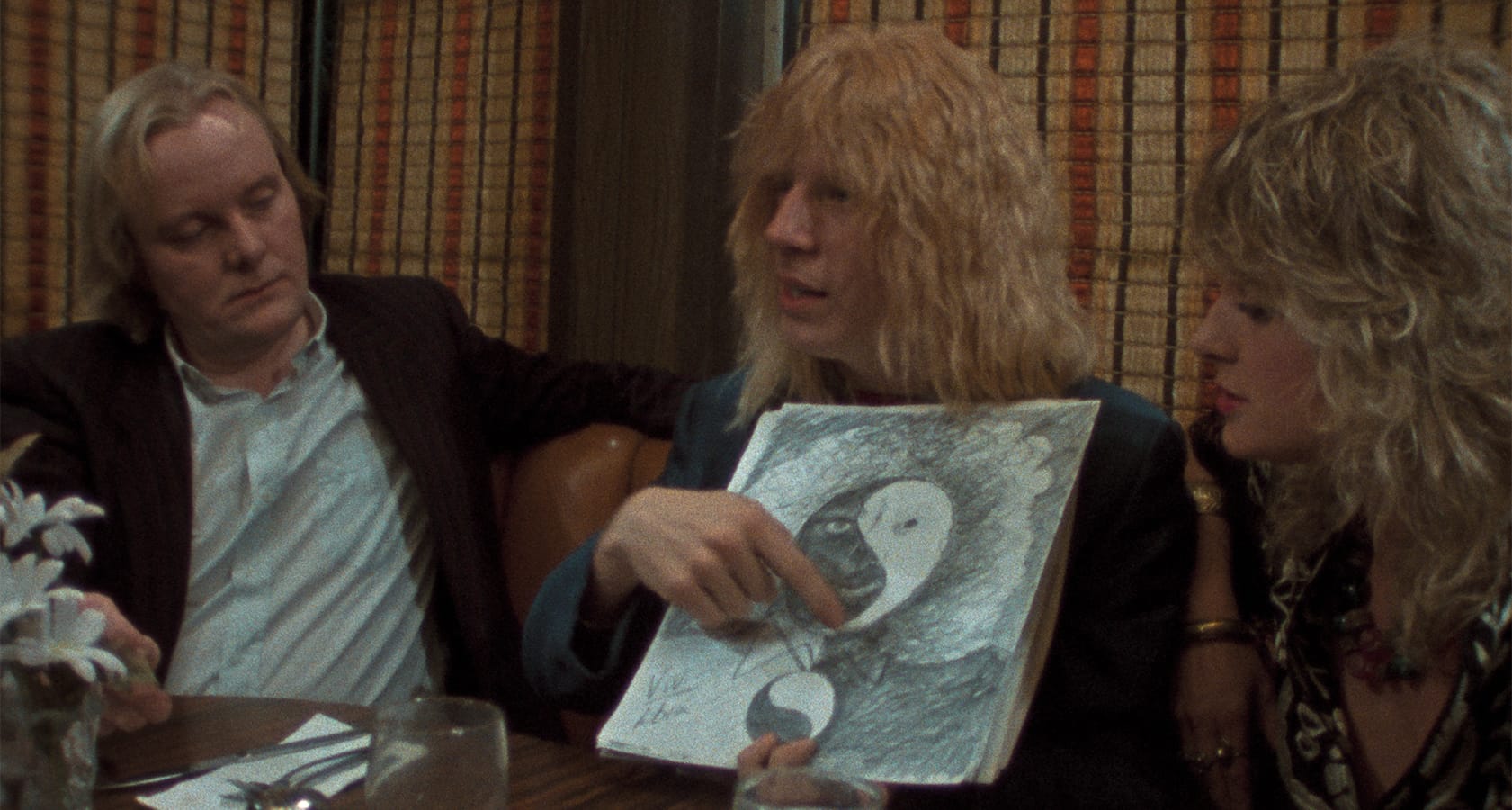
If I have any quibbles with the new Criterion release, it’s only that there’s so much more extant material which could have been included. Due to a contractual loophole worthy of Spinal Tap themselves, Guest, Shearer, and McKean had to publicly appear in character at least once every five years in order to maintain their rights to the film, making them more extensively documented than many real-world bands of their era. Most puzzlingly absent is the remainder of The Return of Spinal Tap, but there are plenty of other clips worthy of inclusion: the band’s 1992 animated appearance on The Simpsons; their metafictional 2000 episode of VH1’s Behind the Music; their star-studded appearance at 2007’s Live Earth charity concert (which, maddeningly, was included on MGM’s otherwise disappointing 2009 blu-ray release). The mind reels at the thought of a “Complete Spinal Tap” box set, though one’s shelf might strain under the required number of discs.
But, like the reviewer who dinged Tap for “treading water in a sea of retarded sexuality and bad poetry” on their Intravenous de Milo record, I’m nitpicking here. This Is Spinal Tap deserves its place as one of the most beloved and revered comedies of all time, and Criterion’s newest release is worthy of its legacy; while I don’t think I can quite bring myself to part with my old MGM disc (those menus really are priceless), this is likely to go down as the film’s definitive home video release. Rewatching it for this review, I felt like I was visiting old friends, captured in their only-just-declining youth like so many preserved moose.
* – This extends to the supporting cast as well: Fran Drescher would reprise her character, schmoozing publicist Bobbi Flekman, in a 1997 episode of her sitcom The Nanny, and Paul Schaffer revived his incompetent promoter Artie Fufkin for a 2017 Funny Or Die video.
This Is Spinal Tap
1984
dir. Rob Reiner
82 min.
Now available on blu-ray and 4K from the Criterion Collection