The Boston Baltic Film Festival runs from Friday, 2/28 through Sunday, 3/2 at the Emerson Paramount Center, and through 3/17 virtually. Click here for the schedule and ticket info, and watch the site for Joshua Polanski’s continuing coverage!
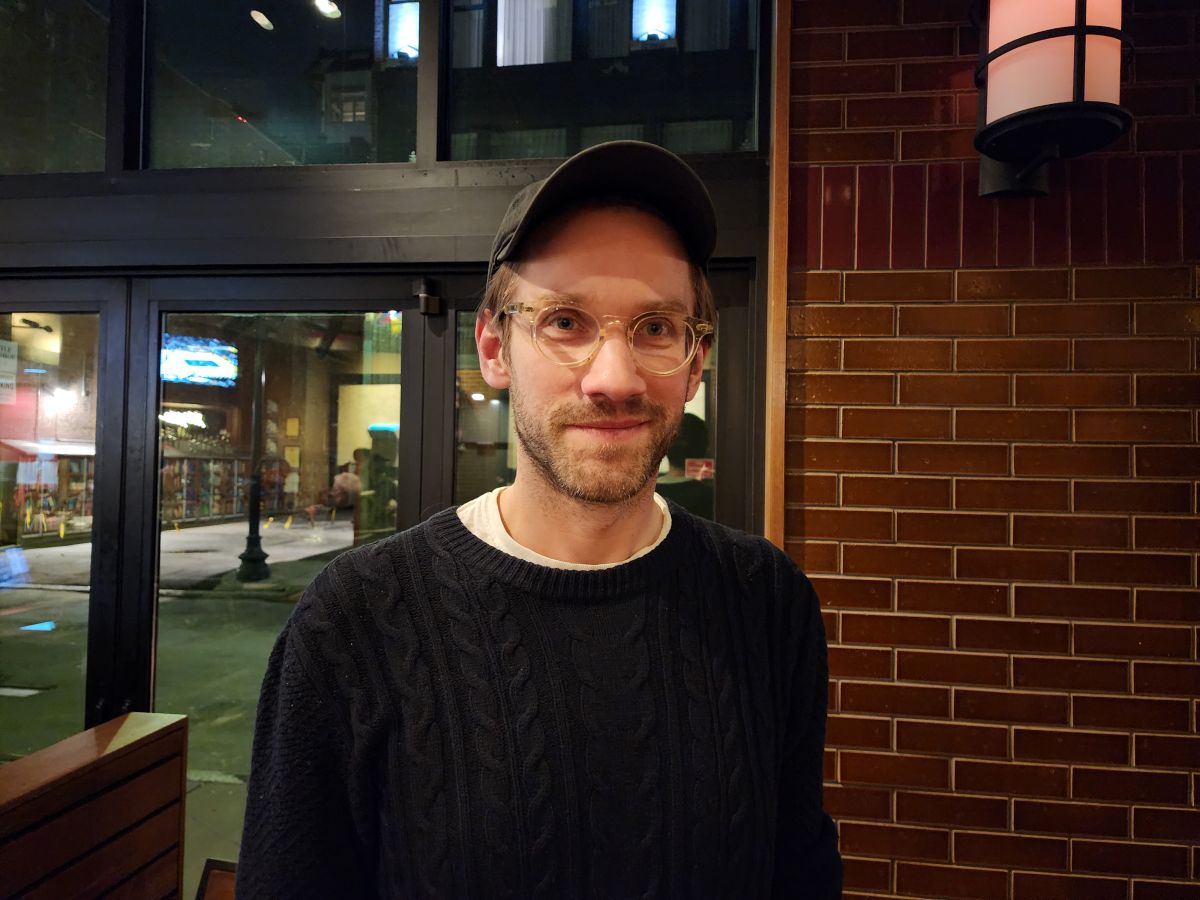
Just like falling in love, the most exciting part of watching a movie is in the beginning. A first viewing is much like the “honeymoon phase,” or the Valentine’s Day vision of love, as Tomas Vengris, the American-Lithuanian director of Five and a Half Love Stories in an Apartment in Vilnius, Lithuania referred to it in our interview. Second and third viewings usually pull one out of the easy first impressions and easy-earned charisma, revealing more and more difficulties and flaws.
Most movies are not conducive to multiple viewings. Five and a Half Love Stories is not like most movies. The one-location anthology follows a series of frustrated “love” stories that all take place in the same apartment in the Lithuanian capital—and it gets better with each watch. This is my third time viewing Vengris’s great film in fewer than two years. I was at the world premiere in Tallinn, Estonia, where it took home the prize in the Rebels With a Cause competition program at the 2023 Tallinn Black Nights Film Festival (PÖFF) for boundary-pushing art. I watched it again from the comfort of my home (and on a smaller screen) in preparation for the Boston Baltic Film Festival and again when it showed at the Emerson Paramount Center. I’ve even reviewed the film on two separate occasions. I grow more fond of the well-thought-out compositions, more compelled by the romantic liaisons, and more enraptured in the world of this apartment every opportunity I have to catch it. The film took an enviable fifth place in my list of the Top Ten Films of 2023.
The vignettes supply a superb mix of comedy and heartbreak, sexiness and disturbance, intrigue and mundanity—a mix honoring the messiness of love. The guests are about as diverse as their problems: a bachelorette party, an Israeli couple investigating pre-Shoah family history, a bisexual male stripper who pretends to live in the unit to impress another man, and more. What they all have in common is that the couples that rent the apartment arrive at pivotal points in their relationships, crossroads of love. These are not the kinds of love stories that populate Netflix teen romances nor the steamy box-office sensations of Challengers or Babygirl, steaminess that flows from the mystery of the newness of the sexual partners. Five and a Half Love Stories is more concerned with what happens after the Valentine’s Day phase, what happens when partners hurt each other, what happens when they love one another but are no longer happy. It’s an area of cinema that’s less sexy and less explored for that reason.
The title does a lot of important framing. Beyond referencing the number of “love” vignettes collected, it also plays with real estate marketing language of “2.5 bathrooms” and “3.5 bedrooms,” bringing commodity and exploitation into focus, themes that lurk most strongly in the second and fourth stories, as well as the occupational transitions of the cleaner (a typically lower-class profession). There’s something else going on with the title, too. The “half” of the fraction reads brokenness or incompleteness into the film’s imagining of romantic encounter—and that brokenness is something all of the shorts share, even though they can also be incredibly sweet at times.
The following interview has been condensed and edited for clarity. Read Joshua’s full review of Five and a Half Love Stories in an Apartment in Vilnius, Lithuania in the Boston Hassle here and his earlier review in Offscreen here.
Boston Hassle: When did you first pick up a camera?
Tomas Vengris: A little embarrassing. I found myself playing with toys longer than it was socially acceptable for a teenage boy to be playing with Micro Machines and Legos and all this stuff. And I had a friend who was also playing more than it was socially [acceptable], and his dad had a camera and this video capture car, he had all this stuff. Well, [It was more socially acceptable] to make movies instead of playing. And so we would shoot.
BH: How old were you?
TV: It doesn’t matter. I don’t know. Like fifteen.
He had this micro machine, a whole battlefield, and we’d fly the camera over it. We’d dress up in fatigues we found at a surplus store and [we would] film, like, running backlit through this tunnel. Then we’d cut it together and [we were] like, “Oh, this is way more interesting.” So, I started learning film techniques before watching good films.
I [also] remember my first film class in undergrad [at Columbia University]. I wasn’t studying film yet. We started learning about Eisenstein and montage and diegetic sound, and I [realized] this is the stuff that we were figuring out in our own kind of geeky, playful way. What if we cut to these random faces? It was an interesting process of learning through making and through having this technology available, which was slightly before you could plug a camera into a computer and just edit it. You still needed a few steps between.
I was just lucky.
BH: Was it 8mm or a consumer camera?
TV: It was consumer cameras. It was probably a VHS camera or a Betacam, but you needed this video capture card, a separate piece of hardware to convert it to digital.
Anyway, they were things not every kid had access to, and it was my friend’s dad who happened to just be this tech geek who had all this stuff. He also had all these World War II documentaries. I couldn’t tell you what it was now … some like eight cassette, World War II documentary collection. And we’d be cutting together footage of Hitler rallies or Mussolini’s rallies with rallies from my high school, my pep rallies from my high school before football games. The cheers were identical and this is kind of how we learned.
BH: Does that still exist? I’d love to see it.
TV: It does. Somewhere, yeah. It’s probably the best thing I’ve ever made.
BH: I’m sure you’re not dying to talk about you playing with toys more. But were they action figures?
TV: It was action figures, Micro Machines, Legos, these model soldiers [that] you glue and paint and whatever. We used those as well, especially when we started filming, because they look more realistic and you put them in grass and they look like they’re in a jungle. It was a direct connection from playing.
BH: One thing I’m wondering about in Five and a Half Love Stories is about the staging. The staging is so important. You’re stuck in one place the whole time with a variety of different people and a different number of people in each vignette. I’m thinking especially the first story, the Irish bachelor party, where people almost mimic action figures; they are stuck in this place where you’re moving them and you have the control. And so if you move them wrong or if they’re in the wrong place, then the movie is worse for it. I’m just wondering if there is a connection here. How important is staging when you’re thinking of your shoots?
TV: That’s a really good question. It really depends, because I think this movie, to me, was a big challenge that I wanted for that reason. I love documentary-style filmmaking. I love improvisation. I worked as an editor for Terrence Malick for many years [as an additional editor on Song to Song and Knight of Cups]. I really like a short that I did while working for him. In my mind, I was rebelling from his style. But when you watch it, you can feel very much that I was in it. When you’re so deep in it, you can’t feel how deep in it you are.
But I really enjoyed this [approach of] let the actor do whatever. I’m going to follow, I’m going to find the cuts, and then put it all together. There’s something that I really enjoy about creating an environment for things to naturally unfold and capturing it and being there. There’s something that I really like about that.
With this film, in particular, I wanted to challenge myself. I liked this idea of being very precise, I guess one way to put it is … as action figures. It’s an interesting connection.
But in Five and a Half, what got me excited was this idea of our interaction with space. It can be as simple as you live in an apartment, you can walk certain paths. There are certain paths you walk a million times a day, and there are certain places in the apartment that you’ll never touch. Even though if you lived there for 20 years, you won’t step into this corner of the room. I found that very interesting. I wanted to use this space with different characters and different stories and find different approaches to the space. It became very staging-heavy, I guess. That becomes a challenge when you want it to feel natural. You want it to feel improvised, but you can’t because someone might just step in front of the camera. There’s only one place you can put the camera. It becomes a different approach. That was my approach.
BH: That comes out. The staging helps characterize the individual people in their different stories. I’m thinking of the first one where the stripper and the woman are in the closet together. I don’t think that’s a space you see in much detail again. And, of course, why are they in the closet, what are they hiding from, and all of this. Then with the Israeli guy, you see him at the table in the kitchen floor. They all gravitate to different spaces in the apartment. To me, the staging is integral to what you did.
TV: Exactly. It’s true. They all find their comfortable spots in this … fake home.

BH: Your characters come from all over the world: Ireland, Poland, Hungary, Lithuania, obviously. Other than the easy answer of “this is who is renting Airbnbs,” what motivates this globalist impulse of your cast?
TV: Interesting. There are a few answers and they all have varying degrees of truth, and I’m not sure which is the most true anymore, honestly.
You have an idea, and you’re excited about it, and then as you’re developing it, some other idea you like comes, and that also shows this or that. And that’s also exciting. One element I wanted to touch on was Vilnius as a city: it’s past, the number of people that have called it home, the different types of people spread all over the world that have called it home that are no longer there. That was a large element of it.
But also, one of the things that initially got me excited about making this film, and it’s interesting and like “oh, how wonderful [sarcastically]” to have these ideas right before the war, was about how we’re all so much more similar than we are different and how this absurd concept of how embarrassing [it is] to be human. We all pretend we’re these rational creatures and [that we’re] doing everything based on rational intellectual choices, but at the end of the day, we all have this shared connection of all being emotional, needy, wanting to love and to be loved. This was this concept. And the best way to show that is to have various genders, various sexualities, various ethnicities, various languages, just to drive that point home. And of course, the best setting for that is this sort of space that’s set up to feel like you’re home, but every week a different person is living in it. That was the initial impulse.
And then, thinking about Vilnius as a city started narrowing down who the international people would be. It didn’t feel right that it would just be a bunch of Lithuanians that are just visiting the capitol, which wouldn’t be realistic either.
BH: Unless I’m miscounting, the number of love stories is a bit of a mystery. There’s the four that are super easy to count, then there’s the fifth one or the half of one, whichever way you want to count it, and that’s also relatively easy: the Airbnb cleaner and the guy next door. I have ideas of who the last one or the last half could be. Perhaps the easiest answer is the cleaner or her husband [not the neighbor]. I’m wondering why name it Five and a Half instead of Four and a Half, and what is important about that to you?
TV: This is a big question that comes up frequently.
BH: I imagined. People can count.
TV: Yeah [laughing]. For a while, I just wouldn’t answer and would do the like, “what do you think?” response, which is also annoying.
BH: If I had to answer that question literally, I’d say it’s the cleaner and her husband.
TV: I guess you can say it’s her and her husband. Actually, that’s probably the most accurate, literal way of answer.
To me, it’s more esoteric [though]. I always looked at it as there’s five love stories that happened in the apartment and the half is all of the other stories that come outside. So when you go to the cleaner, when she goes home, it’s her and her husband.
BH: Or the abusive neighbor that shows up.
TV: Exactly. It could be the abusive guy. It could be the old Polish couple. There are a lot of these love stories that we touch on. You see that it’s apartment #5 in the beginning, and then you end on apartment six. It’s like this half is all of everything else. It’s just the step into everything else. That’s how I had it in my head. Of course, there were a lot of changes in the writing process that could have turned it into Six and a Half or Four and a Half or whatever, [laughs] Five and Three Halves because there’s these little half-stories. But at some point in the process, I became attached to this “half” as just this hint at the infinity of other stories without being too literal about it.
BH: It’s also the nature of how apartments are advertised. Sometimes it’s like this is a “two and a half” bathroom house, and you go in, and the last “half” is just some dinky abandoned toilet in the basement that doesn’t work and has no walls around it. You’re never sure calling it a “half” bath is accurate. [Both laughing.]
TV: This is a tenth at best. Yeah.
Interesting. That wasn’t a conscious intention, although I like it. Yeah. But this is the thing, right? You come up with an idea or you come up with one version, then you rewrite it, or you change the title to something else, and something else, and then finally something sticks. Sometimes, it takes you five years to figure out why it stuck. That’s one of the interesting things about following that intuition because sometimes you’ll just understand way later what the real reason is.
BH: Of course, you’re not the only person behind Five and a Half. I’m sure your DP had influences of something you might not be aware of.
TV (Sarcastically): None. He had nothing to do with it. [Both laughing.]
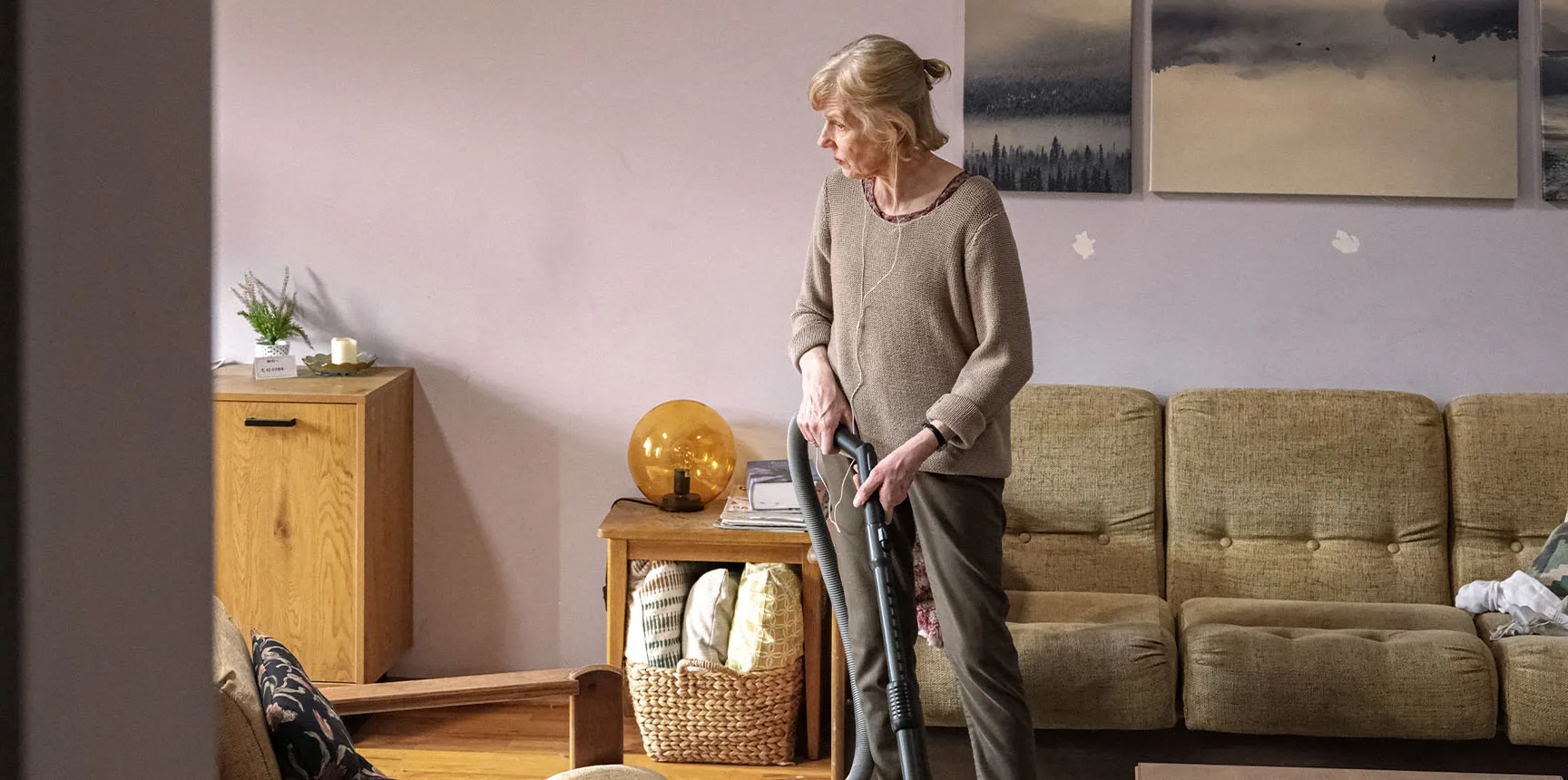
BH: Normally, cinematic romance is confined to the act of falling in love and not all the things that happen after falling in love, the other shades and colors and textures of love that you see. These five stories are all about the other parts of love after that initial phase. I like that a lot about your film. This is combined with the sort of one-location element, and that combination reminds me a lot of the Japanese filmmaker Yasujirō Ozu. Was he an influence at all? If not, who were your influences?
TV: Interesting, interesting. I hadn’t thought of it at all, but I completely see why you say that. He wasn’t a conscious influence.
BH: Then who would be? We talked about Malick a little.
TV: So this film is Malick’s Nightmare: no moving camera, all interior. I’m trying to think. Narratively, I was watching a lot of the anthology film approach. It’s not a traditional anthology film. So, of course, I was leaning on the Jim Jarmusch style early on in the process.
BH: Oh! He’s from my hometown. Cuyahoga Falls, Ohio.
TV: Really? He’s awesome. And the movies that created the same feeling. These were straight comedies, but something like Night On Earth where it’s all five different taxi rides.
Actually. The guy Jim Stark, who was the head of the jury that ended up giving us the award in Tallinn [for the Rebels With a Cause program] produced that movie, which was so, so weird. His advice to me after was, “You made an anthology film, you made a good one, congratulations. Never do it again. They don’t sell, nobody watches them, just don’t do it.” So I guess, and the irony being that the anthology film that he produced that probably burned him. It was one of my childhood favorite movies.
BH: Who are you watching right now?
TV: The current filmmakers that I’m going to drop everything to see are Andre Arnold, Lynne Ramsay, Sean Baker, the Safdie Brothers. These are the filmmakers.
BH: Mostly American? Or?
TV: No, no. Lynne Ramsay and Andrea Arnold are Scottish and English. Actually, I feel kind of out of touch with the American indie scene these days aside [from the stuff that makes it to Europe.] The really good European art house makes it to the US, and then the really good US indie [stuff] makes it to Europe, but they kind of have their own world.
When I was just starting to get into realizing that film is an art, not an entertainment, I was watching a lot of [Ingmar] Bergman, I was watching Bergman and a lot of [Krzysztof] Kieślowski. These were the masters. I don’t know though… I don’t have my gods.
BH: That makes sense to me. You won the Rebels with a Cause award at Tallinn, which has an iconoclastic flare to it. It’s about formal and thematic freshness.
Let’s talk about disaster. Disaster lurks in your film, and we know this from the whole transition scenes that almost look like an earthquake. Disaster is not something that you see depicted with love a whole bunch. Is this something that you think of as a thematic pair?
TV: I do. I do in the sense [of]… a metaphorical state. After you’ve passed, as you said, this honeymoon state of love, the impending doom or disaster is such a critical part of love. And especially in this case where these stories are part of a crisis of love. They are relationships on the rocks, foundational relationships being shaken. So to me, disaster is that part. It’s waking up in a cold sweat wondering if your partner is cheating on you or whatever; that is the disaster. That is the ground shaking under your feet that’s about to open into a giant chasm.
BH: That makes me go back to the fifth story with the husband because when the apartment is falling, he tells her, “Go, get your friend out the closet.” And it was at this moment that his love was strong enough for her that it didn’t matter this thing, this possible affair, was going on. The relationship was strong enough to weather that.
TV: Yes. That, to me, is kind of the point. At the end, when she goes back to the apartment, he’s there in his little apron helping her with the bag. I think that she, like all the other characters, was tempted by this idea of the love story that we’re so used to seeing: this falling in love and being noticed and blah, blah, blah.
When the reality, there’s a quote from Captain Corelli’s Mandolin [the novel by Louis de Bernières] that was big for me. I’m going to butcher the quote, but to paraphrase it, “Love isn’t being in love. Love is what’s left over when the ashes of the fires of being in love have burned away.” The roots of the trees have grown together and everything else has burned off. And I really like that. It’s something that I found already deep into development, but [when I found it] I was like, “Oh, this is it.” This is what I’m saying. This is what the characters are.
BH: This quote and your approach remind me a lot of Ozu’s The Flavor of Green Tea Over Rice. The wife and the husband are having a hard time. The husband pursues an affair, and the wife disdains him in her own ways. She always judges him for the way he pours green tea over his rice. Then, you slowly see them forgive each other, and at the end of the film, she lets him have his green tea over rice. But, like your film, it’s about this pivotal point in a relationship that you don’t see that depicted too often.
TV: [I’ll have to check it out.]
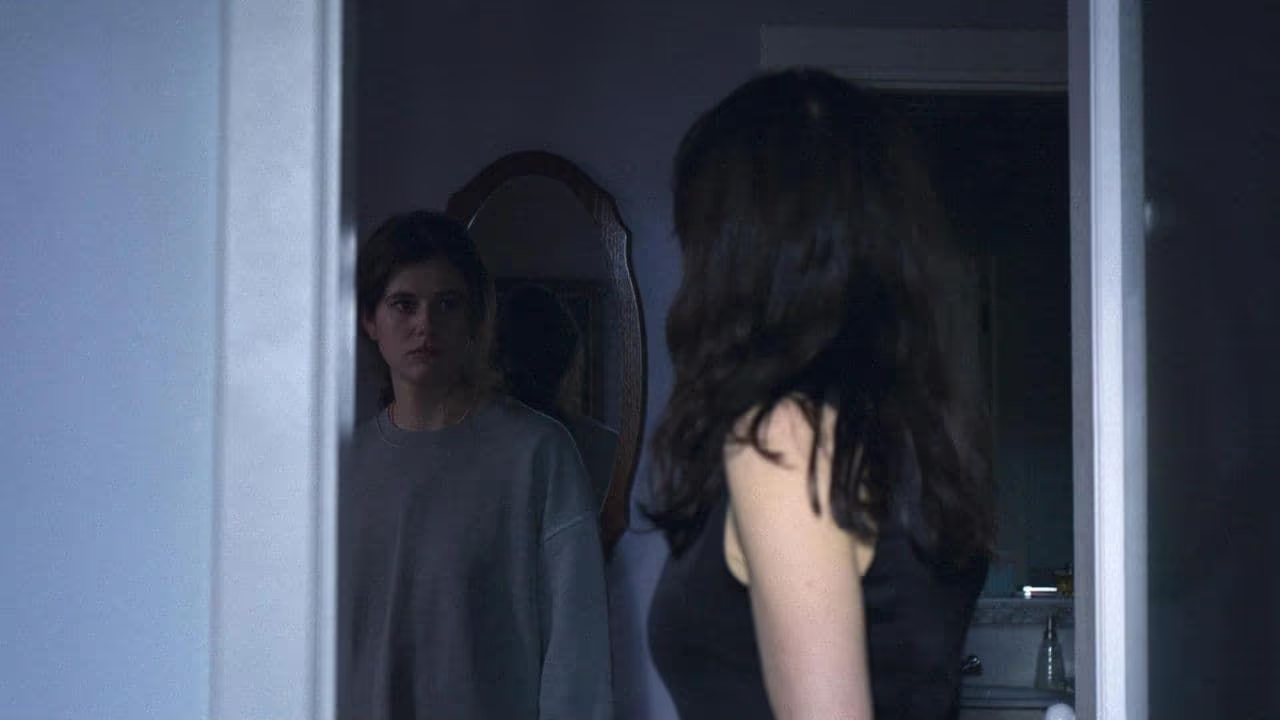
BH: It’s a great film. And a great film yours shares a lot with. Your camera is very motivated, very intentional. You don’t leave the apartment even when tempted to. I’m thinking of the Hungarian guy looking outside at those young women, or when he proposes to the one woman outside. It would’ve been so easy to put the camera out there. I’m wondering what those conversations with your DP were like and what the philosophy of the aesthetic that you wanted to go for was?
TV: Very early on for me, before I had any DP, I wanted to tell a story from an apartment’s perspective. How do you breathe perspective into four walls and a ceiling? So right away, the rule was that the camera could not leave. If we want to see outside, we have as far as that window lets us.
BH: Did you change lenses at all for that?
TV: We did. We changed lenses a lot. To me, [the difference between a] long lens and a wide lens is really just how much you’re paying attention to. With my same eyes, I can be just focused on the pen or I can be sort of sitting back and taking in the whole room. So that was a parameter from the very beginning.
In early prep, I was working with a Hungarian friend of mine who was a DP. And a lot of these ideas were initially developed with him before we switched to Jurģis [Kmins] for co-production reasons and [because] my Hungarian friend couldn’t do it. But he came to Vilnius. We shot in my apartment.
BH: It was shot in your apartment?
TV: Yes. I moved out.
BH: Did it save the production any money?
TV: Yeah, not really. When you have to repaint everything, [use] different furniture, [it all adds up.] I had to move into an Airbnb. So I moved into a real Airbnb to turn my apartment [into an Airbnb for the film].
It wasn’t the plan to shoot there initially, but [because of the COVID-19 pandemic] there were just no short-term rentals left. Everybody had converted their short-term rentals into long-term rentals, and you just couldn’t find apartments to shoot in the city. So we [went around the apartment] and took pictures. We decided to stay away from eye level. So, we’d go a little lower, go a little higher, be behind a cabinet, under a chair. All of these things started coming out there.
[And then, how much the apartment is] paying attention became very critical too. The apartment doesn’t care right away. The apartment doesn’t care about the close-ups, so you need to earn the close-ups. If someone comes into the apartment and is talking, the apartment doesn’t necessarily give a shit. This has been going on from the apartment’s perspective forever. That’s why we keep a camera in another room, let the scene play, and have characters come in and out. Only when they deserve it, in a sense, would we go in for closeups and things like that.
There was this playfulness about the idea. How do we set up? Where do we put a camera to make it feel like this apartment’s perspective? How do we keep it interesting?
[Our answer to that] was less camera angle and more like different times of day, different lights. When it’s at night and you are using certain lights or sounds, one person listens to one kind of music and another person listens to another kind.
When you start listening [to the apartment], you hear things non-stop. When I listen for it, I can hear every time my upstairs neighbor flushes the toilet. If you’re not paying attention, then maybe you just go through your day and don’t think about it. All of these creeks and this stuff become a way to breathe life into the apartment.
BH: I didn’t know that was your apartment. It must be very helpful to know the space so well.
TV: That’s another thing about this. Like you were saying, I could practice the staging, I could bring actors in. I would be there up until I had to move out. There was a lot of wandering around and looking and exploring that space. It was very helpful.
BH: Was the order of the stories always the same?
TV: From shooting, yes. We didn’t reorder anything in the edit or anything. The order was not always that order in the script. Stories were even changed out. But until, whatever, six months before the shoot, that’s how it was.
BH: I’m interested in the role of capitalism and, maybe more specifically, the economy of the exchange in the film. The biggest thing is it’s an apartment, it’s an Airbnb, it’s not even a hotel. It’s like this ultra-capitalist version of a hotel. You have the stripper in the first one—a symbol of capitalism applied directly to the body. The stripper comes back in and doesn’t pay for the property in one of the other stories. This act of theft is involved. There’s so much exchange and capitalism happening in the background. You have couples working from the apartment, for example.
Is this theme intentional? What do you see of love and this capitalistic process of exchange? What thematic relationship exists between those two things?
TV: That’s a great question. I mean, so what was hyper intentional was this idea of an Airbnb [where you] pay for a fake home for a week and set it up to look like a home, put pictures on the wall to trick people into feeling like they’re [home]. That part was very intentional.
There’s also a lot of criticism of the love in the “love stories.”
BH: What do you mean by that?
TV: Something like the stripper is also very intentional as this paid for love or [hired] intimacy, whatever you want to call it.
Elements of this are very important in the sort of the Valentine’s Day version of the love story. [But] a large part of the initial intention was to sort of question [this] by showing the real kind of dirty love.
I don’t know how much I connected it. I really like that interpretation a lot. I don’t know how much I thought about capitalism as a system outside of the Airbnb, but my feelings on capitalism and the transactional and financial nature of love and financial, transactional nature of love, is that is’s a huge hurdle in achieving any kind of real connection. That’s my personal feeling. Maybe that comes out.
BH: I’d agree. With the abusive couple, it’s implied that the reason the woman is not doing anything to leave is that she needs the place to stay. And says he will calm down and then she’ll go back to bed where she always goes to bed. This idea that she has to put up with this abusiveness because she needs something, she needs a place to stay, it’s strong.
TV: That’s exactly how I feel. These elements that feel wrong in love [also] feel transactional: financial exchanges, someone trying to get something for themselves or from someone else. Those are all of the wrong ways. I like that.
I remember talking to my therapist after my first film. She had seen it and she was talking about all kinds of things for me and my identity and whatever, and I was like, “yeah, but that’s not what I meant.” She would ask what I meant, and I’d [tell her things like] “well, the character developed that way because of this and that.”
She [pointed out] there’s literally an infinite amount of other choices I could have made, and there’s this strange moment of, as I was looking back at Motherland, thinking “Oh, that’s exactly why I did it.” If you were to ask me at the time, no, no, no. I could have explained [my choices] very rationally by looking at storytelling or the narrative structure. This is what I’m doing to make a better piece of cinema. But in reality, there’s an infinite amount of ways to also increase tension or whatever [other choices I made]. So it’s an interesting element, a sort of self-reflection, because our films end up exposing a lot about us as people, as much as we may want to deny it.
BH: One last question. Feel free to pass if it’s too personal. How has that influenced your personal relationship with your partner? I mean, you’re writing a movie about complicated love. How has that made you a better partner?
TV: It’s a great question. We met a long time ago, but we reconnected during the making of the movie. So I could say that the sixth love story is the one where we get together and have a child.
This is one of those things that you could say is a coincidence, but I don’t think it is. When I started working on the film, I was going through a really dark place, and I had all kinds of relationships, all kinds of bad things were happening, and I was doing all kinds of bad things. It was just a very chaotic, toxic time. And I started going deeper and deeper and deeper into this [production], and in the process of bringing it to life, I met my life partner. Toward the end of the edit, or maybe after the edit was finished, was when she got pregnant. I don’t know if there are coincidences. I would say it brought a lot of clarity.
I do think that in diving deep into this question, I [developed] an aspirational sense of the type of partner I want to be, the type of relationship that we should seek. Even if the execution isn’t always a hundred percent there. That’s a good question.