In the last few years, there have been a few movies that have unpredictably challenged our temporal space with a dream-like ambience. Friendship threatens the existence of social norms with purposeful disorientation, while Maddie’s Secret folds the hallucinatory haze into its quasi-cheeky earnest storytelling. A skeptic might call it a cheap aesthetic trick to mask production value, but the funny thing about these films is that they feel more authentic in what they’re trying to do, as opposed to generative AI’s attempt to convince that polished hyperrealism is worth watching. These movies are written by humans with weird thoughts and muddled emotions, which cuts to the heart much cleaner than the average morally dubious fruit-drama.
Along the genre-spectrum of this kind of filmmaking comes Night Nurse, which is directed and written by Georgia Bernstein, a very much real person. The film is certainly one that in concept — a cat-and-mouse(ish) game (kinda) between an elderly man with dementia and a nurse — seems salacious enough that it feels like fodder for learning-language models to spit out a reiteration of the common May-December porno. And I suppose Night Nurse does sound and look like one, with blushing provocation between the two characters.
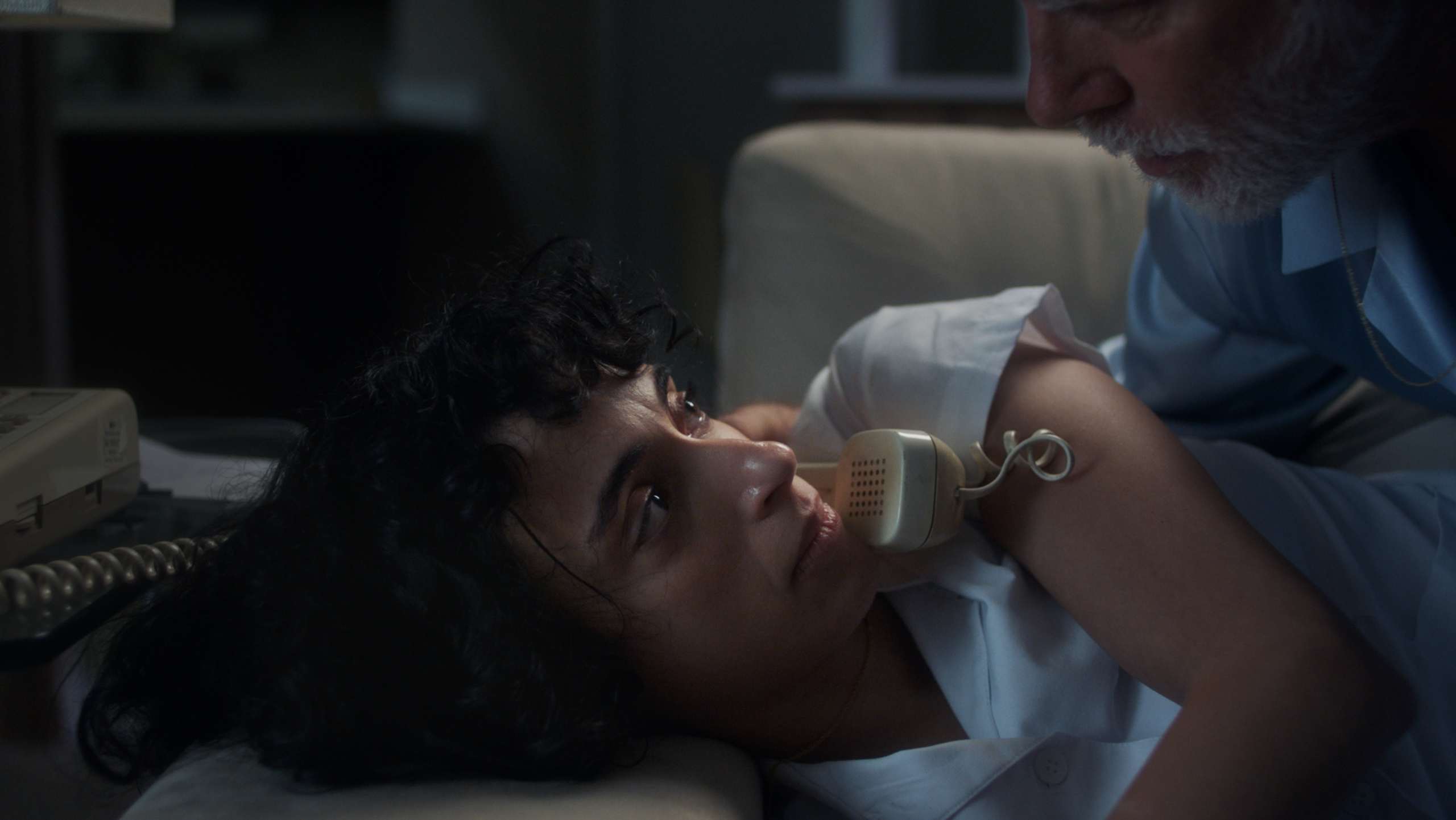
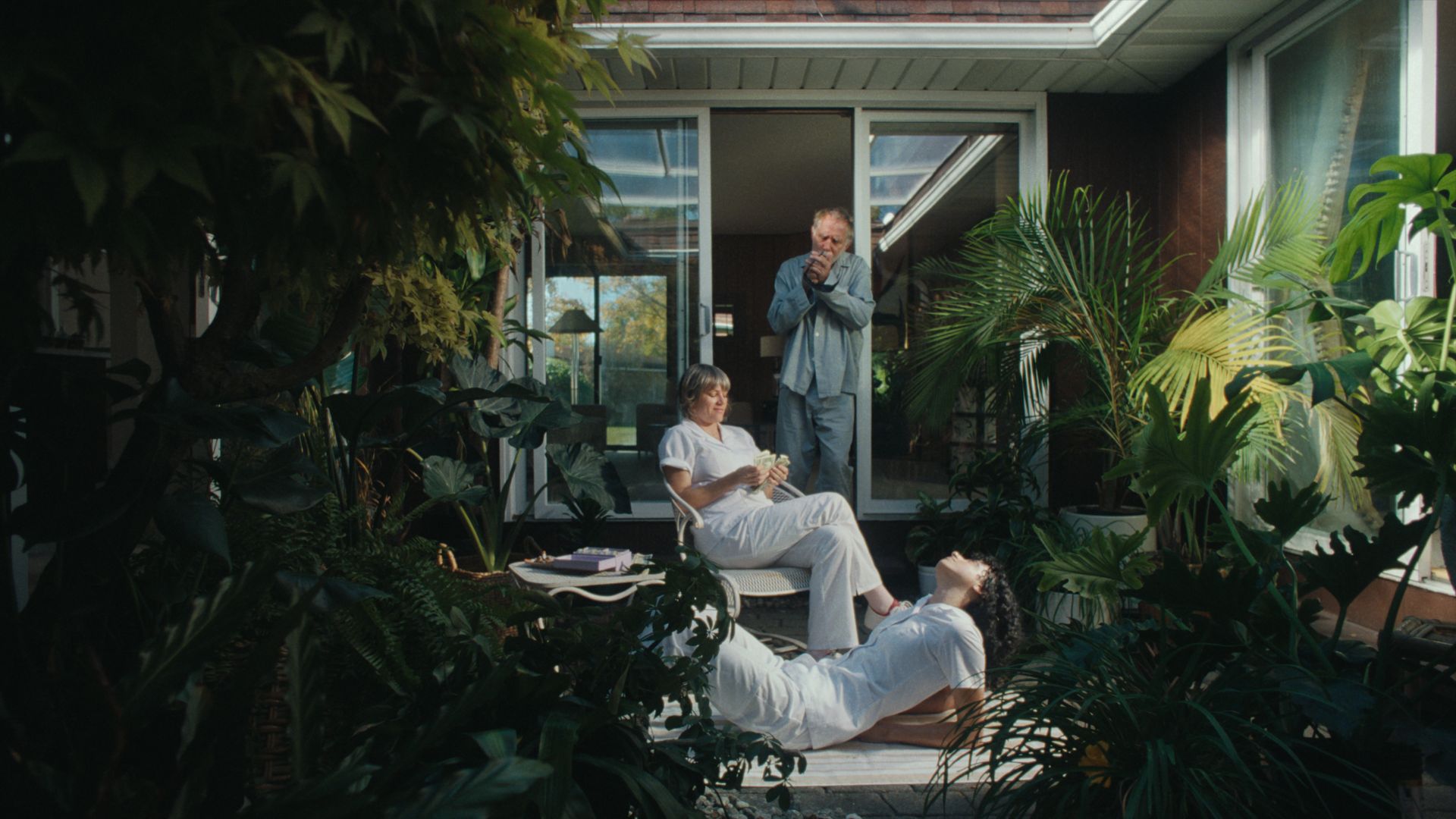
But context matters. After being inspired by a real-life spam call, Bernstein writes a speculative power dynamic between new, inexperienced hire Eleni (Cemre Paksoy) and retirement home/implied in-house casanova Douglas (Bruce McKenzie). Douglas can sense Eleni’s hesitations in her environment and teases her; when she tries to perform a memory test, we can see that in Douglas’s clear-sky eyes that he’s fucking up on purpose. He also sends piercing gazes across the room with a cigarette in hand, which feels somewhat illegal to impose a bad-boy character for someone who then has a sponge bath scene with an accompanying nurse. The tension between Eleni and Douglas bursts when she catches him phoning in a “grandpa is sick, send money” scam late at night, and Eleni is drawn in.
To me, this is where the obvious part of the movie “ends,” about twenty minutes into a 95-minute film. Douglas is not entirely interested for sex (“If you’re looking for a pogo stick to play with, I’m not your guy,” he says after he pushes Eleni away from an aggressive, unprofessional come-on), instead trying to come to terms with aging and loneliness. Maybe we catch one or two other residents, but we mainly see a gaggle of nurses playing as Douglas’s background pawns or members of his nighttime harem. Even if Eleni is physically there, her importance drifts in and out with Douglas’s attention.
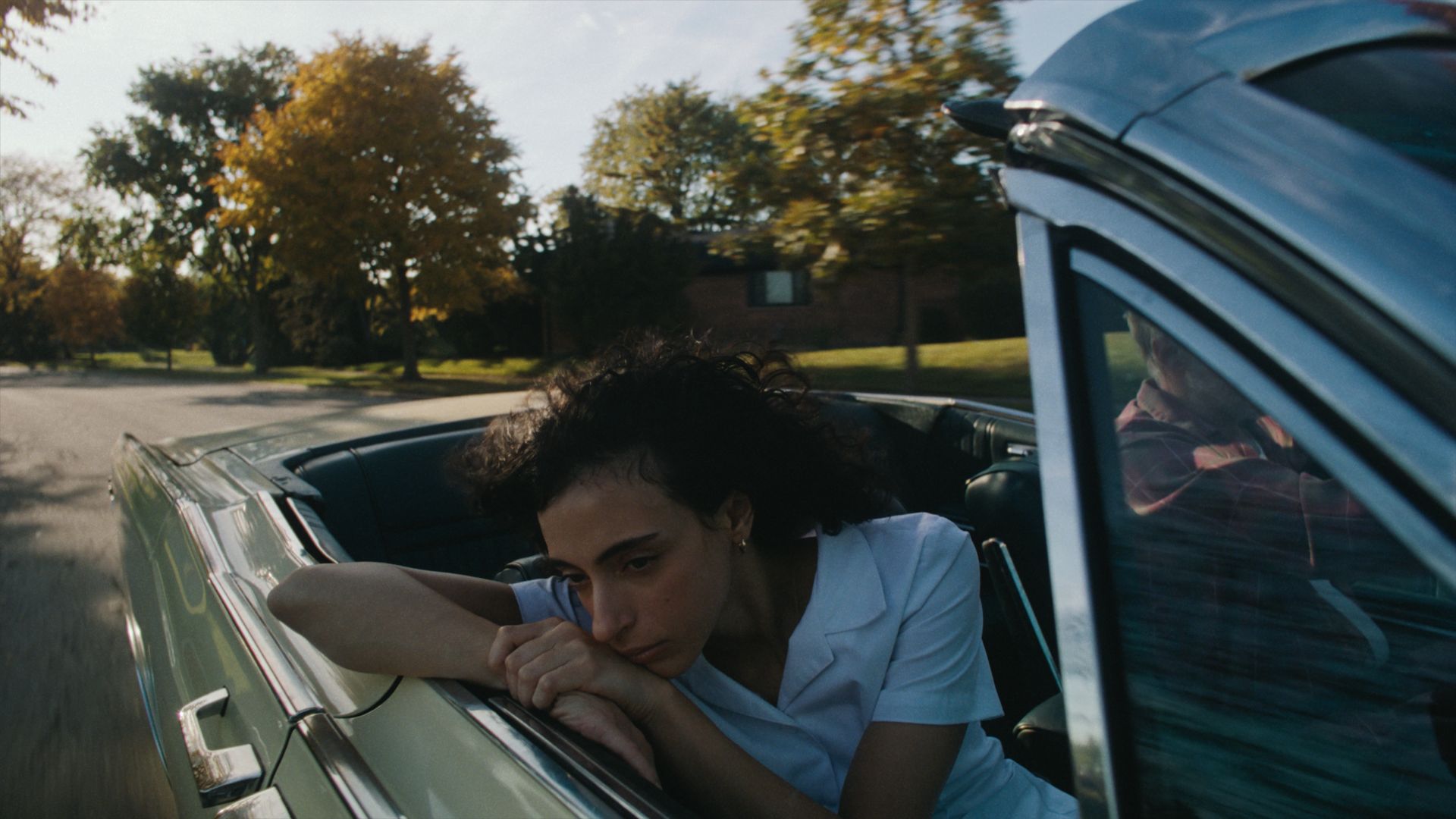
It may be that the fantastical and alienating imagery in Night Nurse establishes a safe space for the lunacy to happen, whether it’s the illicit workplace affair or that the FBI won’t pounce on the suspect immediately. It’s not that it’s particularly crazy for this to happen (and perhaps there is credible evidence about McKenzie’s sex appeal to pull this off), but I can feel that the film’s highlights — occupational hazards of passion, the influence of men in geriatric matching pajamas — lose steam as it broadens into a “What could this relationship get away with?” plotline.
Though the script could have been more precise, I think there is something worth watching in this new addition to the Bonnie and Clyde encyclopedia, especially when it gives the characters a chance to reflect on their conditional power to each other. Composers Sam Clapp and Steven B. Jackson’s experience with podcast scores are displayed here in the spacey piano keys, creating the uncertainty of what’s to come next. Like other films in its dreamland devices, Night Nurse may be silly underneath, but it won’t be as obvious if you’ve succumbed to its spell.
Night Nurse
2026
dir. Georgia Bernstein
95 min.
Opens Friday, 7/10 @ Alamo Drafthouse Boston Seaport and AMC Boston Common