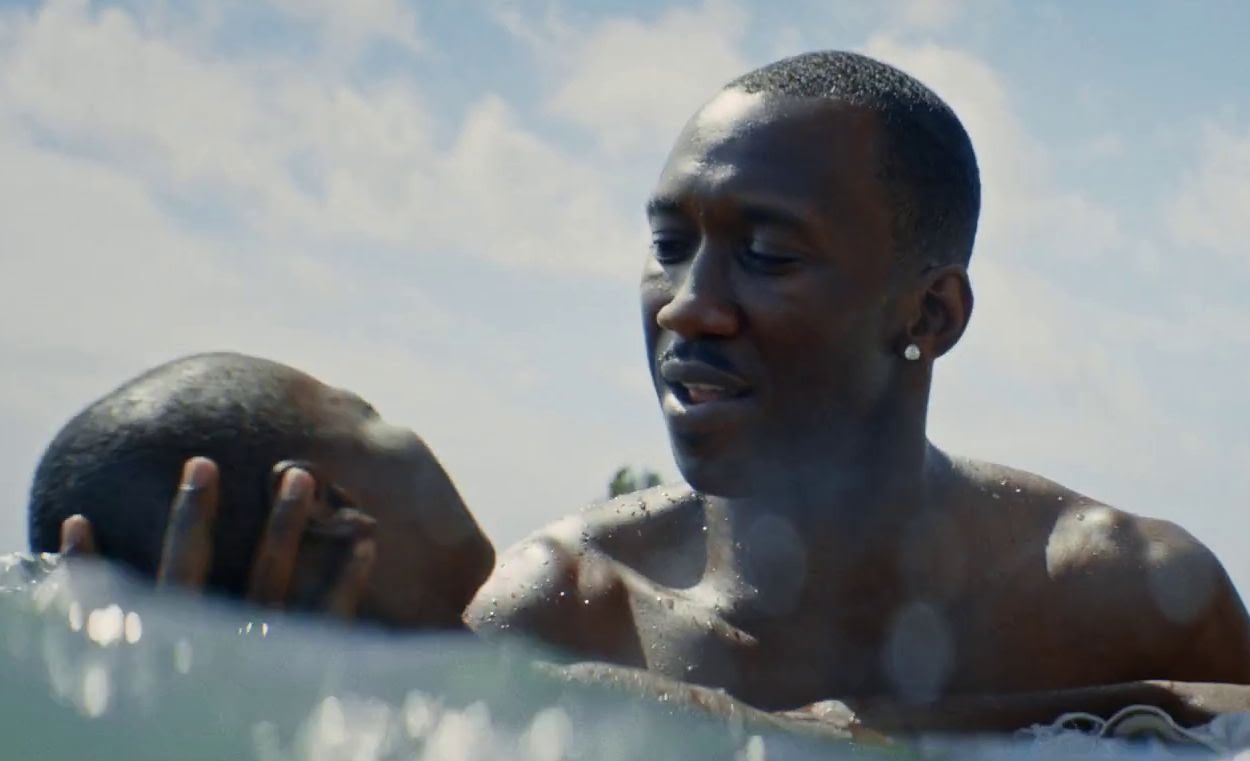
Moonlight is nothing short of a near-perfect, multi-faceted masterpiece of romantic and socio-cultural drama about a young gay Black man growing up. Based on Tarell Alvin McCraney’s unpublished, semi-autobiographical play In Moonlight Black Boys Look Blue, Moonlight captures what it feels like to be a constant outsider from birth. Backed by stellar performances, emblematic relationships, a boatload of boiling, conflicting interpersonal issues, and breathtakingly crafted sights, sounds, costumes, and cuts, Moonlight is a morosely sweet representation of humanity’s best and worst traits. The film follows Chiron through three different points of life based on his then-most personally reflective name: “Little” (Alex Hibbert) for his childhood, “Chiron” (Ashton Sanders) for his teenage years, and “Black” (Trevante Rhodes) for his young-adult years, the first and last of which were nicknames given to Chiron by other vital characters. Running scared from a group of bullies shouting slurs, Chiron hides in a crackhouse only to be found by a soft-hearted drug dealer, Juan (Mahershala Ali). Worried by Chiron’s withdrawn nature, Juan takes Chiron under his wing alongside his girlfriend, Teresa (Janelle Monaé, in her feature debut), before returning the boy to his soon-to-be-found very drug addicted mother, Paula (Naomie Harris). As Chiron continues needing guidance, unexpected losses bookend Moonlight’s on-screen moments as he continues grappling with his queer, Black, masculine identity in a town of homophobes and fewer and fewer people in his corner. May he find his strength to carry on despite the bleakness of his surroundings and learn to love himself despite others.
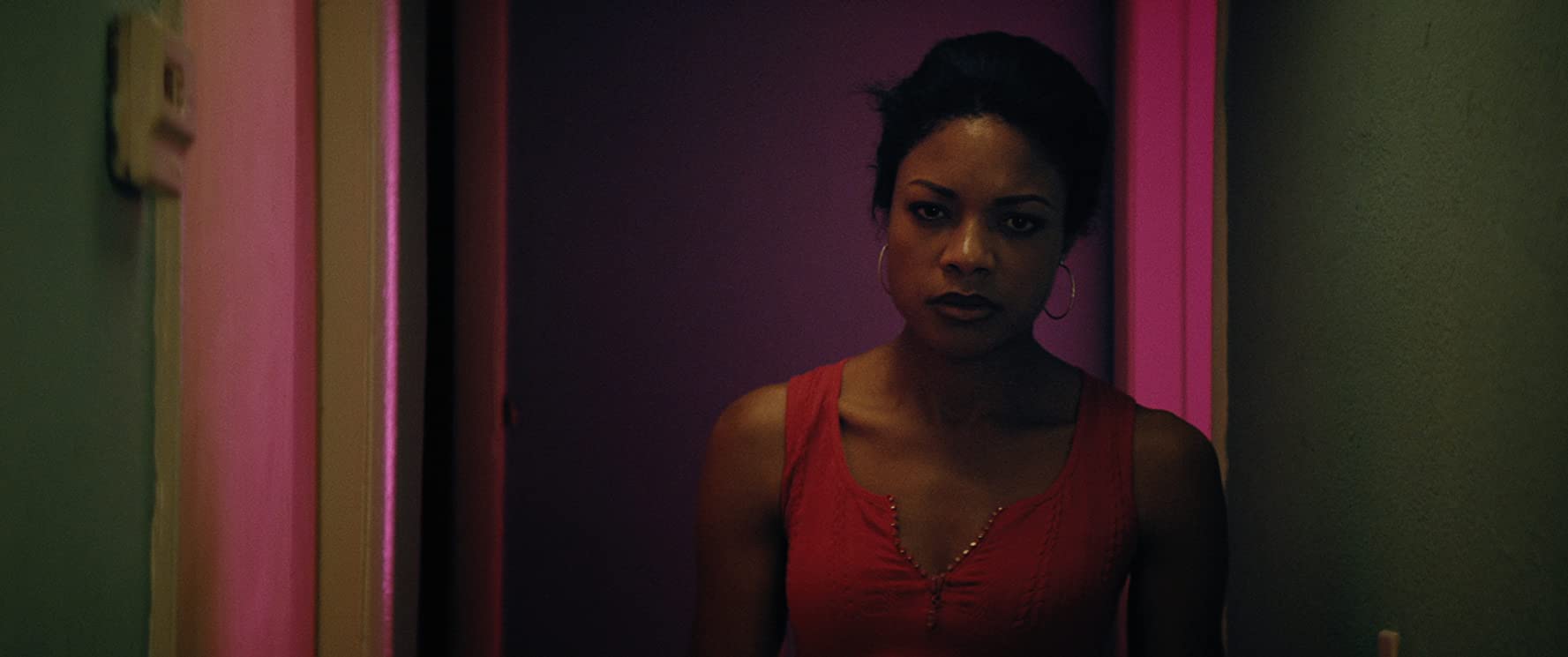
To say Moonlight is a beautifully poetic movie about gayness is an understatement. To say it’s about intersectionality between different sexual and racial identities, a film that highlights double standards in discrimination, or a love letter to Black excellence, human resilience and, well, love itself, would also be an understatement. Moonlight is a universal film that elegantly conveys numerous—and equally palpable—messages about allowing people to live as they want. Chiron is a deeply saddening (but not uncommon) subject, as his life, from the get-go, is rooted in forced self-sufficiency. Growing up with no father or similar figure, an absent crack addict for a mother who eventually just uses him for money—”I need some money…. I’m yo’ blood, remember? Now I ain’t feeling good, and I need something [crack] to help me out. Come on, baby,” she hollers after pushing past Chiron and storming into their house, whom she then corners when he first refuses—and few, if any, solid relationships, his withdrawn nature makes perfect sense: he has no idea what love and stability of any form looks like. Thankfully for him, Juan and Teresa’s hearts are large; despite the eventual, complicated, and unresolved blow to his dynamic with Juan, the adult pair teaches Little many life basics, like how to swim. They teach him it’s okay to be himself, that even though people use “faggot” as “a word to make gay people feel badly,” and that he can have better than what Paula could give him. That influence and their strong affection for Little Chiron carry on throughout the rest of his life, to the point where Chiron, eventually called Black, mirrors Juan in fitness and fashion sense. If only they all knew ahead of time where Paula got her rocks from.
Though Chiron is the primary and most tragic subject, Moonlight has a second intersectional victim in Chiron’s only friend, Kevin (Jaden Piner as a child, Jharrel Jerome as a teen, and André Holland as a young adult). Both of them are queer Black men growing up in the same, unaccepting community of youths. The only difference is that one of them blends in better, while Chiron filled many of the stereotypes before he even knew of his sexuality. From an early age, Kevin tries showing Little, whom he calls Black in mockery of his first nickname, that he can stop bullies from pushing him around: “Why you always letting people pick on you, man…? All you gotta do is show these n*** you ain’t soft.” The two brawl, and subtle sexual tension foreshadowing the pair’s sexuality when they’re older aside, Little’s now received the clearest understanding of how he can get through all his life’s nuances: he has to fight for himself, and oh boy does he have a lot to fight through. Does he build himself up more quickly? Not really; as a teenager, he still gets picked on and scoffed at for appearing gay because he wasn’t as “hard” as bullies as the hoodie’d, brash-spirited Terrel (Patrick Decile) deemed appropriate. Kevin, meanwhile, is a chameleon as he gets detention for hooking up with girls on school property, earning the respect of Terrel and other assholes like him. If being “hard” means going so far as assaulting others in demonstrating your toughness, then for Kevin, it’s no question that he should repeatedly right-hook Chiron’s jaw in front of the entire school. Instead of cowering as expected of the once-called “Little” that’s folded in front of Kevin, Chiron arises stronger than ever as he dead-sets himself on thrashing a thick, wooden chair over Terrel’s head and stabbing him with the broken chunks. The rough-upbringing-to-prison pipeline remains unbroken in Chiron’s rage that Kevin wrought, despite the intimacy they share shortly before the incident.
Chiron quickly finds his footing, looking like and working in the same profession as Juan once did. Unfortunately, unlike Juan, Chiron carries an emptiness: now fitting the ideal masculine image of a hardworking man embracing the Kevin-branded nickname, Black has never let anyone else close. Even as Paula finally enters rehab and reaffirms that, even though Black “… ain’t gotta love me. Lord knows I did not have love for you when you needed it, I know that…. But you goin’ know that I love you,” he can’t let pass the guilt and isolationist tendencies he learned to rely on. How can one open up to themselves or the rest of the world if they weren’t allowed to in the past? Of all people, Kevin finds the answer: food. With equal memories of pleasure and violence shared between them after they split drinks and some Cuban food—breaking the thick ice before they venture back to Kevin’s apartment—Kevin admits he’s “never [felt] worth shit. Just kept on, man. Never really did anything I actually wanted to do. Was all I could do would do what folks thought I should be doin’. Wasn’t ever really myself.” Though he’s now got a prison-mandated job and a small child to make him feel more content, this admission demonstrates what viewers already knew: Kevin was just doing what he could to avoid being made the victim or singled-out gay kid, especially when they fought. In reconnecting, they both desperately wanted in each other what no one else could understand: someone who gets how they feel. Thankfully for both of them, there’s always been someone right there alongside them who felt the same. It’s a shame prejudice and societal expectations could’ve psychologically allowed them to live as they wanted, because even when there’s no Moonlight around, they feel eternally blue.
Moonlight is about coming to terms with all that happens to you, how people get carved from experiential stone, and how you can free yourself and embrace a better life with better people. Despite Terrel’s slightly cartoonish presence and a slightly laughable line towards the film’s end, Chiron’s life illustrates how, whatever some may say, so long as you’re not hurting anybody else, there is nothing wrong with who you are or the fact that you’ve been through some fucked up shit. Just about everyone already has emotional baggage and their own set of issues, so why add to people’s burdens instead of, as Teresa says, filling our lives with “all love and all pride”? Hopefully, Chiron, Kevin, and others in similar positions can find the mental serenity Teresa has long settled into. For drama fans, those who identify with any of Chiron’s multiple identity components, and those looking for a fine-tuned, emotionally tender, and morosely organic flick to end Pride Month with, Moonlight is an endlessly profound triumph.
2016
dir. Barry Jenkins
111 min.
Screens Tuesday, 6/30, 7:00 p.m. @ Landmark’s Kendall Square Cinema
Part of the ongoing repertory series: Retro Replay – Pride