

Crime 101 is a relatively slick and surprisingly emotionally provoking theft thriller about a traceless big-time robber who refuses to hurt anyone. While it’s quite slow, a bit cookie-cuttered, and needs thicker side characters, 101 centers around the lives of an illegal thief, a legal one, and a cop (not to forget Barry Keoghan’s batshit crazy antagonist and less professional heist undertaker, Ormon) to balance tense action with genuinely heartfelt characters who collide unexpectedly. Mike Davis (Chris Hemsworth), an orphaned, black-suited jewel thief, commits his many medium-score heists along the West Coast’s U.S. Highway 101. Mike excessively plans ahead to ensure he’s untraceable and, more importantly, that no one’s harmed. In LA, where Mike’s boss Money (Nick Nolte) resides, Mike undertakes another small job that nearly ends badly, casting doubt on his boss’s plan for Mike’s biggest—and final—heist.
Meanwhile, a less fashionable and more sensitive cop named Detective Lou Lubesnick (Mark Ruffalo) connects the “untraceable thief’s” underlying heist pattern, declaring to a disbelieving precinct that many isolated robberies were, in fact, committed by one man (Mike). Once Mike reengages with the plans—intersecting with long-time insurance broker Sharon Colvin (Halle Berry), who experiences fierce sexism in seeking partnership at her company Mike and Money plan to rob—it’s already too late: Money’s already sent in Ormon, a loose-wired, amateur, and violence-seeking criminal, to take Mike’s place in his robbery plans, making the entire operation now traceable. In a race to the big finish, arrests, death, and big bucks are all in motion—is the cost for financial salvation worth it? It seems no matter who wins, everyone loses a little in the end.

That cost is what gives Crime 101 a surprising amount of brain and heart: it criticizes money as much as it idolizes it. Having come in expecting another big studio action dud akin to just about everything the Russo Brothers have produced since Avengers: Endgame‘s huge theatrical run, 101 comes with countless surprises. While nothing unusually striking occurs—and the film’s first half sludges—these financial criticisms come through in 101’s characters. Both Mike and Sharon aim for top-dog-dom in their respective fields. While viewers don’t see it initially, Mike’s dedication to strategic perfection doesn’t end at physical harm. “People who grow up in chaos crave order… and everything [about you] is a little too perfect,” Sharon at one point implies to Mike regarding his appearance, past, and how he spends his time. It’s true: his well-pressed suits, fine-groomed composure, white-marbled home, and consistent organization of everything in his life demonstrate that “crave” for “order,” even before he himself gets into the meat of it here and elsewhere. His entire life is dictated by “work” and whatever else he allows into his living system. That’s partly why the almost-failed beginning heist spooks him so bad, because it steps into a reality beyond his control—where money cannot solve things. But when “you grow up with nothing [and] have nothing to hold on to…, money is everything,” he admits to Sharon upon her aforementioned reading of his soul. He looks at the homeless and instead of empathy feels relief: “when I lived that, I looked around…. [I] realized this life couldn’t be for me.” Money thus gives him control, or the power to lead whatever life he deems best. Sharon can relate.
Sharon’s opening sequence sees her close to finalizing a massive deal with wealthy financier Steven Monroe (Tate Donovan)—the same financier Mike and Money set their sights on as their juiciest victim. Before she has a chance, the entirely white-male board of her company passes the close along to a new, much younger female associate. Upon requesting partnership after 11 years with the company, which she notes later as being longer than some of her superiors, she first gets excuses: “We’ll have to backburner that until next January when we have a better idea of the full financial picture,” her arrogant boss and board member, Mark (Paul Adelstein). Upon pushing, Mark gives Sharon a much more volatile answer: “You’re 53,” or too old to “bait” the company’s white-male clientele to hire this white-male-run insurance company. In other words, Sharon was never going to have a higher place or get a fat paycheck, and now she’s deemed too old to get everyone else theirs. It’s a degrading reality that both Sharon and many women/non-men face: in the least painful circumstances, these people are humiliated, dehumanized, socially isolated, and financially constricted simply because they don’t appear the same. Sharon thus sees money as the only way to change these a-holes’ ways.
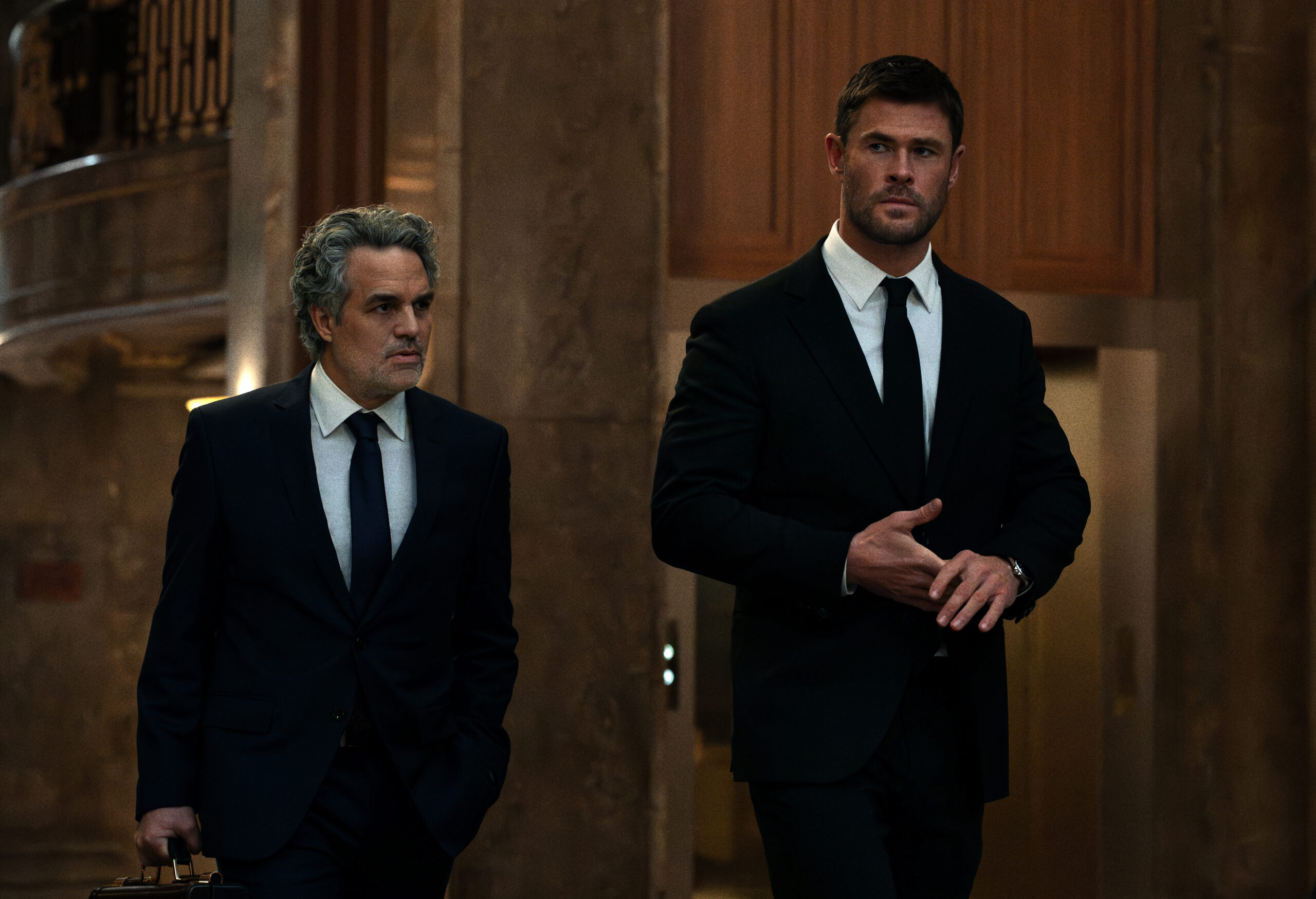
This shared understanding further complicates the crime for Det. Lubesnick, who is quite the opposite of the other pair in understanding that “money doesn’t buy happiness,” but is sensitive enough to empathize with the pair’s qualms and motivations. The contrast between the detective’s more ordinary way of life—as he stumbles through yoga studios for self-improvement and works appearing less showered than a neglected dog—with a slightly cheerier outlook and the money-seeking one of Sharon and Mike elevates how psychologically poisonous wealth chasing is, consuming Mike’s life and damn near ruining Sharon’s with the sexist barriers put up by the greedy around her. It’s not the gateway to a truly blissful life; Det. Lubesnick is closer to that than any of the rest.
While 101’s dynamics are by far its strongest component, Crime plays safe just about everywhere else. Dialogue is slick enough to entertain, but nothing memorable or engaging; action is fun, but not particularly tightly paced or creative; to make the characters as meaty as they are, exposition dumps slog 101’s first half to a near-criminal degree; the plot’s “untraceable” heists and larger logistics don’t usually hold under scrutiny (no one keeps a mask on for longer than a minute into big confrontations, for one rudimentary example); both Maya and Ormon could use expansion, as their characters feel more like plot extensions than other players in this Crime. Thus, Crime 101 is a decently character-driven thriller about morals, money, and true peace as the film begins and ends with a yoga instructor’s recording telling the viewers to “inhale… exhale… and relax.” In a time when money is openly corrupting the U.S. government at an intensity arguably unseen for at least a good while, it’s important to remember that money requires the same discipline and moderation that a drink does, only its consequences are much worse. It can just as easily save a life as it can control or destroy it. For those looking for a dive into the pros and cons of the money-run globe in a standardly entertaining heist film, Crime 101 is fairly propulsive and provocative, if not perfect or original.
2026
dir. Bart Layton
140 min.
In theaters now @ Apple Cinemas, Alamo Drafthouse Cinema Boston Seaport, Landmark’s Kendall Square Cinema, Patriot Cinemas, and all local AMCs