
The Nightmare Before Christmas is a visually stunning, darkly humorous stop-motion musical that blends Halloween spookiness with Christmas cheer, appealing to fans of Tim Burton, stop-motion, and holiday movies. Its creative style and playful tone make it a must-watch for those who enjoy holiday films with a twist—proving Tim Burton’s years-long effort to transform Nightmare from a poem to a film to be a jolly idea.
In a universe where each holiday is actually run by different figureheads who lead their Holiday themed—whether they be familiar, like Santa for Christmas and Christmas Town, or entirely fictitious—Jack Skellington (voiced by Chris Sarandon while speaking, Danny Elfman when singing), Halloween Town’s well-respected Pumpkin King and leading man of Halloween’s yearly plans grows tired of the same, now unspooky routines. With the mummy-wrapped bogeyman named Oogie Boogie (Ken Page) rivaling Jack’s festivities leadership, Jack seeks out new Holiday ideas on his own, against the wishes of his support system, like Sally (Catherine O’Hara), the female Frankenstein-like creation of local mad scientist Doctor Finkelstein (William Hickey), who is secretly in love with Jack. Deep in the nearby woods, he finds a door leading to a room of more doors, each leading to a different Western holiday town, where he then stumbles into Christmas Town and is immediately awed by its colorful atmosphere, cheerful population, and jollier holiday spirit. Deciding the best course would be to hijack Christmas, Jack does, unraveling a fiasco of cross-holiday confusions that lead to near-fatal kidnappings and swathes of horrified children. Jack must save the holidays, himself, and the people he endangers before they die or, worse, Christmas is ruined.
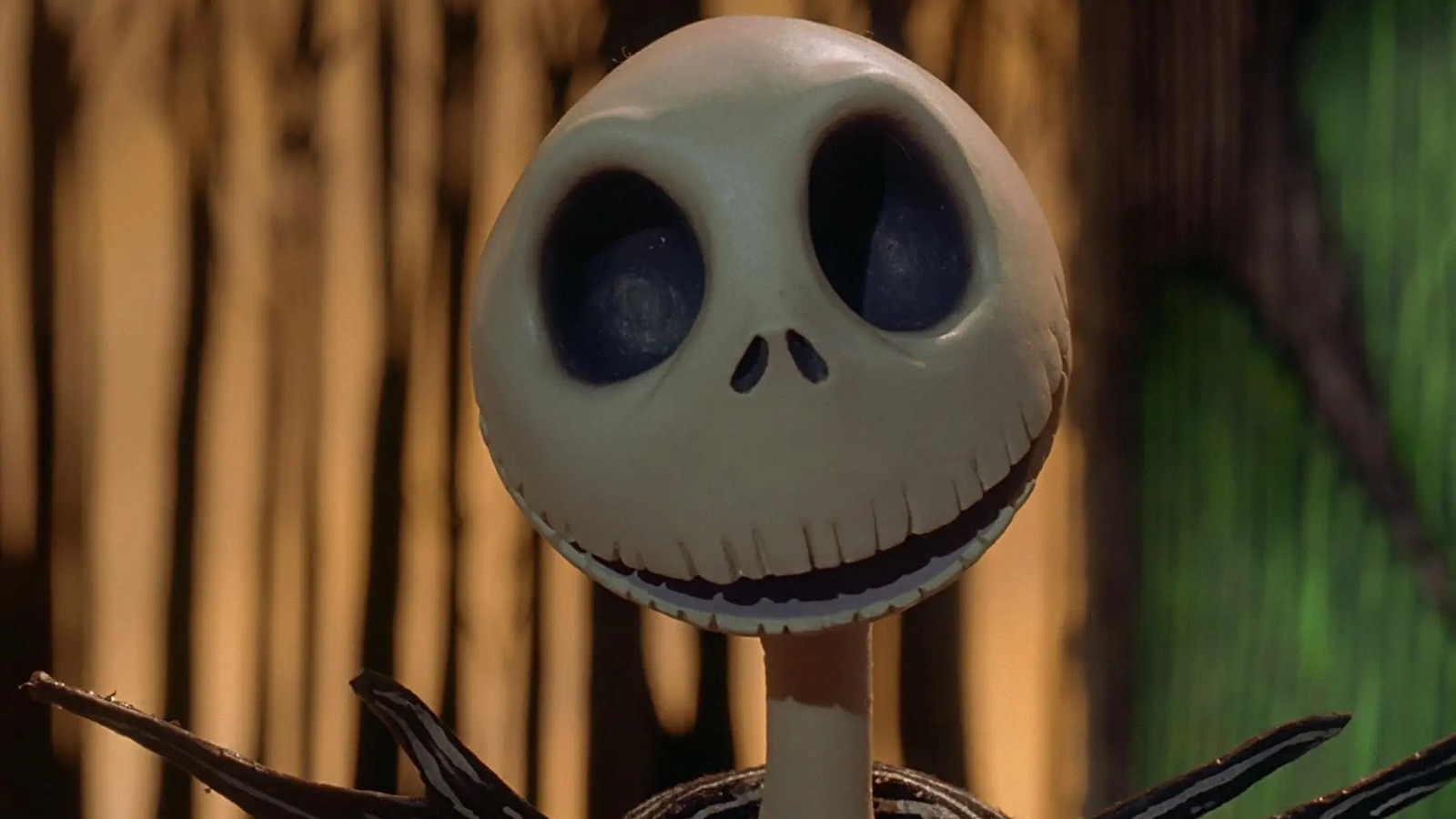
In short, in a shrunken runtime of 75ish minutes, Nightmare Before Christmas enthuses viewers with characters both silly and somber. The vibrant, smoothly oriented stop-motion, Danny Elfman’s sly score combining Halloween’s organ lows with Christmas’s fluted highs, and impeccable voice work of the entire cast shouldn’t go unnoticed. Burton’s iconic, whimsically dark filmmaking style bleeds into this realm where every holiday myth is true, creating a fiercely grim yet cozily memorable setting. Plus, with hypnotic singing numbers that literally see Danny Elfman sing his bones out as Jack, viewers will feel themselves drawn into a world of holiday living that is both unsettling and welcoming. Jack and all his friends also make for an amusing and painfully relatable ensemble. The entire film spins because Jack has what can only be described as a midlife (or eternal life?) crisis. Every year, he does the same work to which he gets the same reactions: “You’re such a scream, Jack,” one Vampire tells him; “You’re a witch’s fondest dream!” a witch tells him after. This time, he doesn’t feel excitement or satisfaction, but bland deja vu: “Yeah, I guess so. Just like last year and the year before that and the year before that,” Sarandon as Jack exclaims, before switching to Elfman to sing all about the monotony of life. Famous or not, for any readers used to eight-hour, five-days-a-week work schedules, this feeling is all too familiar: years of getting up, going to work, facing the same issues and tasks as the day before, and going home to sleep only for the next day to unfold the same. Jack’s desire for fresh Halloween spontaneity stems from such grievances over these continuous routines. While his ensuing actions are unique to his goofy, chaotically spooky nature, that urge for newness is all too understandable.
Sally, meanwhile, yearns to be more like Jack, be with him, and show him how he’s right where he’s supposed to be. She spends her time at least initially under Doctor Finkelstein’s thumb: “You’re mine you know! I made you with my own hands,” Finkelstein reminds her. But Jack gives her hope for a freer, more fulfilling life. Aside from her love for Jack, Sally has spent god knows how long watching him do as he wishes, orchestrating Halloween and bending the loyal and willing town to such Holiday wills and whims. It’s only natural that she feels constrained by Finkelstein: “You can make other creations. I’m restless, I can’t help it.” Such restlessness drives her to disobey Finkelstein multiple times, especially as Jack comes under strain of the position he’s privileged to be in—a feat where courage is most needed, and of which Sally musters multiple times. Such behavior yields results for both herself and Jack; danger and weighted decision-making either make or break people, and she shows with each nightshade poisoning of her creator that she can face them. Thus, as the cataclysms of Jack’s decisions bring chaos to the world and their homes, Sally’s courage and self-assurance is both satisfactory to see unfurl on its own, and a beneficial component for Jack to eventually take into his own quarrels. Love and the human need for prosperity drive us to do crazy things, which Sally—who should be the most inhuman of us all—utilizes as best she can to reshape her destiny.
Thus, while the shortened run squeezes out any room for juicier emphasis on made Jack’s crisis, Sally’s freedom and their hometown’s stability, The Nightmare Before Christmas is a gleeful, silly, somewhat emblematic, and surprisingly character-driven Christmas musical demonstrating that even the most Holiday-dedicated can have self-confidence and boredom issues so bad they’ll flip their lives upside down to fix them. For Tim Burton-Danny Elfman fans, Christmas and/or Halloween film fans, stop-motion enthusiasts, and those looking for something short and sweet, Nightmare is a hilariously memorable dream of hauntingly jolly proportions. As Jack finally embraces Sally’s love, it’s impossible not to grin with kiddish hope.
1993
dir. Henry Selick
76 min.
Screens Monday, 12/8, @ 6:30 p.m. & 8:30 p.m. @ The Brattle Theatre
Co-presentation with gather here; arts and crafts encouraged for 6:30 showing
Part of the ongoing repertory series: Special Engagements and Special Events