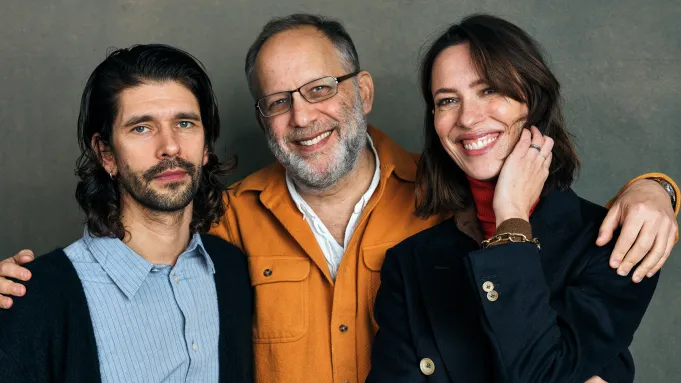
On the eve of the release of his latest film, Peter Hujar’s Day, at the Brattle Theatre, director Ira Sachs hopped on Zoom to discuss the processes behind such an intimate drama, his inspirations, the unbelievable talents of Ben Whishaw and Rebecca Hall, and much more!
BOSTON HASSLE: You and I actually spoke on the phone a hundred years ago about Frankie, which was really fun. That was one of the first interviews I got to do with Boston Hassle.
IRA SACHS: It’s nice. We get to speak again, and we’re still doing this.
BH: How long had you known about Linda’s project when she was speaking to Peter about his day? Did you know Linda Rosenkrantz at all before the book’s publication a couple years ago?
IS: No, I didn’t. I read the book and messaged her on Instagram. I should actually find those messages. I said I was interested in making a movie from [her book], and then it took about a year to make that happen. It was not immediate, and now I know her very, very well. I think we have a relationship that is very different from her relationship with Peter, but also has certain things in common with that relationship. She’s such a warm and curious person, and she loves artists, and she’s very welcoming to the project. She also reminds me of relatives of mine. I think we connect on a Jewish, Eastern European level. We have something historic between us.
BH: I didn’t know anything about Peter Hujar’s Day until you announced the film was coming, I thought it was such an interesting concept. Then I learned that she was going to do this with other artists, but it only happened with Peter. It’s nice to see that a stalled giant project can still be something on its own and then become this film.
IS: I knew that it would be a project of intimacy between Ben and I, and between Ben and Rebecca, and in a way, through with Linda and I. It’s a very handmade film, I would say. It was ours. We could just do what we wanted. There was a lot of creative freedom to that that I think is in the DNA of the film.
BH: That’s something I was wondering about. Obviously you can’t improvise the dialog because it’s based off of the transcript, but I imagine there was a lot of improvisation in the physicality?
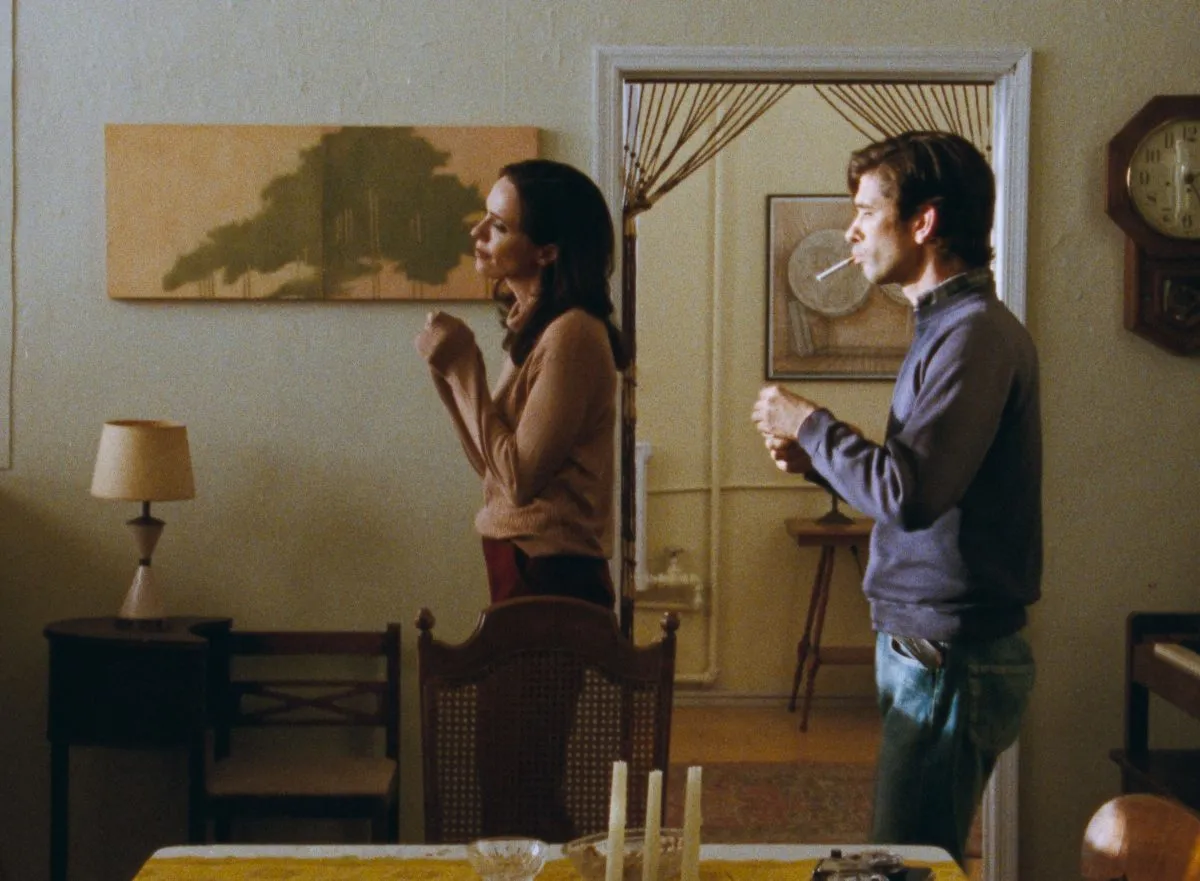
IS: I would put them in specific positions and situations, and then they were free to move as they would like for the most part. There are some sequences in the film which are and you can kind of notice them, which are very choreographed, like go to the refrigerator, pull out some water, pour a glass, hand it to Ben on this line, because there’s a way in which we always had to work with with this verbatim text. We couldn’t add to it, so we had to kind of keep it flowing. On the other hand, I could say, “Do this dialog about Bette Davis and Joan Crawford on the bed.” They were very free, and that was part of what was really interesting to me as a filmmaker. There was a random quality to what piece of text would happen where. It was based on trying to tell a story of a day also in the present, the day within that space.

BH: You bring up the artifice of it, which is something I found so interesting, because it feels so intimate, this portrait of these real life people, and the actors playing them, and the film surrounding them. You break the fourth wall a few times, where suddenly you see the camera, or the boom mic, which somehow is not as jarring as something like that could be. Can you talk a little bit about that, where you’re pulling people in and out of the movie, but never actually pulling you out of it?
IS: I was trying to find a balance which would make the film both really naturalistic, but also an examination of the process of making a portrait. I cast Ben and Rebecca as Peter and Linda, and they were performing in American accents to British actors. I was very aware that this was a theatrical exercise. It wasn’t naturalism, it was something else. I felt that I had the freedom to make a film that was about Peter’s day and his universe, about the relationship between Peter and Linda and the intimacy of that friendship. It was also a film about what it means to take a portrait, to make a portrait of somebody. In that way, it became a film about light, space, and form. I was considering light, space, and form as a secondary text of the film.
BH: Speaking of accents, I thought Ben did an incredible job with that sort of “’70s gay guy” speaking voice. I’ve done a lot of my own research about pre-AIDS gay life in New York, specifically, which I’ve always found so interesting.
IS: I’ve been reading Thomas Mallon’s diaries [The Very Heart of It], which I’m enjoying a lot, which run from about ‘83 to ‘94. Turns out he’s a neocon, which I’m not really loving about him, but…
BH: That happens a lot, like Andrew Sullivan or someone like that. We don’t have to get into that. But, no, I just really think Ben nailed the voice.
IS: He nailed a voice. But he was not imitating Peter. You won’t know how Peter sounds. There’s almost no videotape of Peter Hujar, and there’s very little audio, but there was a little bit which Ben listened to a lot without trying to create an imitation or be a ventriloquist, but he did get something. I feel like Ben is possessed in this movie, to be honest. There’s a form of possession that took over him as an actor, not just connecting to Peter, his ability to to make this language live is enormous to me. It’s a monumental performance.
BH: It’s completely titanic. Having Rebecca Hall there as Linda too, obviously. She’s a genius.
IS: I think about Christine (2016). Really such a sad movie. To me, it’s not really a film about Peter Hujar. It’s a film about Peter and Linda Rosenkranz together. That’s really significant to me. It’s a two-hander and, and, as the camera person and the director, I was interested in a balance between the two. Listening is a form of acting, right? It’s a very active thing to do. Rebecca found a whole second narrative around affection and love and curiosity and friendship. I think Rebecca understood something that I tried not to verbalize, that ultimately this is a film about loss. Though I tried not to actively talk about AIDS in the film, I think [about] the awareness that Rebecca and I had that within 13 years, Peter would be gone. It really is a shadow that creates a kind of melancholy, and absolutely that is essential.
BH: That’s how I feel with anything that takes place in the ’70s like this, where I’m just thinking they don’t know what’s coming, but you can’t let that distract from what’s being told or presented.
IS: Have you read much of Andrew Holleran?
BH: I’ve read Dancer from the Dance.
IS: I think he’s one of the greatest American writers of the 20th century, and I think the fact that he isn’t recognized as such has to do with his particular focus on gay life. He wrote a book called Grief, which I recommend tracking down, because he writes about the time pre and post AIDS with such delicacy. It’s really extraordinary.
BH: Yeah, compare that to Edmund White’s sex memoir that he published right before he passed. He just writes, here’s the list of all of my boyfriends over 80 years. All these different eras. It read to me like Annie Proulx in a way, where it’s just thinking about something that happened 40 years ago. That’s what is so great about this film. It feels like the world captured in one day, in one apartment, with just the sun slowly setting, and it’s such a beautiful feeling.
IS: Have you seen a short film I made called Last Address? It’s on the internet. It’s my most seen film. It’s an eight minute film about a group of New York City artists who died of AIDS. And in a way, Hujar is an extension of them, because it’s also structured around the course of a single day, but it’s almost anti-biographical. You learn nothing about the names of except the names of all these people who died and disappeared in the AIDS epidemic. You might find it interesting to watch the connection to this film.
BH: That sounds really interesting. I wanted to ask about Peter’s name dropping, which I thought was very funny. I feel like that’s something that gay guys still do, in a way.
IS: I’m not totally certain that he’s name dropping because these are his intimates. So on the other hand, he understands that certain people have power because of their celebrity. He talks at some point about “Susan.” At another point, he talks about “Susan Sontag.” He talks about both her as someone who’s close to him and also someone he refers to in the third person.
BH: That feels more accurate than just a name dropping, where he’s just bringing up artists to put in. This was his day. This was what was happening yesterday.
IS: It’s a very usual day for him. It was a village, a group of people who were doing things that others thought were not important, but that they each valued in themselves and in their community. And I think they needed each other to find that this work could be meaningful. It was a village, it was a subculture. It was also an art movement, a very serious movement, in the same way that Picasso in the ‘30s might be considered a movement.
BH: That’s similar to what Lizzie Borden said about Born in Flames, where she would park a car down the street with a fake parking pass so she could get the camera where she needed.
IS: Born in Flames is a great example. People have noticed that there’s a singular nature to this movie. I wish that wasn’t the case, because I feel like there was a time when movies like Born in Flames were happening on a regular basis.
BH: There needs to be ways for artists to make these sorts of things without having to go into crazy debt. Last question just about the music that was used at the end?
IS: It’s Mozart’s Requiem, which veers towards camp, because it draws attention to the melodrama of daily life and the melodrama of this monument to Peter Hujar. It becomes almost ironic, because it’s such an ordinary set of things he’s describing. But by using Requiem for the film, it says there’s nothing ordinary happening here.
Peter Hujar’s Day
2025
dir. Ira Sachs
76 min.
Screens Friday, 11/21 through Tuesday, 11/25 @ Brattle Theatre – click here for showtimes and ticket info