Director Danny Boyle and writer Alex Garland’s 28 Days Later is a fun, puckish, and darkly human zombie action thriller. With an amateurish edge that strengthens Days‘ balance between throat-gripping horror, bittersweet intimacy, and socio-political implication, Boyle’s premiere zombie outing is as deft as it is dangerously fun. It holds up even today, well past the peak of zombie-genre reinvigoration it jumpstarted in ’02, thanks to its timelessly applicable social commentary.
Riots. Violence. Police brutality. Lawlessness. As the camera pans, chimps watch such horrific clips with us. Only in-film TV, but for some torturous science experiment. Animal rights activists do what’s usually the right thing, breaking in to free the chimps. The catch? They’re here because they’re infected. “Infected with what?” one asks. “Rage,” the bulb-eyed, fearfully shouty scientist who catches them says upon warning to leave them inside before the inevitable happens. Blood everywhere. Activists turn in seconds, ripping each other apart. The world seems to end. But 28 Days Later… A bike courier, Jim (Cillian Murphy), wakes up in a London hospital. Once he escapes, seeing destroyed infrastructure, ransacked vending machines, empty streets, and a swarm of sleeping infected people in a church, he runs like hell before finding other more prepared survivors in Selena (Naomie Harris) and Mark (Noah Huntley). Once briefly safe, the experienced pair breaks it down: a viral infection has wiped out everything except a couple of straggling survivors. Agreeing to keep moving, they venture through different parts of England—eventually joining with a surviving father and daughter in Frank (Brendan Gleeson) and Hannah (Megan Burns)—discovering the best and worst parts of themselves, the infected, the new world, other people, and, worst of all, a military in need of structure and a future.
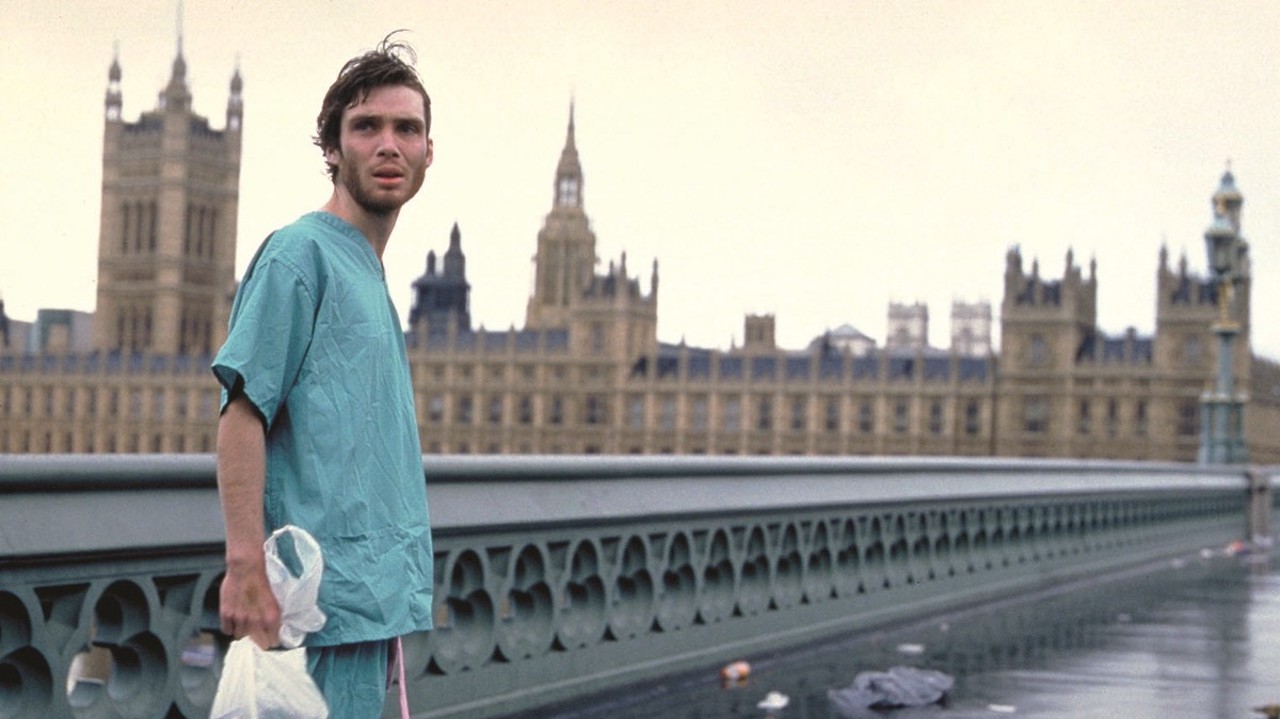
28 Days Later is a true modern zombie classic, utilizing a found-footage format for most of its run to further deteriorate a grim, rotted-out London whilst its characters find how to keep themselves and humanity alive. Taking notes from George A. Romero’s Dead trilogy in its brilliantly splattering makeup and dusty, rundown set design, Boyle, Garland, and co. use a shoddier handheld camera than your typical 35mm—not to mention beginning the film with breathtaking (and damn near impossibly attainable) deserted London shots—to make a world where rules are gone, survival is all that’s left, and characters’ reactions are the most potent driving force of significant change. With the rage virus leaving its victims alive, merely enhancing their aggression levels to the extreme, Days‘ “zombies” aren’t zombies at all; they’re victims of a cruel medical experiment that cranks up pre-existing human traits, making them violently angry. Just in concept, Boyle and Garland enhance their “zombie” flick by depicting humans as the problem: road rage, air rage, violence, and other forms of aggressive behavior already exist. The virus wouldn’t have affected humans as severely had the drive been there. Selena and Mark know that well, and must break Jim into that new world.
Mark’s “humorless” but typically British giraffe joke aside, Selena and Mark hold nothing back. When finding Jim’s parents dead in their bedroom with a heartshattering note on the blank side of Jim’s childhood photo, Selena bluntly recommends: “They died peacefully. You should be grateful.” But how can anyone be grateful for their parents’ dying “peacefully” in an apocalypse? Who appreciates how death steals a soul even in the civilized world? Jim learns how through Mark’s retelling of his family’s airport escape plan: “My, um… parents and my sisters, we went to Paddington Station hoping we could get on a plane…. About 20,000 other people have the same idea. The crowd was surging…. I looked down, and I was standing on all these people, like a carpet, people who had fallen. And somewhere in the crowd… I saw my dad. His face. Selena’s right. You should be grateful.” As hordes swarm this small group and some meet gory fates, Jim sees how “grateful” he should be if he “died peacefully” like his parents. It’s a world so gruesome, fast, and mercilessly unfair that a relatively painless death is the closest to $1 million someone can ever get again. But, fortunately, Jim’s adaptability is more efficient than most, and his optimistic but not unaware perspective allows him to cling to something neither Selena nor Mark has: hope for a future and a better life. Once Selena also teaches Jim about the pros and cons of other people—or at least reveals her warped perspective on them—that difference appears most transparently.
Once Hannah and Frank come into the picture—a lovely daughter and dad who get introduced via flashing Christmas lights on a single apartment balcony, who then save Jim and Selena from a grisly fate and offer shelter once the main pair explores the light’s source—Jim opens up to them while Selena only shuts down further. Jim sees them as “good people,” ones to keep around both for company and for survivability (safety in numbers, plus Frank’s awesome with a riot shield and baton!). However, Selena sees them as a liability, especially teenage Hannah: “Well, they’re desperate. Probably need us more than we need them…. You should be more concerned about whether they’re gonna slow you down.” If they slow her down, or if they and Jim all get infected, she’d leave or kill them all “in a heartbeat.” But upon going with them, Selena only warms up to the new energy Hannah and Frank set in. As they joke around in abandoned supermarkets, poke at each other with random objects amusingly as they’re repacking the group car, and Jim adopts the family’s welcome, light demeanor, Selena changes her mind: “All the death… all the shit. It doesn’t really mean anything to Frank and Hannah, because—well, she’s got her dad, and he’s got his daughter, so—I was wrong when I said that staying alive is as good as it gets.” Fortunately for Selena, Jim’s always felt that way and only gets relieved to hear her come around. Even in the apocalypse, joy can sprout—at least until the military rolls through.
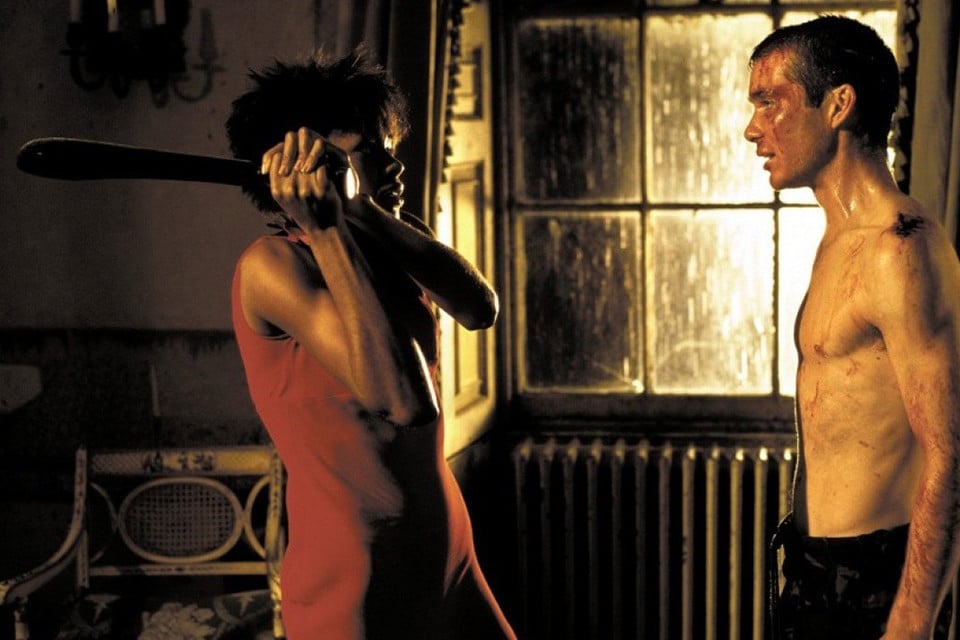
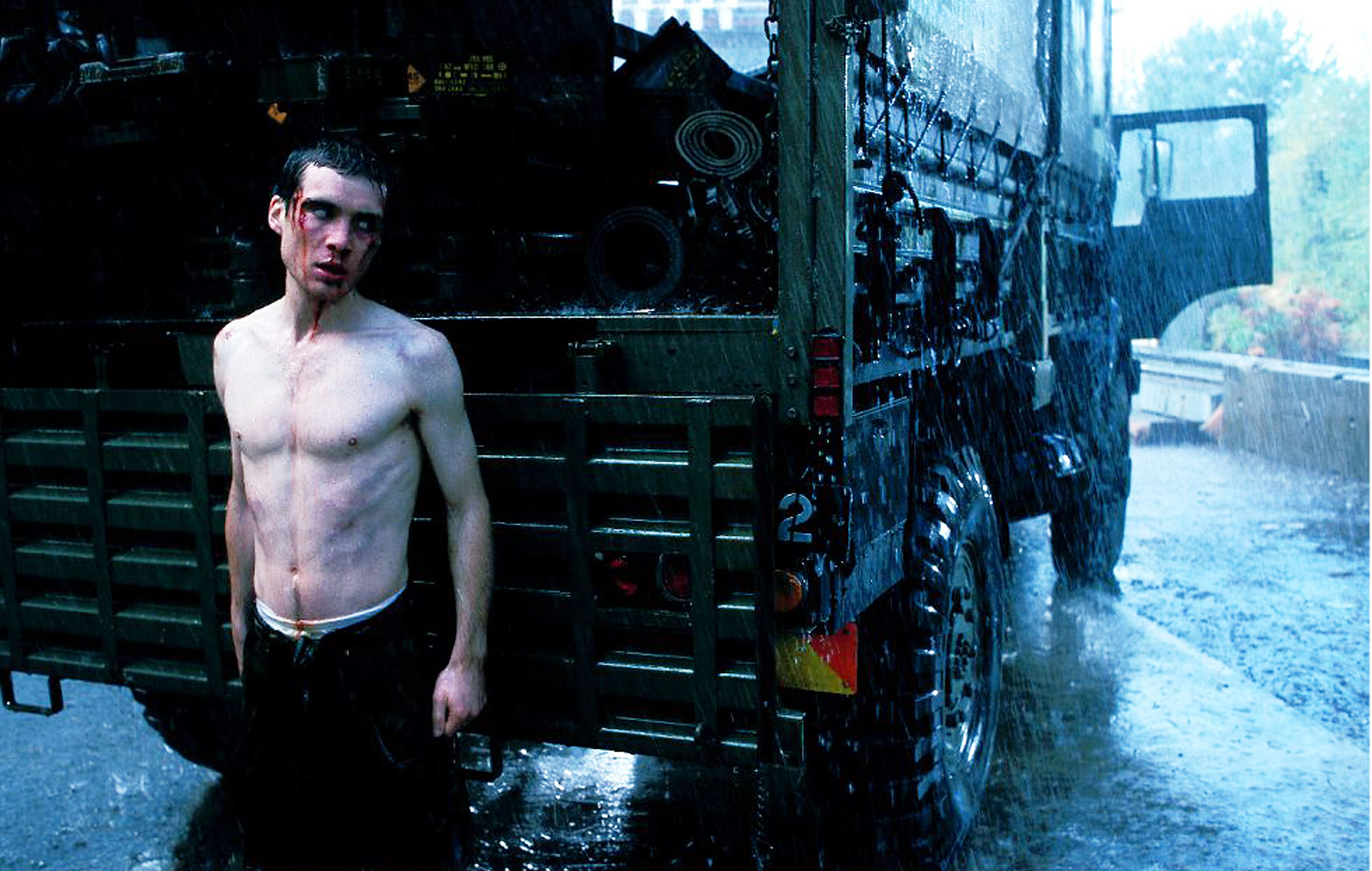
As mentioned, the Rage virus merely supercharges people’s anger and aggression drives, turning them from reasonable creatures with violent capabilities to devolved, impulsive savages who are only capable of such violence. But where there’s a potential, there are those who will meet it, no matter how terrible or extreme that possibility is. Jim, Hannah, and Selena see such extremes when they meet Major Henry West (Charles Eccelston, who took a gracious emergency pay cut for Days‘ completion) and his band of eight English soldiers. Initially coming in hopes of finding a cure to infection, as Major West quite literally advertises that “an answer to infection is here” via radio recording, the group finds their barbaric solution: “I promised them [my men] women… ’cause women mean a future.” Giving Jim an ultimatum of death or acceptance that the soldiers will rape Selena and underage Hannah for the supposed sake of humanity’s future, Jim gets beaten, one of West’s own soldiers gets shot going against the violence, and Hannah and Selena get dressed up to get torn down. Seeing this grotesque side of humankind—all because “Eight days ago, I [Major West] found Jones [a soldier] with a gun in his mouth. He said he was gonna kill himself because there was no future,” so Jones felt reproductive-purposed rape was the only way forward—Jim allows himself to become much like the infected in his hunt for Selena and Hannah’s safety. Stalking soldiers bloodied and silently fast, Boyle ensures the now-shirtless Jim lunges at, runs, and guts his new victims as remoreslessly as the enraged—all to ensure that he and the girls can have a chance at a decent future. An ugly site for pure-hearted reasons that makes 28 Days Later’s true meaning most apparent: humanity is as capable of love, compassion, and kinship as it is of coldness, presumption, and aggressive isolation. In this snippet of our best and worst behaviors, we have much to worry about and much to hope for. Ever-burning “Hell” can turn into a warm “Hello” with just a little bit of kindhearted effort.
Thus, while the camera work is occasionally too incoherent to impact, some lines feel disruptively corny (especially considering the film’s mostly visually inclined trajectory), 28 Days Later is mostly a finely woven zombie thriller that packs a lot more socially necessary meat than expected in every bite. It’s no wonder 28 Days Later spawned a stand-alone sequel in 28 Weeks Later and the start of a Garland-Boyle-created trilogy in this year’s 28 Years Later. The original is as fun and gory as it is implicative and sentimental. For zombie fans, Boyle-Garland fans, Cillian Murphy fans, and action-horror fans, 28 Days Later is a teeth-sinking treat.
2002
dir. Danny Boyle
113 min.
Screens Wednesday, 10/29, 4:20 and 7:00 p.m. @ Landmark’s Kendall Square Cinema
Part of the ongoing repertory series: Retro Replay – October Frights