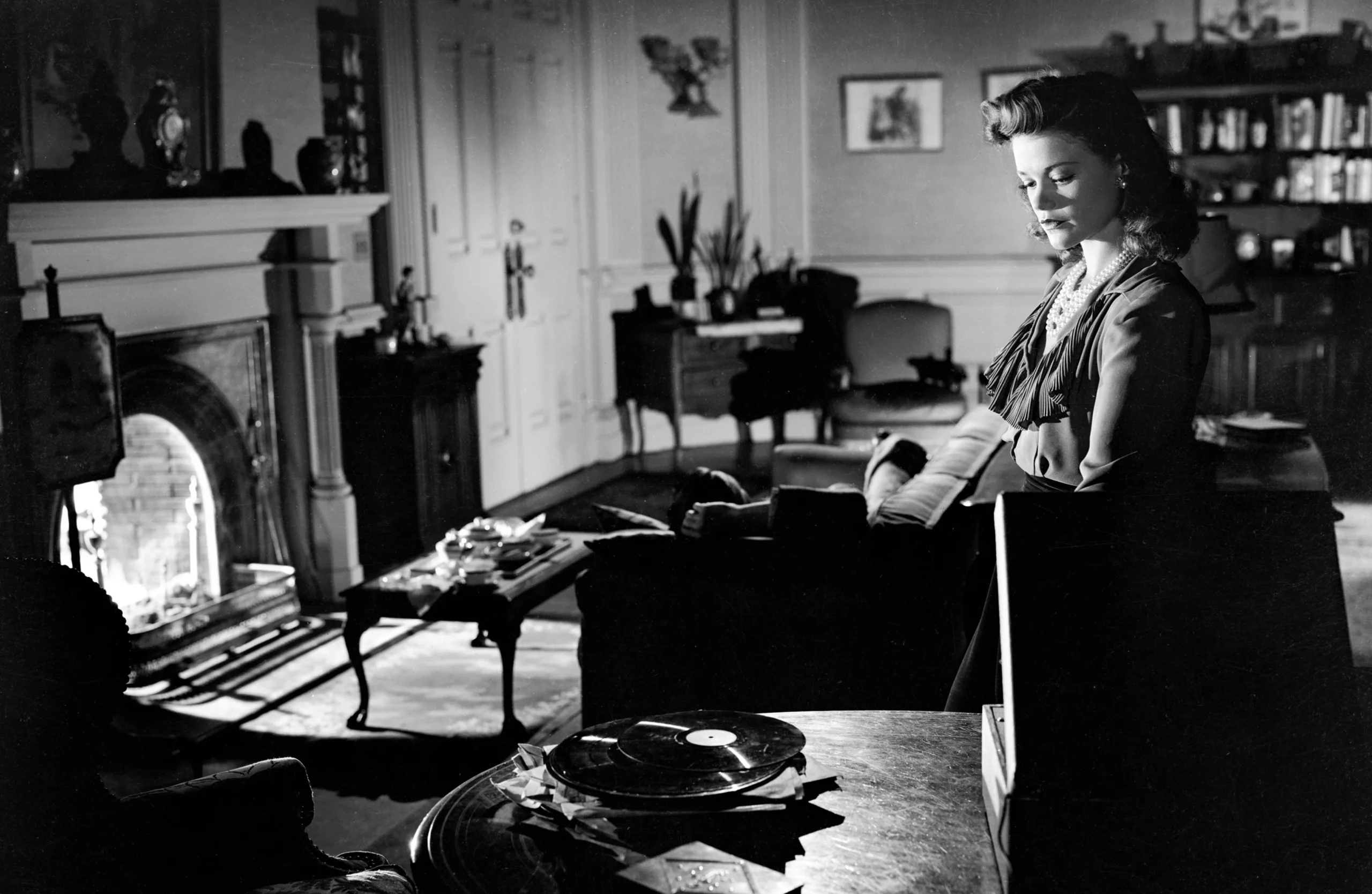
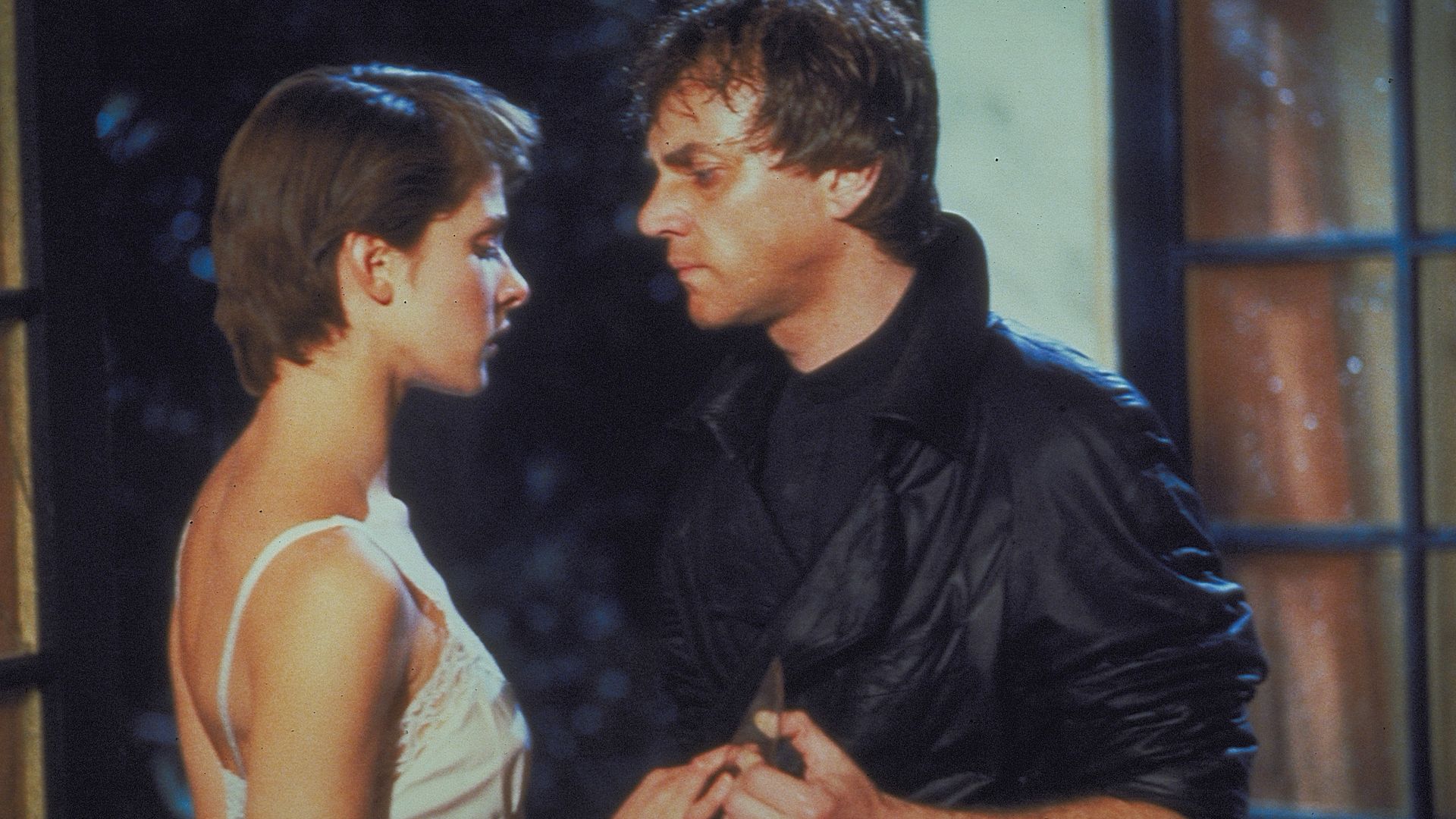
Both Cat People movies deliver strange, sexually charged, and (at least in the original’s case) ambidextrously intellectual and primitive fantasy thrillers about people who turn into black leopards. Though the original is superior to Paul Schrader’s messy ‘82 remake, they both deliver jarring sexual connotations about the sinfulness of desire, with the remake upping sex in perverse—but somewhat fitting—ways. They both follow the same basic premise. The original sees a Serbian girl named Irena (Simone Simon) run into an elegant and kind man named Oliver Reed (Kent Smith). They quickly fall in love, but Irena holds herself back out of fear of an ancient evil from her home village—one where feline-looking women get violently overtaken by romantic jealousy and also kill those that kiss them—that she believes infests her soul. She gets tempted by desire as much as by evil, wandering past panther cages thinking about freeing them to hurt those upon whom she wishes ill, estranging her from her new husband. In the ‘82 version, Irena (Nastassja Kinski) goes to New Orleans in search of her brother, Paul (Malcolm McDowell), after years apart because they were orphaned at a young age. While there, mysterious murders where a black leopard mauls prostitutes, draws her to the zoo’s carnivore section where she meets and becomes attracted to a zookeeper, Oliver Yates (John Heard). Paul gets jealous, leading him to chase his sister to try and force her to understand the truth of their shared cat heritage. In both films, Irena must discover her true self, the difference between desire and love, and a way in which she can be happy without hurting anyone else—or face punishment for her sins.
The ‘42 original excels in exploring the nature of desire, sex, and love from a thrilling perspective. With terrific performances, a steady pace for a mere 73 minute runtime, and a firm grip on the suspense of Irena’s dilemma (the pool scene is such a classic that Schrader had to remake it for his version), Jacques Tourneur’s Cat People elegantly demonstrates the difficulty of Irena’s past-present conflict and how it spills over into her love life. First, Tourneur sets Irena up to be a peculiar, unconventional woman who likes the sound of animals roaring just as much as she adores silence and darkness: “It’s the lions in the zoo,” she responds after Oliver asks what the loud groans in the distance are. “One can hear them here often. Many in this building complained. Their roaring keeps them awake.… To me, it’s a way the sound of the sea is to others—natural and soothing.” In the same night, she also explains to Oliver the story of her village’s cat people and their murderous reputation, establishing a dichotomy between her draw to beasts and her fear of them. A similar dichotomy also draws Oliver to Irena, which he himself admits: “I don’t love her, but there’s a warmth to her. I’m drawn to her. Whenever she’s near, I feel I have to touch her. But I barely know her. We’re strangers in some ways.” They’re not particularly close, but their desire for each other keeps them going, for a time. As the pair drift apart further and further, with Irena increasingly tempted to free some beasts as she gets more jealous of the distance she inadvertently creates and Oliver falling increasingly for his coworker and close friend Alice (Jane Randolph), the sexual charge of her shift towards primitive desire for sex and death alike gets intellectually balanced out through her new psychiatrist, Dr. Judd (Tom Conway).
In trying to understand the unscientific motivations for Irena’s troubles—that she herself forcibly turns into a leopard when jealous—the psychiatrist offers a multitude of scientific explanations: “There is, in some cases a psychic need to loose evil upon the world. And all of us carry within us a desire for death. You fear the Panther, yet you’re drawn to him again and again. Couldn’t you turn to him as an instrument of death?” he asks upon finding Irena staring yet again into a leopard cage. He consistently appeals to fact-finding, scientific reasoning to explain why Irena behaves the way she does, before he ultimately succumbs to a similar fear-based desire experienced by Oliver. He enlightens Irena and the audience to the now more widely understood psychological bases for why and how various mental illnesses arise and perpetuate themselves, before Tourneur makes Judd the one and only victim of Irena’s evil, desire-fueled primitivism. Sometimes, science isn’t enough to stop sexually driven evil, and Dr. Judd learns that personally. Whether or not people can actually turn into killer animals, the “desire for death” and humanity’s other brash drives come through disguised as seduction and sexual uncertainty, making Cat People a suspenseful and consequential dive into sex and sin as an Irena falls deeper into her true self.
Paul Schrader’s ‘82 Cat People further expands on the original’s exploration of desire by pushing it to the extremes, albeit to varying results. While the film isn’t as good as Jacques Tourneur’s—sloppy editing, poorer writing, a dragged out pace, and disruptively stilted direction that feels too much like an actual freak show and not a movie significantly, hinder Schrader’s attempt—it expands upon the cat people’s lore and ups the grotesque sinfulness of it all. Paul’s inclusion especially intensifies these themes, because his whole purpose is, well, trying to sleep with his reunited sister. His whole motivation is to free himself of his beastly curse: “You can’t escape the nightmare without me. And I can’t escape without you. I’ve waited a long time for you.… I’m the only one who can touch you, and you’re the only one who can touch me.” Though Irena rejects Paul’s desperate incestuous plea, she inherently knows he’s right about her inability to love or be intimate with anyone else safely, especially as he becomes the Panther she stares at constantly at the zoo. From the get-go, though romantic with Oliver, she resists temptation, only to find jealousy drives her beastly nature anyway. Unlike her ‘42 counterpart, the violent side in her leaves her with a choice: either live loveless and alone as a human or accept her other half and live amongst other leopards. A symbolic choice between what would be civility or raw, unhinged freedom. Schrader’s Cat People thus becomes the answer to the original’s questioning, demonstrating what life looks like for those who act on pure lust and desire which Dr. Judd once tried to get all parties to understand in the original.
All in all, this Cat People double feature is an eye-opening demonstration of human nature’s worst traits, and how they fester and impact our lives even if we don’t turn into actual carnivorous beasts. The second version may not be as good, but it adds a lot to the original’s contemplation in a more twisted spectacle. For thriller fans, fantasy horror fans, and fans of both ‘40s cinema and ‘80s camp, both Cat People flicks will be satisfactory bites of catnip-seasoned consequence.
1942
dir. Jacques Tourneau
73 min.
Screens Monday, 8/18, 7:15 p.m. @ Somerville Theatre
Double Feature w/ Cat People (1982)
1982
dir. Paul Schrader
118 min.
Screens Monday, 8/18, 8:45 p.m. @ Somerville Theatre
Double Feature w/ Cat People (1942)
Part of the ongoing repertory series: The Great Remakes