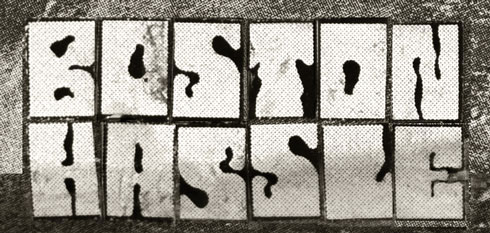
Apart from counting among the finest examples of American animation and comedy, the LOONEY TUNES and MERRY MELODIES cartoons produced by Warner Brothers in the first half of the twentieth century have had the side effect of extending the longevity of countless other cultural touchstones far beyond their nominal shelf life. By remaining in circulation nearly a century after their initial release, and by influencing every subsequent generation of animators, jokes that must have initially seemed like disposable pop culture references have been indelibly woven into the public consciousness (I, for one, can’t count how many timeless American songs I know entirely from hearing Bugs Bunny singing them under his breath). The result is that a number of actors from the golden age of Hollywood have been transformed into archetypes, thanks largely to the fact that Mel Blanc loved impersonating their voices. Gangsters will always talk like Edward G. Robinson. Big dumb guys will always talk like Lon Chaney, Jr’s interpretation of Lenny from OF MICE AND MEN. And, from now until the end of time, there will always be creeps who talk like Peter Lorre.

Peter Lorre holds a peculiar role in film history. While often lumped in with the great horror actors like Boris Karloff and Bela Lugosi, Lorre rarely starred in proper horror movies (though he was in some outstanding ones – check out MAD LOVE sometime). Rather, Lorre excelled at playing deviants, killers, and general untrustworthy types in movies otherwise rooted in reality – see CASABLANCA, THE MALTESE FALCON, and Alfred Hitchcock’s THE MAN WHO KNEW TOO MUCH. By specializing in real-life monsters, Lorre became the first big name in a long history of scene-stealing character actors, a lineage which includes Christopher Walken, Willem Dafoe, and Crispin Glover. Peter Lorre didn’t need monster makeup; dude looked creepy enough as it is.
All of this was already in place in Lorre’s breakout role in Fritz Lang’s 1931 suspense classic M. While contemporary horror classics like DRACULA and FRANKENSTEIN have lost much of their edge from familiarity, M finds Lorre playing a monster who has only become more relevant as time has progressed: a serial child murderer. Understandably, we never actually see Lorre’s deeds onscreen. Rather, they are chillingly implied, through famous shots like a child’s balloon caught in the telephone lines, underscored by Lorre’s incessant whistling (while it’s easy to overlook today, Lang’s use of offscreen sound was boldly experimental at the time). Any doubt about what has occurred is erased as soon as we see Lorre’s face; there’s no way that guy’s not a psychopath.

But it’s just as fitting that we never witness Lorre’s actions, because the movie isn’t really about him directly. Instead, the drama comes from the race to catch him, both by the law, and by the city’s criminal element, who are anxious to reduce the police presence to the sleepy status quo. Lang was flush with the possibilities presented by sound cinema and new techniques in editing, and M is filled with scenes that dazzlingly cut between the efforts of the opposing mobs. No one has ever made films that look quite like those from pre-war Germany (though many have tried), and almost every shot of the film is filled with stark shadows and extreme angles. M propels with an intensity uncommon today, let alone in 1931.
But, of course, all of that drama might ring hollow if the threat of Hans Beckert weren’t sickeningly real, and the film hinges on Lorre’s unhinged performance. It’s clear from every twitch, every nervous glance of his eyes, that this guy is insane. Yet he’s also not unsympathetic; Lorre’s performance, both here and in many of his most famous films, evokes pity and revulsion in equal measures. And Lorre’s famous monologue at the end, in which he begs for treatment rather than vengeance, is heart-wrenching enough to give even his pursuers pause (this unusual dichotomy is explored by author Brock Bower in his cult novel THE LATE GREAT CREATURE, whose central character, faded German horror star Simon Moro, is a thinly veiled portrait of Lorre). It is the moment that cemented the Peter Lorre persona, and ensured that he would be imitated by generations of children who may never even learn his name.
http://youtu.be/d1344KFFpRo
M (1931) dir. Fritz Lang [117 min.]
Friday, July 25, 7:00 PM
Harvard Film Archive (Carpenter Center, 24 Quincy St, Cambridge, MA 02138)
$9