The second act of a Broadway musical is, more often than not, a depressing and poorly-paced hurdle towards an emotional ending. Stage productions of Wicked are no exception. Yet with only a fifteen-minute intermission sandwiched between both acts, the second half can be forgiven for its flaws, following the first act with more clever mythology and strong emotional beats. Wicked: For Good, on the other hand, succumbs to all the stage musical’s flaws and more. It barely works as a sequel, but remains a disappointing one that only had me longing for the feeling I had the first time I watched Wicked: Part One.
Despite some of its faults, I loved Wicked: Part One. I loved the costumes and the sets, the pure love between Elphaba (Cynthia Erivo) and Galinda/Glinda (Ariana Grande), and the energy of songs like “Defying Gravity” and “Popular,” so much so that I was more than willing to forgive the odd CGI, the dim and disappointing lighting, and some uninteresting musical numbers. But still, Wicked: Part One was a strong adaptation of the stage production; it was fun and theatrical and immensely rewatchable. Wicked: For Good, on the contrary, does not work as a standalone movie, and it barely works as a sequel to the first. It has me reconsidering the whole project – should a musical with such grandeur ever have been made into a film? Despite the creative liberties taken with the two additional songs (both forgettable), Wicked: For Good is an immense disappointment compared to the first. None of the emotional beats hit like they should. All of the magnificence of the stage musical and the first film wither away, and it’s not entirely the fault of the nature of the second act.
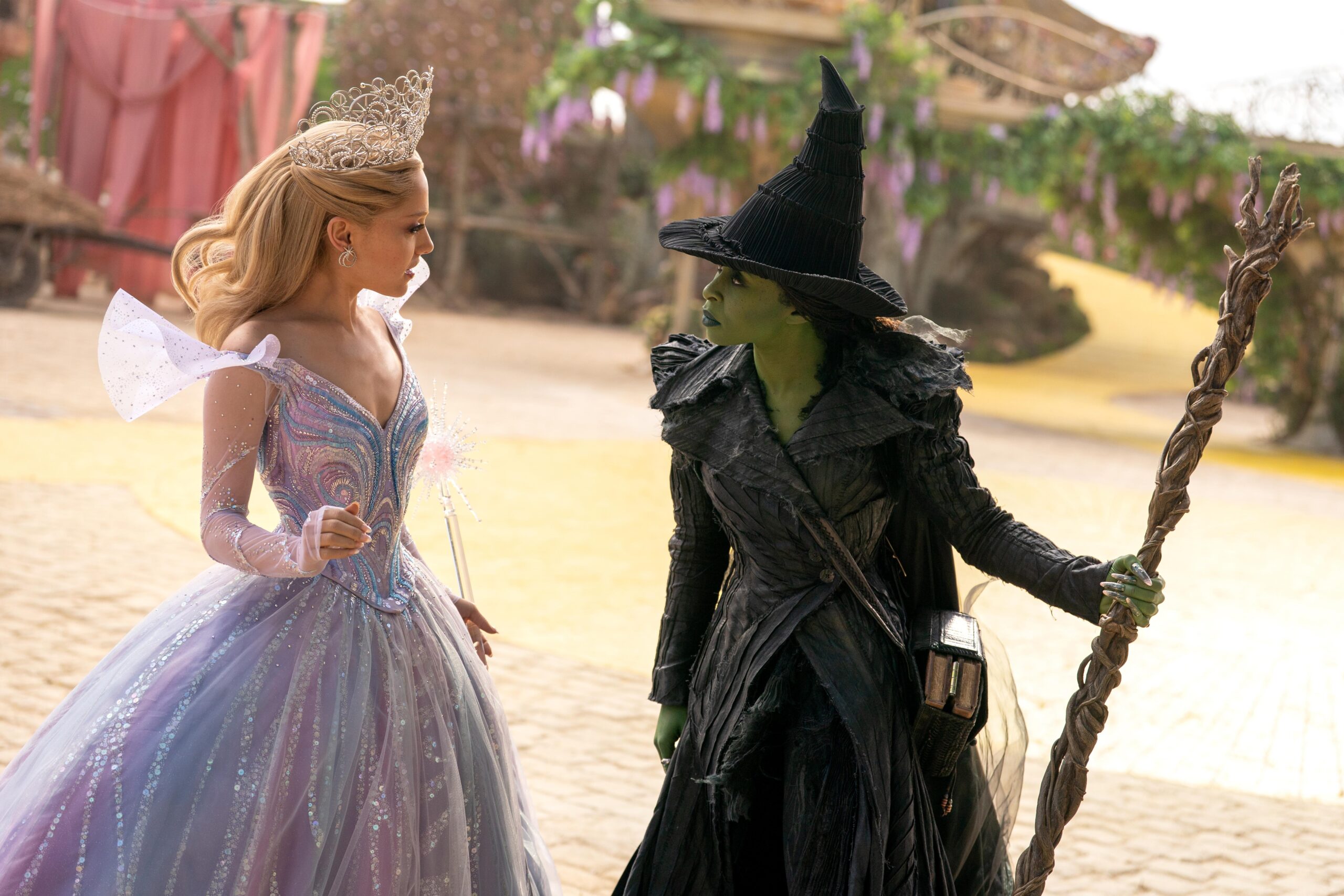
Wicked: For Good resumes quickly from the ending of the first, where Elphaba flew away from Oz, and Glinda stepped into a diplomatic role with the corrupt Wizard of Oz (Jeff Goldblum) and Madame Morrible (Michelle Yeoh). On the surface, it seems everyone apart from Elphaba has finally achieved what they had wanted and dreamed of, but submerged tensions rise higher and higher, as does Elphaba’s notoriety as the newly minted Wicked Witch. Erivo and Grande’s chemistry continues to flourish in the sequel, one of the more redeemable parts of the adaptation being the near-homoromanticism between the characters. Goldblum and Yeoh, on the other hand, feel woefully miscast, and stumble through their scene embarrassingly. Yeoh seems the most out of place, her stunningly evil presence negated by a terrible voice. Goldblum seems to always play himself, in charmingly goofy moments and also in awkwardness where earnestness and emotion were intended. Jonathan Bailey’s Fiyero is still as charming as ever, but his star power is underused in “As Long As You’re Mine.”
Chu’s adaptation also completely blunders some of the most moving songs from the musical. The worst number in the first film was “I’m Not That Girl,” not because of the song itself or Erivo’s performance, but because of the filmmaking, which turned a longing ballad into a boring music video. Tragically, most of the songs in Wicked: For Good are given the same treatment. Both the beautiful romantic duet “As Long As You’re Mine” and the glorious and painful “Thank Goodness” are rendered entirely forgettable, and even “For Good” is weakened by the cheesy, uninspired filmmaking. It loses the song’s poignancy through such bland direction, despite the strong performances. The only great song in the film is “No Good Deed,” which admittedly gave me full-body chills.
There are also missed opportunities in the transformative backstories to the Tin Man and Scarecrow, each scene poorly edited and shying away from what should be far more visually interesting and creative, if not horrifying and stunning to watch. The death of the Wicked Witch of the East and the subsequent portrayals of the events of The Wizard of Oz fall short of how mythological they could have been. The coalescing of the world of Wicked and the source material it originally rewrites is underutilized not for any glaring failure, but rather the missed opportunity all of it illustrates. The long runtime still flows by fiercely, and maybe that’s my own love for musicals, but much more attention and detail could have been given to this second act. It’s also worth noting that the first act’s depictions of fascism don’t go much further – the second part only ends up feeling repetitive and tired, and weighed down by the quick unraveling of the strings of the first act’s plot. Wicked: For Good doesn’t do anything more interesting than regurgitate bits of the first, and maybe that’s true of the stage musical as well, but the film also fails at capturing most of the creative opportunities the second act presented.
Wicked: For Good, from a critical standpoint, may not have been set up to succeed. Perhaps the musical should have been one film, with songs cut rather than added. Perhaps there was the possibility for the second act to be changed substantially. Regardless, the adaptations presented an opportunity to improve upon the musical, to fully utilize the expansive, creative space that film provides. Instead, Wicked: For Good is mediocre, dragging down the legacy of the first film and wasting such a marvelous artistic opportunity. Erivo and Grande still make this a worthwhile watch, but there is not a single moment in the film that compares to the ending of the first, not to mention all the magic and wonder of what it’s like to see Wicked – a musical so clever, so unexpected, so beautiful – onstage.
Wicked: For Good
2025
dir. Jon M. Chu
137 min.
Now playing in theaters everywhere