When David Cronenberg directed Crimes of the Future in 2022, gorehounds around the world celebrated it as a return to form: after two decades of (relatively) straight fare like Eastern Promises and A Dangerous Method, the man whose name is synonymous with “body horror” had made another gnarly genre picture about the intersection of twisted anatomy and nightmarish tech. But Crimes of the Future, for all its overtly Cronenbergian flourishes, marked the beginning of a new phase for the director. Consider that Saul Tenser, the protagonist played by Viggo Mortensen, is not a mad scientist, but a long-in-the-tooth artist whose medium is unnatural organs– not unlike his creator. Indeed, underneath all the cyber-bugs and men covered in ears, Crimes of the Future could be viewed as a veiled autobiography of sorts, Cronenberg’s musings on what it means to still be in the David Cronenberg business after nearly a half century of shocks. Crimes of the Future was Cronenberg’s return to body horror, but arguably his first foray into something scarier: self-reflection.
One needs only a cursory knowledge of the Canadian filmmaker to sense that his latest, The Shrouds, continues this trend. Vincent Cassel, as shadowy tech magnate Karsh, is plainly styled after Cronenberg, donning the director’s signature silver pompadour and latter-day Saint Laurent swag. Indeed, Cronenberg conceived of The Shrouds following the 2017 passing of his wife, Carolyn, and the film is shot through with an almost overwhelming melancholy. This is Cronenberg like we’ve never seen him before, for once wearing his heart on his sleeve figuratively rather than literally.
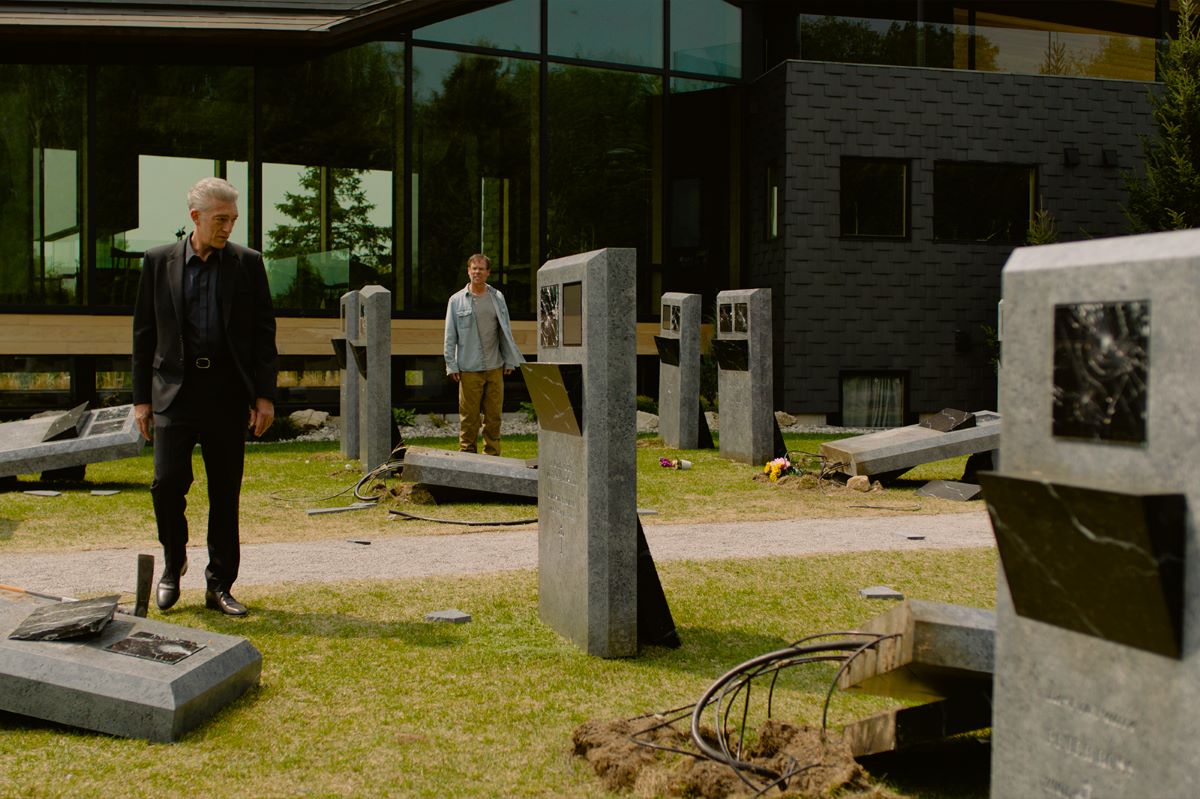
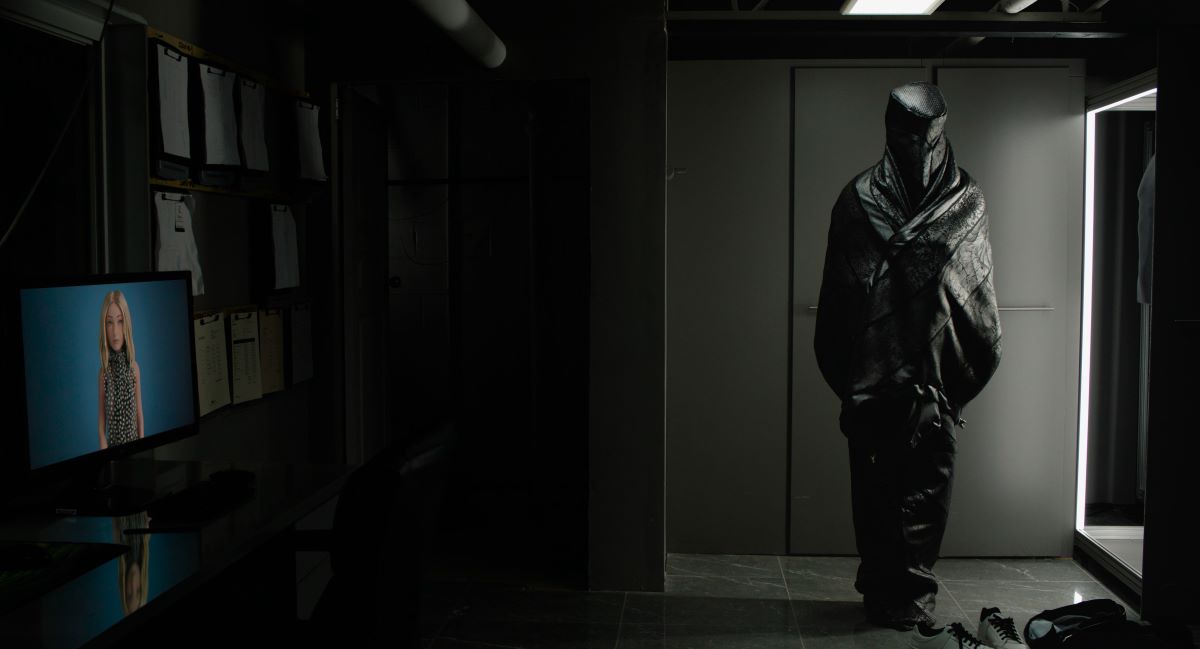
Lest all of this sound out of character, know that Karsh’s billion-dollar idea is one that could only have sprouted from rich, Cronenbergian soil: the CEO of a company called GraveTech, Karsh has invented a high-tech burial shroud which beams a 3D image of a loved one’s rotting corpse onto a video screen on their headstone (or, if they’d rather, a handy little iPhone app). Unsurprisingly, Karsh was inspired by the loss of his own wife, Becca (Diane Kruger), to a particularly vicious cancer. Karsh is consumed by Becca’s loss (“The grief is rotting your teeth,” his dentist dryly informs him in the film’s very first line), whiling away the days in his elaborate Japanese-themed high rise, his only friends Becca’s veterinarian sister (also Kruger) and her tech-geek ex-husband (Guy Pearce). However, when vandals break into the flagship GraveTech cemetery and trash several graves– including, inevitably, Becca’s– Karsh must investigate the ethics and security of his innovation.
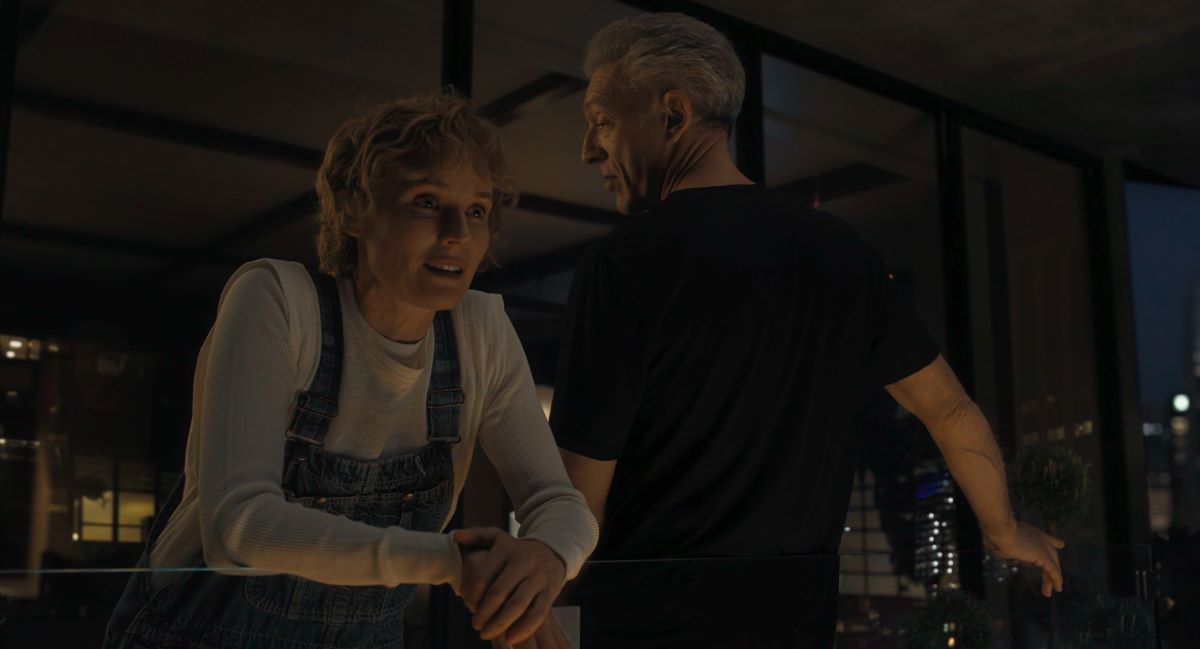
The central conceit of The Shrouds is, of course, so quintessentially Cronenbergian that it might initially scan as self-parody. Indeed, the film is in conversation with its director’s filmography; Kruger’s dual role is a clear homage to Jeremy Irons’ performance(s) in Dead Ringers, and an uncomfortably confessional sex scene mirrors one of the more memorable sequences in Crash. But the most purely Cronenbergian image in the film is not fantastical in the slightest: Becca, in flashback, presenting her nude body to her husband, the scars and amputations of her treatment on full display for the first time. Unlike the exploding heads and alien orifices on which he made his name, we realize that this is a sight David Cronenberg likely witnessed in real life, visited upon a person he loved. Needless to say, this change in perspective throws Cronenberg’s aesthetic into an entirely different dimension. It’s not body horror, so much as body elegy.
The Shrouds is obviously a film about grief, but it is very specifically about grief in the 21st century, when our most cherished memories of departed loved ones are outsourced to “clouds” owned by multinational corporations. Not only does the vandalism at the graveyard interrupt Karsh’s virtual access to his peculiar form of mourning, but it raises questions about the security of the entire project; whispers abound of Russia or China hacking into GraveTech and turning his wife’s grave into a hub for an international spy network, which was certainly never a concern in the days of old-fashioned embalming. Then there is “Hunny,” Karsh’s AI-powered personal assistant, conspicuously also voiced by Kruger. As in so many films before (and certainly to come), Karsh develops an unhealthy emotional and occasionally flirtatious relationship with the app, even as it becomes clear that Hunny herself is a glaring liability in our dystopian surveillance state. In a wry bit of humor, Hunny is not some hyper-realistic virtual sexbot, but a stock Apple cartoon avatar, her sexy come-ons at times emanating from a cuddly anthropomorphic koala. Ever the visionary, Cronenberg recognizes that the future is scary, but also kind of stupid.
There are flashes of this strain of dark humor throughout The Shrouds; Karsh brings a blind date to a fancy restaurant which is revealed to be situated within the grounds of his cemetery (“The Shrouds at GraveTech”), and the little animated logo which pops up every time he accesses his wife’s virtual cadaver is never not funny. In all, though, The Shrouds is somber and downbeat even by Cronenberg’s standards, and may alienate those who come to the director’s work for ooey-gooey thrills. Far from the livewire eccentrics played by James Woods or Jeff Goldblum in Cronenberg’s earlier films, Cassel rarely brings Karsh above a low monotone; he is a man wholly numbed by grief and technological obsession, and this numbness spreads to the film as a whole. The Shrouds is a haunting work, but if it doesn’t grab you, you may find yourself fidgeting.
As with any filmmaker whose name is shorthand for an entire subgenre, it is perhaps easy to take David Cronenberg for granted; for all his laurels and commendations (six films in the Criterion Collection, two on the latest Sight & Sound poll, retrospectives in theaters the world over) there is a tendency for “serious” cinephiles to consign him to the Fangoria basket, and for gorehounds to assume he’ll be around forever. But Cronenberg’s use of genre trappings belie an artist with an utterly unique view of the world around him, and, at 82, it is inevitable that he might begin to look inward. The Shrouds is a profoundly moving, if deeply weird, work of reflection by a true original. If it happens to be his last, it would be a worthy epitaph– but I have a feeling David Cronenberg isn’t ready for the shroud quite yet.
The Shrouds
2024
dir. David Cronenberg
119 min.
Opens Friday, 4/25 @ Coolidge Corner Theatre