
When I first heard about Nate Parker’s The Birth of a Nation, I couldn’t have been more excited. It premiered at Sundance Film Festival to great acclaim. The promo pictures released were cryptic and striking. And the film’s title — a re-appropriation of D.W. Griffith’s Klan-friendly movie — was, and still is, one of the boldest plays in the history of film. More importantly, this was a film about Nat Turner. An enslaved man who led one of the most successful slave rebellions in America.
I’ve seen other pieces online doubt the importance of Nat Turner’s insurrection — saying no one can prove its impact. While details on Turner himself remain scarce, the visceral impact of Turner’s actions seem less ethereal. Change comes from the bottom-up. And actions like Turner’s — alongside other thwarted agents of change such as Gabriel Prosser, Denmark Vesey, and John Brown — fundamentally altered the landscape of racial relations in America. The final image of Parker’s film would like to draw a direct correlation between Turner’s rebellion and the Civil War.
It’s also important remember the many disgusting “laws” whites implemented after the rebellion in an attempt to stop any more uprisings. Prohibiting education of free blacks. Requiring white ministers at black congregations of worship. The list goes on. And let’s not forget the killing of over 200 black people — most not involved in Turner’s actions — at white hands.
Because of this some argue the uprising should be simply mourned. Vinson Cunningham wrote in the New Yorker that “the ultimate quelling of Turner’s rebellion, and our uncertainty as to its ultimate utility—its status, in other words, as a genuine tragedy—is precisely why it so immediately passed into the haunted realm of national myth.”
Yet, whether tragedy, triumph, or something else entirely, Nat Turner’s life seems like a story worth telling — especially within cinema, an art-form funded mostly by businesspeople against tales revolving around anything but mopey or love-struck white people.
I, a white person, saw the movie in the small Maine town I grew up in with my father and a few assorted old white couples. Two of the older white people left during a brutal scene of abuse — perhaps too disgusted to look upon the sins of our ancestors. After the movie my father said to me: “I never heard of him. But he was a brave sunovabitch.”
Feminist writer/commentator Roxane Gay wrote on Twitter (I can’t find it but trust me!) that anyone with access to a library could learn about Nat Turner — thereby rendering the movie pointless. I disagree. Not everyone reads books. A Nat Turner movie would be a good thing to exist for America — and as my father proved to me, it can be used as an educational tool.
But Roxane Gay has good reason to boycott the movie (Read this). The same reason my initial excitement after The Birth of a Nation‘s premiere turned to extreme trepidation nearer to its release.
In 1999 Nate Parker — the star, director, writer, and producer — and Jean Celestin — co-writer of the film — were accused of raping an unconscious woman while in college. While Parker was acquitted, it seems more than likely the victim did not consent. And despite Parker’s personal legal claim to innocence, Celestin was charged with sexual assault. In 2012, the victim took her life. Parker to this day still maintains his innocence but also says he was not properly taught the meaning of consent. Which does not sound innocent. (A more comprehensive time-line can be found here)
The Birth of a Nation is shrouded in the controversy of its creator. And, frankly, it often isn’t good enough to transcend that controversy.
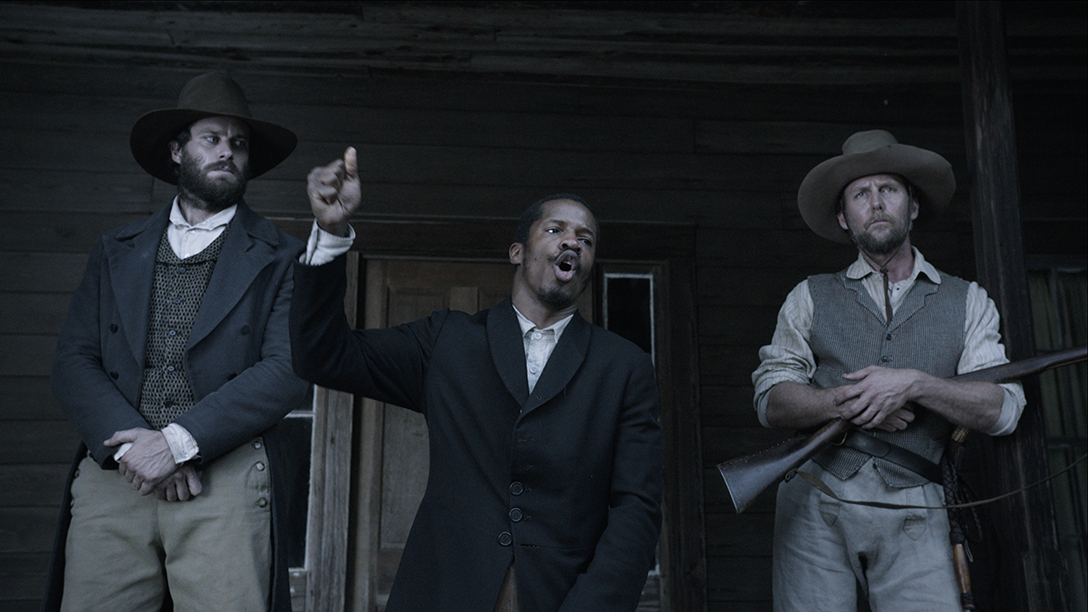
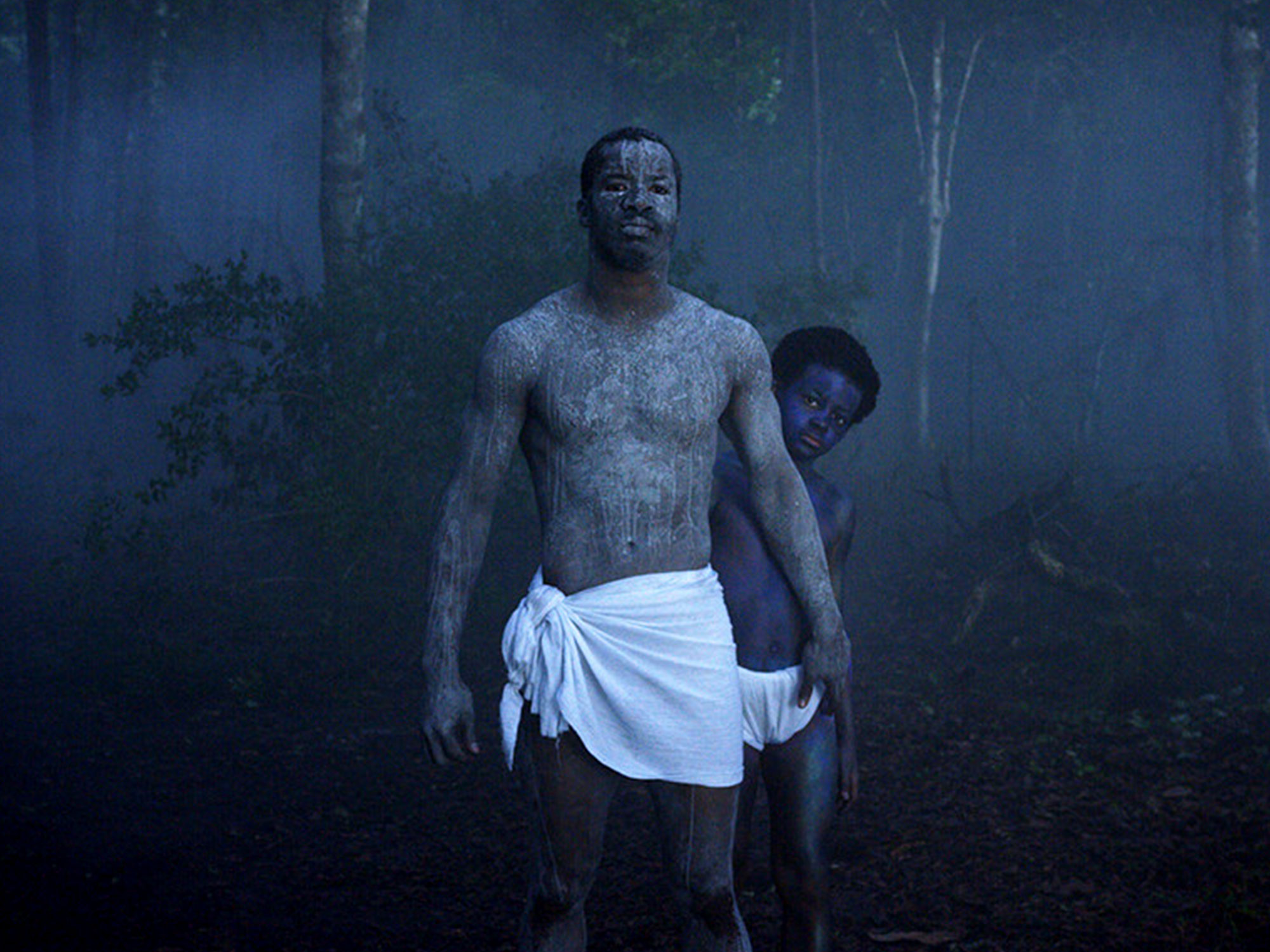
The Birth of a Nation isn’t a bad movie. Plenty of the scenes are directed with more fire and verve than any movie released recently by Hollywood. You can feel the blood pumping — rage and anger — behind these scenes. From the cryptic, spiritual opening featuring a young Nat Turner to the climatic insurrection itself — these scenes are amazing.
And Parker, controversies be damned, is a fucking hell of an actor. The supporting cast gives their all as well. Gabrielle Union was great. And I was very impressed with what Colman Domingo did with a very dialogue-light role. (Everyone should check out Spike Lee’s filmed version of Artist/Singer Stew’s musical Passing Strange — which has an incredible performance form Colman Domingo).
But Parker is a first time director, and some of the movie just feels and looks amateurish. Certain shots are just goofy — such as an angel Turner sees before his death (who looks like someone in a bad costume), and the aforementioned morphing of a young man viewing Turner’s hanging into a Civil War soldier. Yet regardless of these filmic highs-and-lows, on a more substantive level it’s hard to view The Birth of a Nation and separate from what Parker is accused of.
Two black women are raped in the film, one very specifically to further Nat’s personal arc. While there is a horrific true history behind black women being raped by white slave-owners, it feels off when it happens solely in an effort to develop Nat Turner and help us — the audience — understand his later actions, because as far as we know, Parker and Celestin made it up.
There is little known about Nat Turner’s life before his uprising — the only primary document coming from a white man who supposedly interviewed Turner in his jail cell before execution. For obvious reasons, this man’s words should be taken with a grain of salt.
Perhaps if Parker didn’t take it upon himself to construct this movie entirely by his lonesome it could have been great — in more ways than one Parker is the digger of his own grave.
That’s all I have to say, but there are perspectives on this film far more important than mine. You should consider them and seek them out. I found Ijeoma Oluo’s piece, over at The Establishment, to be particularly striking. I’ll end with a quote from her.
“…I hope you see how many victims suffer in the shadow of a nation that finds the thought of addressing its rape culture too inconvenient. And I hope you ask for more. I hope that you ask for justice for rape victims, justice for black women. I hope that you ask for representation for black people and people of color. I hope that you ask for more than this film, for more than this filmmaker. Because we, black women, have been asking for a long time—and nobody has been listening.”
The Birth of a Nation
2016
dir. Nate Parker
120 min.
Now playing at Coolidge Corner Theatre, Kendall Square Cinema, and pretty much everywhere else.