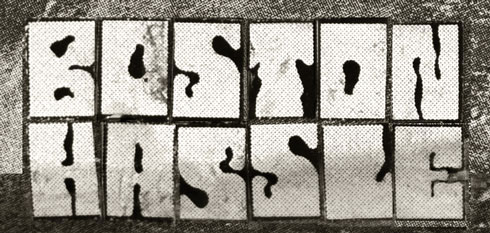
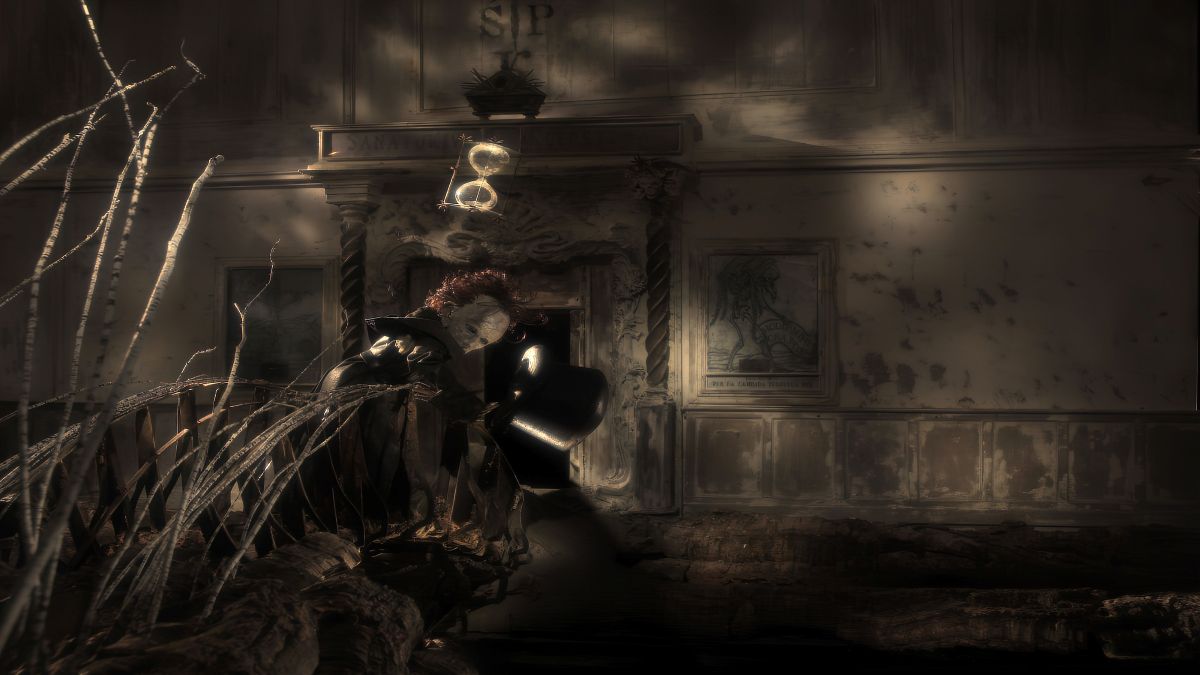
Even if you’re unfamiliar with them by name, there’s a very good chance that when you hear the phrase “creepy animation” you envision the work of the Brothers Quay. Their style— jittery stop-motion, frequently featuring Victorian dolls and bird skeletons in grimy, archaic corridors— is at once widely imitated and utterly inimitable, instantly recognizable even after influencing generations of gothic imagery. Given their excruciating attention to detail, it’s not particularly surprising that a feature-length Quay film takes time; their new film, the outstandingly titled Sanatorium Under the Sign of the Hourglass, is their first feature in 20 years, and only the third of their career. Purists may quibble as to whether it measures up to the brothers’ best work, but it’s always a pleasure to sit in a darkened room with the Quays’ nightmare-puppets and get good and weird.
Like the Quays’ legendary 1986 short Street of Crocodiles (which screens as a 35mm aperitif to the feature this weekend at the Brattle), Sanatorium draws from the work of Polish writer Bruno Schulz. A young man takes a train to an institution deep within the Carpathian mountains to visit his dying father, only to find that time flows strangely within its decaying walls. Events repeat, gravity bends, and there is a shop run by a many-armed man which sells used chalk. This is all, I should add, apparently taking place within a strange artifact in the possession of a (live-action) auctioneer, who peers in through a porthole and occasionally reacts.
Take this with however many grains of salt you deem necessary given the above plot description, but for a film by Stephen and Timothy Quay (an vitally important qualifier), Sanatorium is almost downright scrutable. Unlike most of their films, which tend to use spoken language as indistinct texture (if at all), Sanatorium includes both dialogue and narration. I’m not sure I fully understand what’s happening at all times, but the brothers have here given us more instruction than their earlier, purely expressionistic work. It makes me want to seek out Schulz’s original book (as well as The Hourglass Sanatorium, the 1973 live action adaptation of the same from director Wojciech Jerzy Has) and return with a deeper perspective.
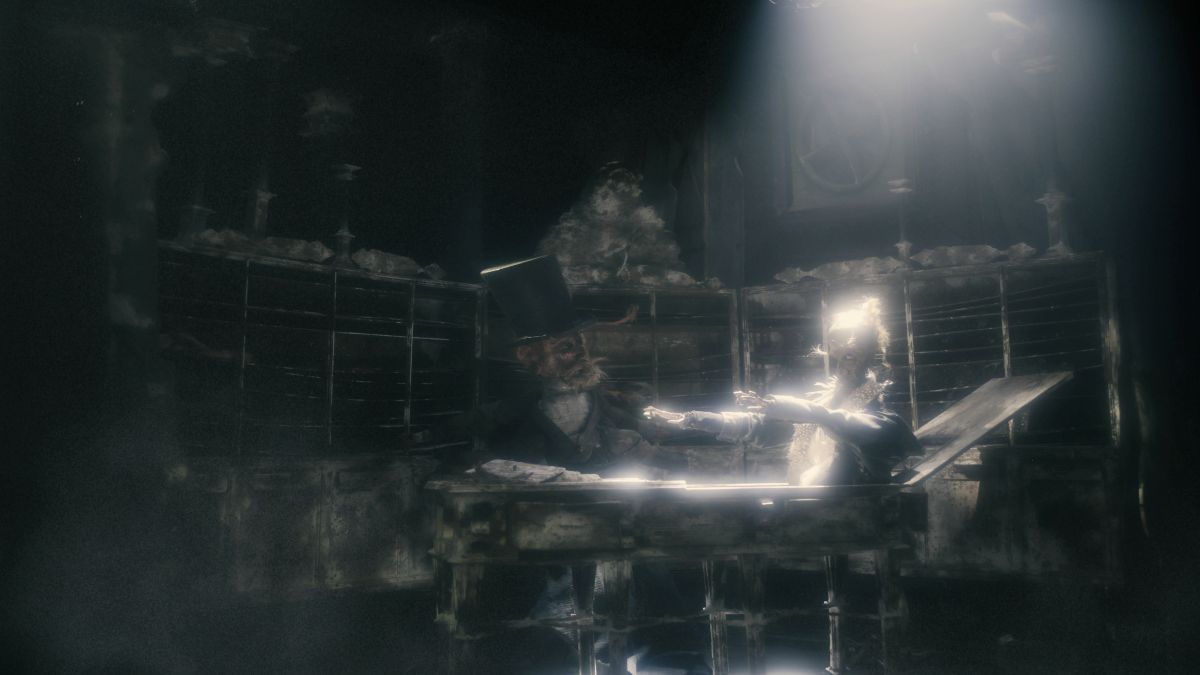
If I sound slightly less enthusiastic than I ordinarily might about a new feature from two of our greatest living animators, it’s only because less of the film than expected is actually animated. The live-action portions (which include some suitably abstract nudity on a bordello set in addition to the framing device of the auctioneer) are significantly less interesting visually than the animation; the lighting is flat, the sets sparse, as drab and digital as the animated dioramas are analog and lovingly homemade. Likewise, the acting is curiously stilted, in stark contrast to the brothers’ typically expressive puppets. I wouldn’t go so far as to say the wraparound scenes are unnecessary, but I have trouble thinking of a reason they should not also be as animated, or at least as stylishly produced. As glib and reductive as it feels to suggest the production ran out of money, it’s tough to think of another explanation.
But I don’t want to do too much grousing, because the animation itself is, predictably, gorgeous. The character design is every bit as ingenious as anything in the Quays’ career, and the presence of spoken language does nothing to detract from the surreal, dreamy ambiance. The score, by frequent Quay collaborator Timothy Nelson, is itself a stunning work of art, as meticulously crafted as the animation to which it is married; the composer has purportedly spent the better part of the past 18 years working on it, producing a sprawling, four-volume soundtrack album which runs several times longer than the film itself. Even a lesser work by a pair of master artisans should be celebrated, and it speaks to the duo’s astounding career that Sanatorium might even be suggested as a “lesser work.” If you’ve got a taste for that specific Quay brand of weirdness (and, again, you may be without even knowing it), there’s little else that can scratch that dark, weird, itch.
Sanatorium Under the Sign of the Hourglass
2024
dir. Stephen & Timothy Quay
76 min.
Area premiere!
Screens w/ Street of Crocodiles (1986) on 35mm!
Screens Friday, 9/5 through Monday, 9/8 @ Brattle Theatre – click here for showtimes and ticket info