“Pandemonium” must be one of the most badass words in the English language. Its mixed Greek-Latin etymology literally means “the place of all demons” and John Milton coined the word to serve as the capital of hell in his Paradise Lost. The appeal of the word for me comes from its almost rhythmic phonetic structure that can make the most illiterate of speakers sound professionally eloquent. I’m also just partial to the word that made up some of the coolest high school sports chants at my preppy alma mater (along with the more awkward “let’s get belligerent.”) At least, I thought they were cool back then. So, I understand why the French director Quarxx would choose the word as the title of his new film. But that’s about all that I understand from his new, quasi-ontological horror guilt-vehicle.
The first 20 minutes are excellent. And the final ten minutes work well enough. It’s the middle hour or so that just squashes all of the other good ideas. Pandemonium begins at the site of a still smokey automotive accident. Nathan (Hugo Dillon, who played Père Jean in The Walking Dead: Daryl Dixon) and Daniel (Arben Bajraktaraj, the Kosovo-born French actor) are both dead, and take a moment to parse that out. Their two names recall the biblical characters that are likely their namesakes but to no effect other than adding empty oxygen to the desired supernatural atmosphere. As they come to terms with Death, Quarxx reveals more about them that begins the film’s investigation into iniquity, guilt, responsibility, and human nature. One of them may be a pedophile — he was distracted by a young girl, possibly intentionally driving toward her on his motorcycle — and the other committed uxoricide.
Two gates appear spontaneously: one a slick, modern-looking gate to heaven; the other a more brownish-red medieval opening to a certainly less pleasant world. The one gate plays sublime trumpet music that only those called to the opening can hear; the other amplifies the screams and cries of the damned. Hell, or the world of pandemonium, summons both Daniel and Nathan and the two men muster the courage to pass through the mysterious and overwhelming gate.
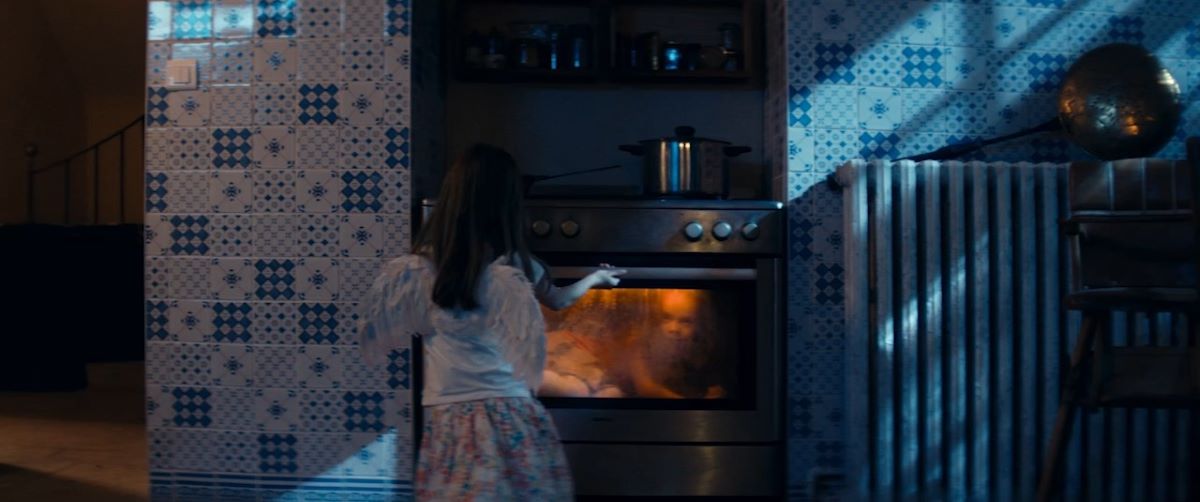
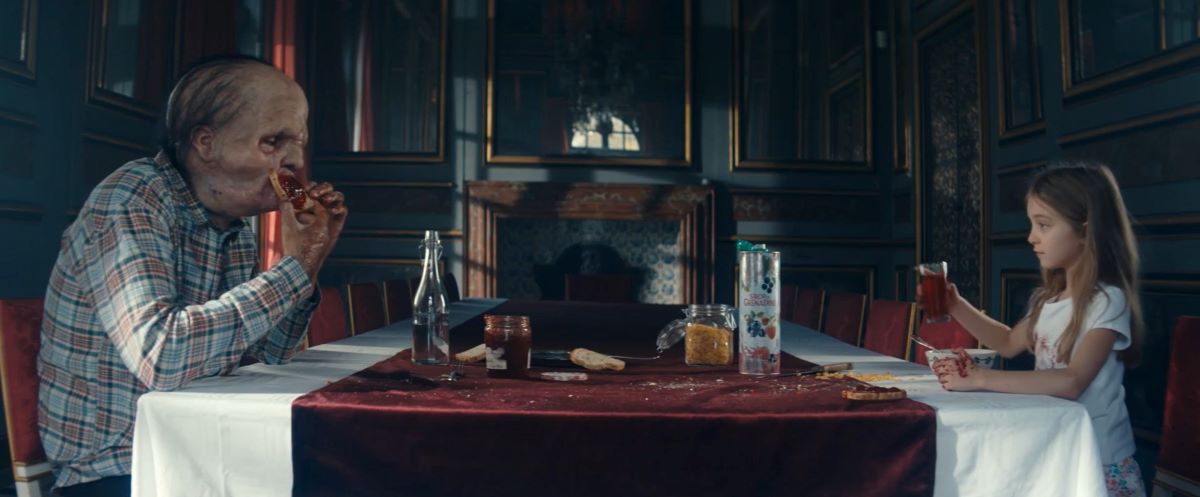
And that’s precisely where Quarxx turns downhill. Nathan disappears, and the next hour is spent with only a minute or two of screen time from Daniel. In the first level of the next world, the next layer of hell, or however one wants to think of the place of eternal suffering, dead bodies lay sprawled around the dusty floor resembling the volcanic images of Pompeii. As Daniel crawls across the fresh dead, he glimpses the private hells of an ungodly kid with a deformed buddy nicknamed “Tony the Monster” (Carl Laforêt); and Julia (Ophélia Kolb), a bad parent who misses the obvious signs that her daughter is being mistreated at school. This hell levels the playing field. Intentionally so. Not in a theological “all sins are rebellion against God” kind of way, but rather because Quarxx, who also wrote the film, either believes all their “sins” are tantamount or doesn’t put enough thought into the actual lives glimpsed by Daniel. I’m not sure which option is more damning of his vision for the film. The first option flattens the moral differentiations of pedophilia and parricide with (really) bad parenting; the second option points to high-level artistic deficiencies and reveals the film for what it is: an excuse to make specific images dreamt up by Quarxx. The episodes have little if anything to do with Daniel and the filmmakers do even less than this to draw any connections, so the viewer spends most of the next hour wondering when the trifle anthology will come to an end and when we can return to the Capital of Demons with Daniel.
As an image creator, Quarxx’s film makes marginally more sense. It’s the kind of horror movie I’d never watch again unless I was intoxicated with a large group of friends: when conversation and drunk banter drown out the dialogue and plot, the cool and gory images will make for an interesting enough background that will catch everyone’s attention every few minutes. The makeup and prosthetics of Tony the Monster are difficult to look away from, and his innocent gentility contrasts with the demonic behavior of his child “friend” Nina, played by Manon Maindivide, in one of the best child performances I’ve seen in quite some time. (He appears to suffer from a fictional extreme of craniofacial anomalies.) The highlights include the early gate cinematography and the few images we receive of the hellscape tableau of chaos. His hell, in particular with Norghul (Jean Rouceau), the visually gross executioner that chaperones Daniel to his next stop in eternal torture (4,000 years of isolation), intrigues and shows his potential as an image-maker. Unfortunately, Norghul gets even less screen time than Tony and that’s a shame because when we meet him just after the film’s nadir, Pandemonium is just beginning to get interesting again.
Pandemonium
2023
dir. Quarxx
95 min.
Streaming on ARROW Monday, 5/27. Also available digitally and on demand.
Joshua Polanski is a freelance film and culture writer who writes regularly for the Boston Hassle and In Review Online. He has contributed to the Bay Area Reporter, Off Screen, and DMovies amongst other places. His interests include the technical elements of filmmaking & exhibition, slow & digital cinemas, cinematic sexuality, as well as Eastern and Northern European, East Asian, & Middle Eastern film.