It’s tempting to say that the filmmakers of the fabled French New Wave were the first to make movies about movies. They weren’t, of course; Singin’ in the Rain beat them by nearly a decade, and backstage dramas and farces have been made since the medium’s silent infancy. But the New Wavers may have been the first to make movies about movies from the perspective of the moviegoer, which is a crucial difference. These filmmakers grew up in the seats of their local moviehouses, and many of them— including Francois Truffaut, Claude Chabrol, and Jean-Luc Godard— began their careers as film critics for the legendary publication Cahiers du Cinema. When their movies were about movies— and nearly all of them were, if only subtextually— they were not concerned with the ins and outs of the business, but in the ways the movies themselves worked. There’s an argument to be made (and many among the New Wave surely made it) that they understood film as a medium better than the masters they idolized.
It was inevitable, then, that someone would make a movie-about-movies about the French New Wave itself. Perhaps wisely, Richard Linklater does not attempt to deconstruct the conventions of the movement in Nouvelle Vague, his sprightly new film about the making of Godard’s Breathless, the way the Nouvelle Vague did their heroes. Rather, it’s a shaggy, affectionate recreation of the dizzying moment they inhabited. No new ground is broken, but to fans of the movement it will be close to irresistible.
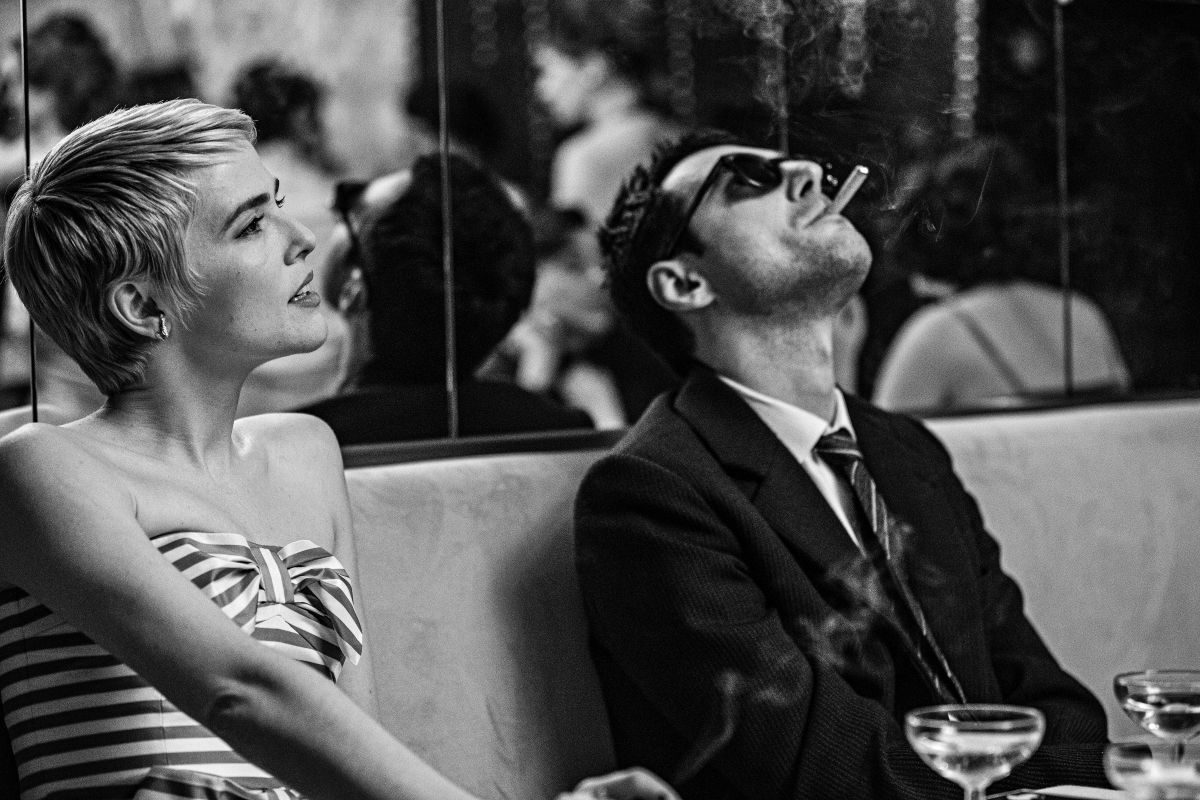
Appropriately, the opening of Novelle Vague plays like a prank on those tasked with reviewing it: after the lights went down on me and my critic friends at the Kendall, they went up on an identically arranged row of Cahiers correspondents at a Paris movie premiere. Godard (played here by Guillaume Marbeck) is in a funk, having thus far only directed a handful of shorts while Truffaut and Chabrol have already made splashes at Cannes. Seemingly through sheer force of will and personality, he convinces producer Georges de Beauregard (Bruno Dreyfürst) to bankroll the gangster-romance script he’s written with Truffaut, and eventually pulls in past collaborator Jean-Paul Belmondo (Aubry Dullin) and Hollywood ingenue Jean Seberg (Zoey Deutch) to star. The rest, as they say, is history, as Godard leads his occasionally reluctant, oft-mystified crew through production of what would become the defining film of the French New Wave.

The most immediately arresting feature of Nouvelle Vague is the uncanny accuracy with which Linklater captures the look and feel of the French New Wave in general, and Breathless in particular. From the puckish opening credit of “Netflix presente…” to the faux reel changes every twenty minutes or so, Nouvelle Vague could pass to the untrained eye as an actual artifact of the era. The cinematography, by David Chambille, is gorgeous, crisply capturing the Paris of 1959. Looking back over my notes from the screening, I found that nearly half of what I jotted down were the names of different movie theaters and restaurants, in hopes that they might still be open (I’m happy to report that at least two of the cinemas, Le Champo and Cinema Mac Mahon, are indeed in operation). It’s one of those films that might push you dangerously close to purchasing a plane ticket.
At times, Nouvelle Vague recalls Slacker, Linklater’s own guerilla-shot debut, which possessed less of a sustained narrative than a series of monologues delivered by a procession of increasingly eccentric hipster oddballs. Here, of course, those oddballs are well-known historical figures of a major 20th century art movement, frequently speaking in quotes they actually delivered (or at least wrote), each helpfully identified via onscreen title. Some characters’ appearances, such as a brief scene in which Godard’s production literally crosses paths with Robert Bresson shooting Pickpocket in the Paris Metro, strain credulity, but it largely works thanks to Linklater’s clear enthusiasm and reverence for his subjects. The glee with which he inserts each of these characters mirrors the vitality of the scene itself.
Of course, this sort of reverence is somewhat anathema to Jean-Luc Godard’s nearly proto-punk ethos, and one can imagine the withering comments the filmmaker might reserve for such a project if he were still alive. But Linklater avoids some of the pitfalls of the modern glossy biopic by inviting us to wonder if Godard wasn’t, to some extent, full of shit. Marbeck plays the filmmaker as a caricature— which, of course, is how the real Godard presented himself more often than not— constantly spouting profundities from behind his ever-present Ray-Bans. A lesser film might take his quips at face value, but Linklater gets a great deal of comic mileage out of well-timed eyerolls from his cast and crew. When he blithely sends his cast and crew home after a mere two hours without shooting a single frame, is it really because he’s “out of ideas,” or does he just feel like knocking off early? Even knowing that he would come out of it with one of the greatest films of the twentieth century (and would subsequently release countless other contenders for the title), it’s tough not to sense at least a little bit of the latter.
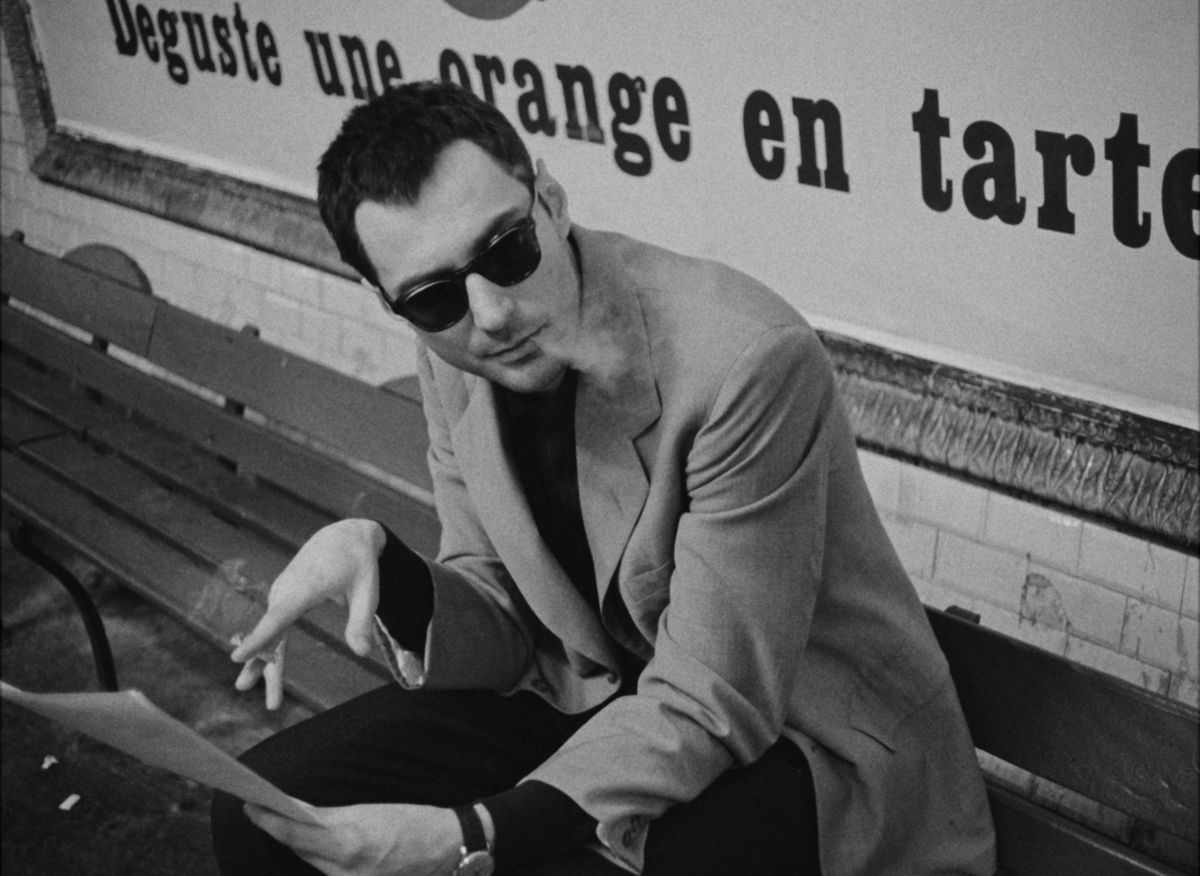
The film’s primary eye-roller— and audience surrogate— is Deutch’s Seberg, one of the year’s great straightwomen. An American plucked from obscurity two years earlier by director Otto Preminger, Seberg is an outsider to the scene, and is (understandably) mystified by Godard’s unorthodox techniques. She bristles at the director’s insistence on shooting without sync sound (“I don’t know what the fuck I’m doing here,” she says out loud to Belmondo as cameras roll on the famous “New York Herald Tribune” scene); later, when Godard explains to her why she’s the only actor not allowed to improvise during the sequence where her character interviews filmmaker Jean-Pierre Melville, she lets out an exasperated sigh for the ages. Deutch is nothing short of wonderful in the role, at once capturing Seberg’s sparkling charisma and the wells of depression which would dog her to her premature death. I’m not sure if it’s the best performance of the year, but I’m hard pressed to think of a more likable one.
In a film such as this, it can be tough for me to separate my affection for the subject from the merits of the film itself (in the interest of full disclosure, I should probably admit that no fewer than three Godard movie posters hang in my room, including a limited screenprint of Breathless). In the end, I’m not sure the distinction matters; while I can’t say what a non-fan of the real-life Nouvelle Vague would make of the film, I was thoroughly charmed. Nouvelle Vague is a bonbon of a film, not nearly as substantial as the films to which it plays homage, but so effervescent and finely crafted that it’s hard not to smile. It’s tough to say whether the Cahiers du Cinema crew would buy it, but it remains one of the year’s most enjoyable movie-movies.
Nouvelle Vague
2025
dir. Richard Linklater
106 min.
Opens Friday, 10/31 @ Coolidge Corner Theatre, Kendall Square Cinema, and West Newton Cinema
Streaming on Netflix 11/14