
Longlegs, the new horror film by Osgood Perkins, is haunted by all the things you’d expect it to be– trauma, the Devil, Nicolas Cage’s latter-day acting career– but it’s haunted by something stranger as well: the earthy, ethereal glam-rock sounds of T. Rex. The film opens on an epigram from their smash hit “Bang a Gong (Get It On)”; assorted album cuts and demos skitter across the soundtrack at key transitional moments; Cage’s eponymous serial killer has the cover of The Slider tacked up over his squalid bed (with his stringy hair and natty suit, Cage even looks a bit like lead singer Marc Bolan here, albeit perhaps if he had risen from the grave and shambled the earth following his fatal car crash). But the influence runs deeper in the film’s DNA. Consider the chorus to “Planet Queen,” one of the songs playing in Cage’s car:
The Planet Queen,
Perchance to dream,
She used my head liiiiike a revoooollllver!
Taken at face value, those lyrics don’t mean anything. They do, however, sound cool as hell belted out in Bolan’s strained vibrato. Likewise, the plot of Longlegs is something very close to nonsense, but it’s also not the point. The point is to add layer upon layer of unease by cramming in as much sinister imagery as possible, as well as through subtle tricks to throw the viewer off their footing. The result is something of a mixtape of bad vibes; even if it doesn’t hang together as a conventional “movie,” it remains a hell of a mood piece.
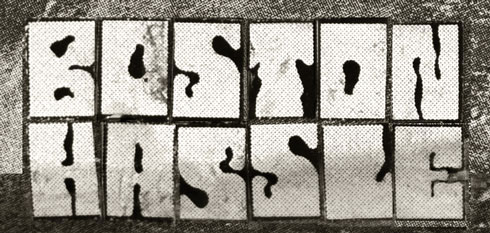
The (nominal) plot concerns Lee Harker (Maika Monroe), a young, “half-psychic” FBI agent in the Clarice Starling/Will Graham vein. Harker, along with her avuncular mentor Agent Carter (Blair Underwood, having a blast), is on the trail of a mysterious serial killer known as Longlegs (guess who?), who has apparently spent the last few decades murdering the families of children born on the 14th of the month. I say “apparently” because the crimes were, by all appearances, perpetrated by members of the families themselves; the only evidence of the true killer’s presence are his cryptic notes, neatly handwritten in Zodiac-style code. Inevitably, Harker begins receiving personal correspondence from Longlegs himself, and she slowly begins to wonder if she doesn’t have more of a connection to the case than she realizes.
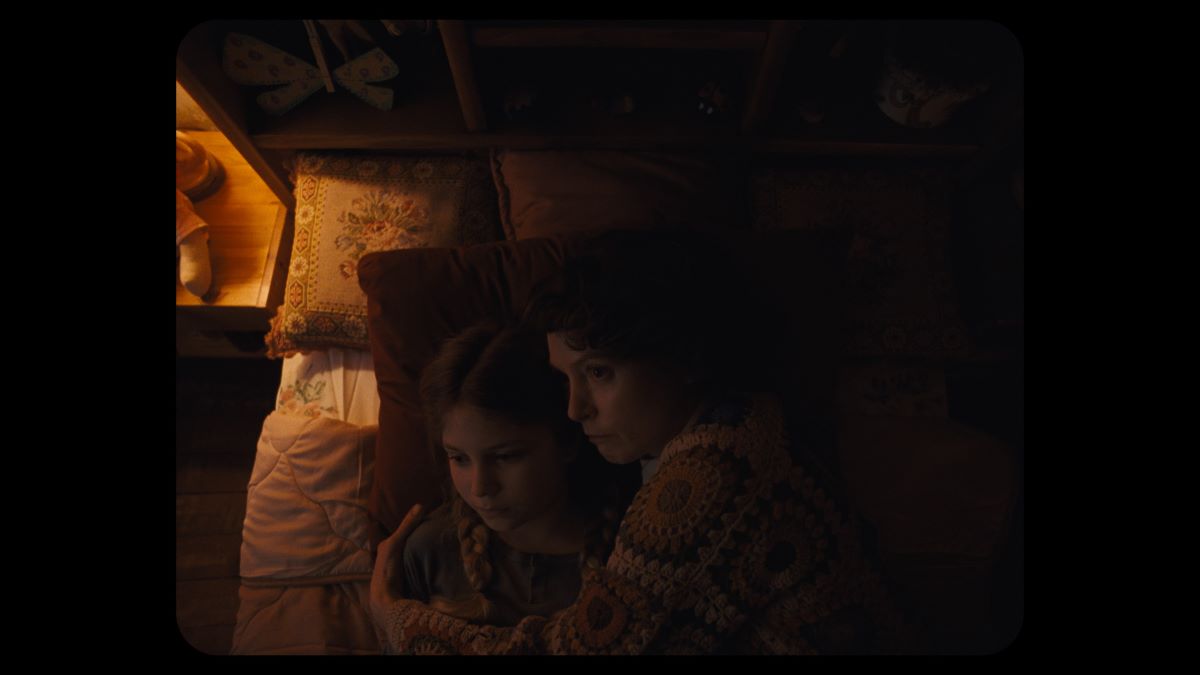
The shape of Longlegs, and the configuration of its characters, draws obvious and immediate connections to The Silence of the Lambs. A more apt comparison, however, might be Hannibal, Bryan Fuller’s cultishly beloved (and profoundly improbable) TV adaptation, which used the procedural structure merely as a vehicle for its grotesque and dreamlike aesthetics. For all the scenes of Harker and Carter poring over evidence, there’s not a lot of actual detective work going on here. The agents gloss over some pretty obvious clues; one of the film’s final twists is so plainly telegraphed in the first act that one wonders how psychic Harker could possibly be. Conversely, there is a scene in which Harker writes out a chart of dates by hand, circles the dates on which Longlegs claimed a victim, and then connects the dots to form an inverted pentagram. From an investigative standpoint, this is of course ludicrous; it depends on Harker arranging the dates and forming the lines just so, and even then I’m not sure what exactly it’s supposed to prove. But the scene works, because watching a horrified agent slowly draw a pentagram in a dimly lit room looks spooky and ominous and fucking rad, and in a movie like this, that’s honestly all you need sometimes.
Perkins’ objective here is simply to creep you out by any and all means at his disposal– which are considerable. At times, his approach is wonderfully over-the-top, as when Harker and Carter pry open the floorboards of a big, spooky barn to discover a startlingly lifelike, child-sized doll, which is later revealed to house an ominous, metallic sphere of indeterminate origin. Other tricks are more subtle: even in scenes of simple expository dialogue, the soundtrack is nearly devoid of ambient room tone, as if all the air has been sucked out of the theater. Throughout the entire film, both modes are played at once, and the effect is dizzying. You are consciously pummeled with strange and disturbing images, all the while subliminally aware that the ground underneath you isn’t the least bit firm.
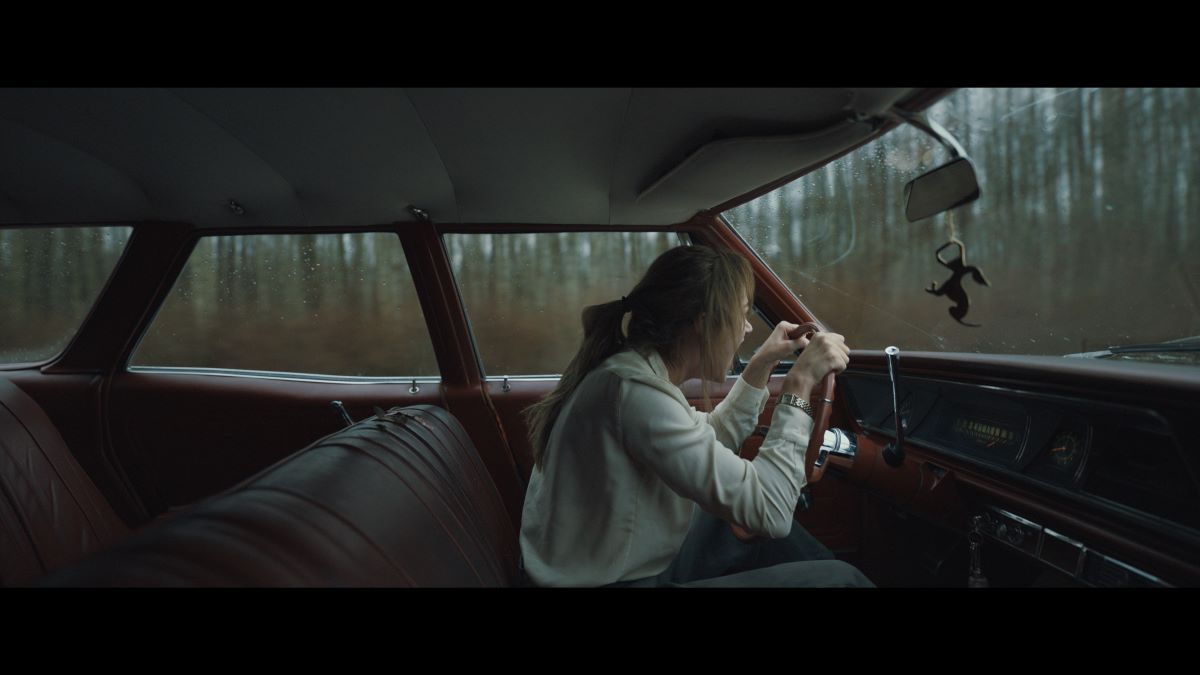
I realize I have only briefly touched on the film’s most distinctive element. We don’t catch more than a glimpse of Nicolas Cage’s title character until about the halfway point, and when we do, something truly extraordinary happens. We meet Longlegs casually sauntering through a hardware store. He approaches the bored teenager behind the counter, does a peculiar sort of hand-dance, covering his eyes and chiming “Cuckoo! Cuckoo!” (The clerk, for her part, rolls her eyes and calls out, “Daddy, that creepy guy is back.”). We then cut to Cage in his car, burning rubber down a rural road, yelling to no one in particular, “DADDYYYYYYYY!!! MOMMYYYYYYYYYY!!!”
This is all, of course, your standard Nicolas Cage freakiness, the sort that he deposits into a dozen VOD genre films a year. And yet, as Longlegs howled at his windshield, I realized I wasn’t laughing; I was actually unnerved. Part of this effect is surely the fact that the actor’s familiar visage is well and truly unrecognizable, buried under globs of clown white and mountains of prosthetics (imagine if a Nixon mask converted into a Michael Jackson disguise, or perhaps a malevolent Tiny Tim). But the fact of the matter is that Cage is simply a singular entertainer who doesn’t always get credit for his ability to modulate his unique presence. I’ve described in this space my theory that Cage’s performances can be plotted onto a “Skinny Elvis/Fat Elvis” continuum; here, he’s more Lux Interior, the Cramps frontman who fashioned himself into a ghoulish exaggeration of the King’s rock & roll swagger. His presence here is not a gimmick; he simply is that bone-chillingly effective.
There will be those who complain that Longlegs places style over substance. And I agree! But sometimes style is preferable to substance– particularly in horror, where the least explicable is often the most effective. Everything in the film is tuned to the same foreboding wavelength, from the flashes of faux-16mm grain to the supporting performances, which are all very deliberately mannered to a near-Shyamalanic degree (I haven’t even mentioned Alicia Witt as Harker’s even-spookier mother, continuing her appealing mid-career pivot to twitchy character roles). Longlegs falls somewhere between a carnival haunted house and a half-remembered dream, the kind which continues to haunt you even as you fail to articulate it in the light of day. Hell, even after all these words, I’m not sure I can articulate it myself– but I have a feeling Marc Bolan could.
Longlegs
2024
dir. Osgood Perkins
101 min.
Opens Friday, 7/12 @ Coolidge Corner Theatre and theaters everywhere