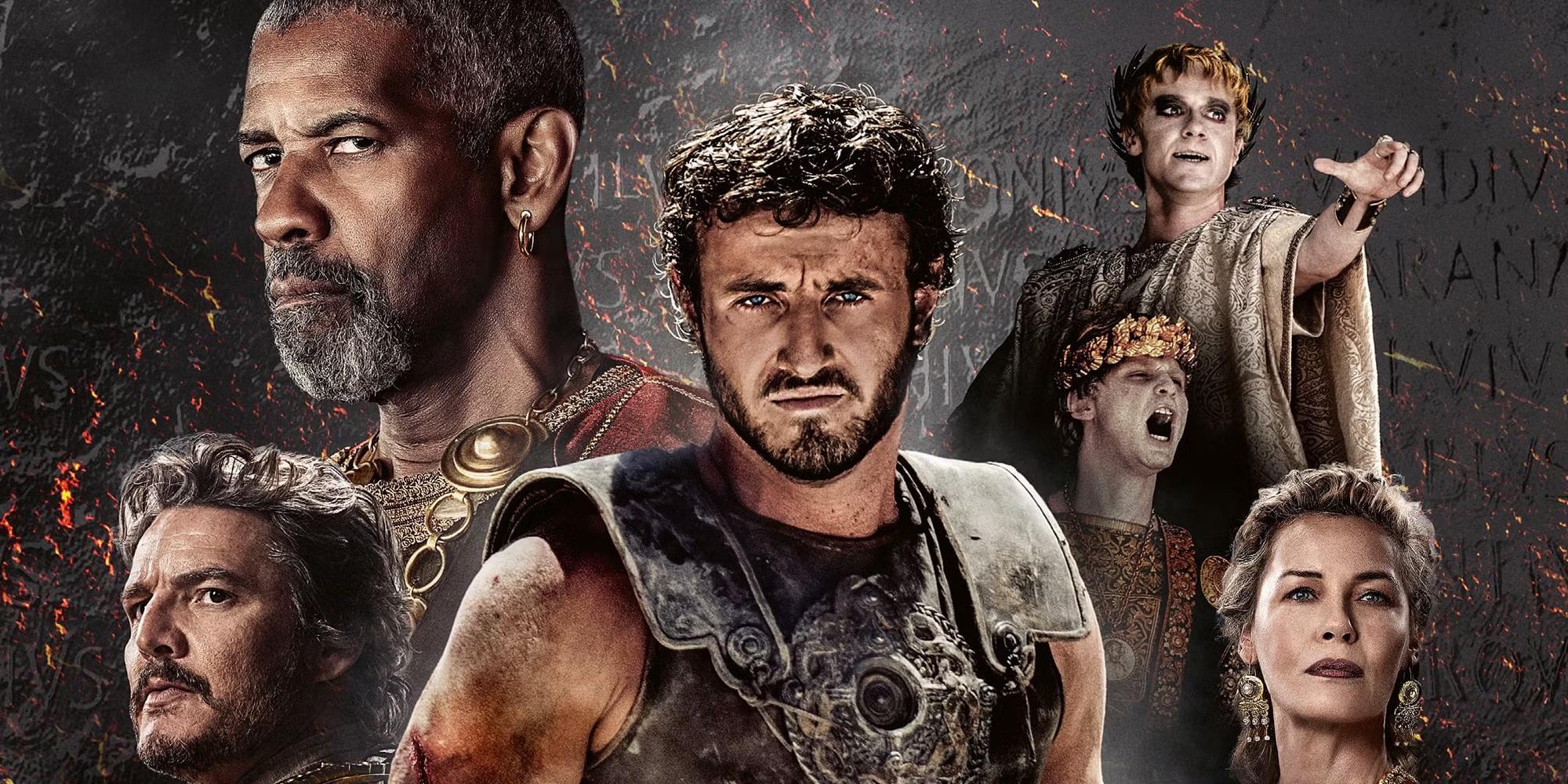
Like its predecessor, Gladiator II is an action-packed, politically motivated, and somber tale about freedom under the ancient Roman Empire. 16 years after Gladiator sees Maximus Decimus Meridius (Russell Crowe) sacrifice himself after giving power back to the Roman people, II sees Rome under the control of again insatiably corrupt—and adolescent—twins, Emperors Geta (Joseph Quinn) and Caracalla (Fred Hachinger). The dream of Rome has vanished; the twins dominate the world through violent conquest, with General Marcus Acacius (Pedro Pascal) leading their reign’s fight. Elsewhere, a simple farmer named Hanno (Paul Mescal) enjoys farm life simplicities with his wife. In full-circle fashion, General Acacius destroys Fanno’s home, killing his wife in the process—he does the same to Hanno’s childhood home decades earlier. Now enslaved by wise and power-hungry ex-slave Macrinus (Denzel Washington), Hanno gets gladiator training for the Emperors’ amusement. With little help beyond his comrades and the far-removed Lucilla (Connie Nielsen), Maximus’ former lover and Gladiator’s emperor’s daughter who tries changing things inside royal chambers, Hanno must earn his freedom—and Rome’s.
Gladiator II is probably director Ridley Scott’s closest return to form in years. Grounded in a familiar balance between weighted action and emotional heft, II continues the robust character-driven centerpiece that Gladiator thrived on. While the jump from the original to here is incredibly hazy—the new emperors are scarcely developed, and their rise to power isn’t shown or explained, making their whole presence feel underbaked—and the film’s about 45 minutes too long, there’s more than enough propulsion to satisfy. Two components especially make II compelling: Hanno’s more extensive involvement and Macrinus’s rise to power. Without spoiling, he’s directly involved in the ensuing royal drama, and it consumes him: “Rage pours out of you… like milk, out of a whore’s tit,” Macrinus tells Hanno before recruiting him. Having lost his wife, life, and two homes, he’s enraged by what he’s constantly stripped of, so his fight for freedom counts a great deal more than his current enslavement. He’s felt Rome’s grip his whole life.
Macrinus, as Hanno’s guide and eventual foe, gives the best performance of the bunch. He’s commanding, sinister, wise, and plotting all at once, whether telling it how it is or demanding your obedience. He taunts Hanno with the different freedoms he desires, only to reveal his plans of becoming such treachery’s mastermind later on. Their dynamic becomes one of false prophets and followers: Macrinus promises ultimate victory only to become the perpetrator of victory’s need. This dynamic and Hanno’s hatred for merciless greed imbues the grander action and political shifts with personal grievance—an exciting edge Scott hasn’t achieved in years. Add to that superb action, detailed spaces and costumes, enticing characters in Acacius and Lucilla, and themes about loyalty, proper governance, violence acceptability, and humankind’s most defining flaws, and Gladiator II is a hell of a good time.
Time will tell if Ridley Scott can continue delivering good movies as he once did and whether or not he’ll carry that hot streak into Gladiator III. And while the jump between Gladiator and II feels disconnected, the emperors cartoonish, and the time long, Gladiator II provides more than enough heart, meaning, and barbarity to satisfy. For Gladiator fans, action fans, Ridley Scott fans, and average blockbuster enthusiasts, Gladiator II is a bloodletting follow-up that knows how to mutilate—or decapitate.
2024
dir. Ridley Scott
148 min.
Opens in theaters everywhere in theaters Friday, 11/22