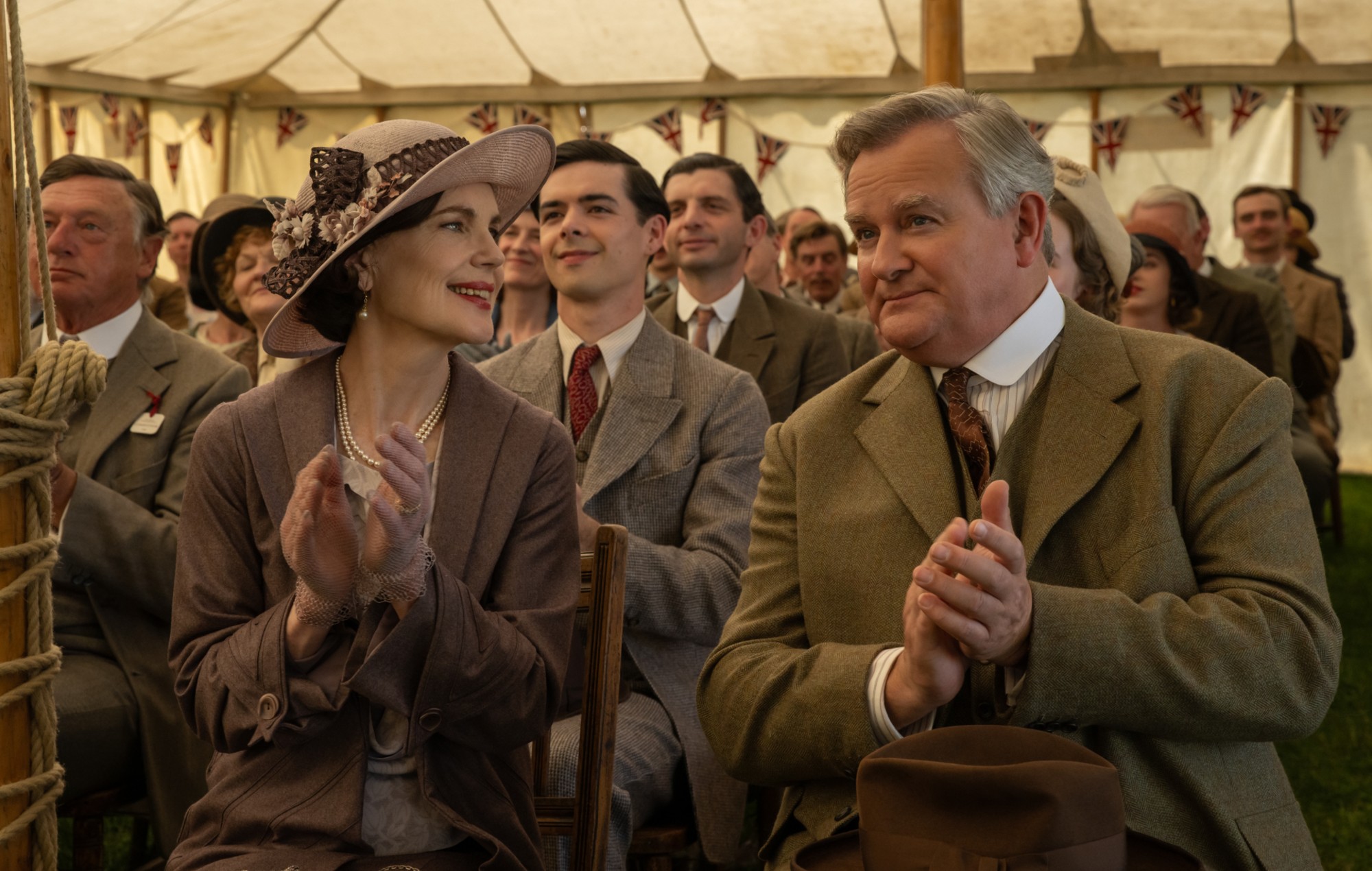
Downton Abbey: The Grand Finale is an elegant, robust, and heartfelt goodbye to this grand royal saga, Lady Mary Talbot (Michelle Dockery), and her extended family. Franchise writing anchor Julian Fellowes returns this occasionally dwindling TV-turned-film franchise to strong form with eloquently sophisticated and relatable dialogue, closing out with as much grace, sociopolitical criticism, tastefully tongue-and-cheek adult humor, and esteemed costume and set design as it started with back in 2011 on silver-screens.
Starting out pretty typically at a family-and-staff attended play starring famed playwright Noël Coward (Arty Froushan) and former Downton footman Guy Dexter (Robert James-Collier)—relatively soon after the off-screen death of Robert Crawley/Lord Grantham’s (Hugh Bonneville) mother, Violet (Maggie Smith), to account for the sad passing of the the beloved actress. The next day at a ball, Lady Mary until then unspoken divorce to her latest husband gets revealed whilst at a Downton neighbor’s ball, rendering her stripped of her royal title in the middle of festivities and kicked out. Devastated, her father Robert Crawley/Lord Grantham (Hugh Bonneville) is adamant they fix things. Meanwhile, Robert and his wife and Mary’s mother, Cora/Lady Grantham (Elizabeth McGovern) return to Downton to receive Cora’s brother, early Downton guest-star Harold Levinson (Paul Giamatti). Harold reveals he’s lost he and Cora’s late mother’s entire fortune due to his shady American business partner, Gus Sambrook (Alessandro Nivola), who supposedly ‘saved’ their family from losing even more during the Great Depression. As Lady Mary decides Grantham House needs selling off to pay for Harold’s debt and manage newly formed income taxes, a resistant Lord Grantham refuses to pass down the throne and sell anything off. Dealing with new social dilemmas, financial issues, and emotionally taxing dynamic shifts, Lady Mary, the family, and the close-knit service staff headed by the now retiring housekeeper Charlie Carson (Jim Carter) must push forward to restore balance and modernize.
If the above sounds pretentious, greedy and stupid, it is. But that’s 19th-to-20th-century English royalty, and franchise writer Fellowes has always understood the appeal to such polished nonsense. Fragile social circles broken by what are already devastating life events like divorce, But, for longtime Downton TV fans or even newcoming Abbey film lovers, that’s part of the appeal. Fellowes has relied on this grandiosely soap opera-y fixture of living—with grandly colorful designer gowns and suits, exquisitely finished wood-and-stone English architecture, and breathtakingly open greeneries for miles around—to demonstrate the pressured, hostile, and sometimes senseless lifestyles and tensions of royal living. While Downton has had its ups and downs over six seasons and two previous films, The Grand Finale lives up to its name with universalizable themes, familial loyalty, top-notch performances, franchise dovetailing connectivity, updated sites and sounds, and hilariously sprinkled bits of cluelessness and humanity.
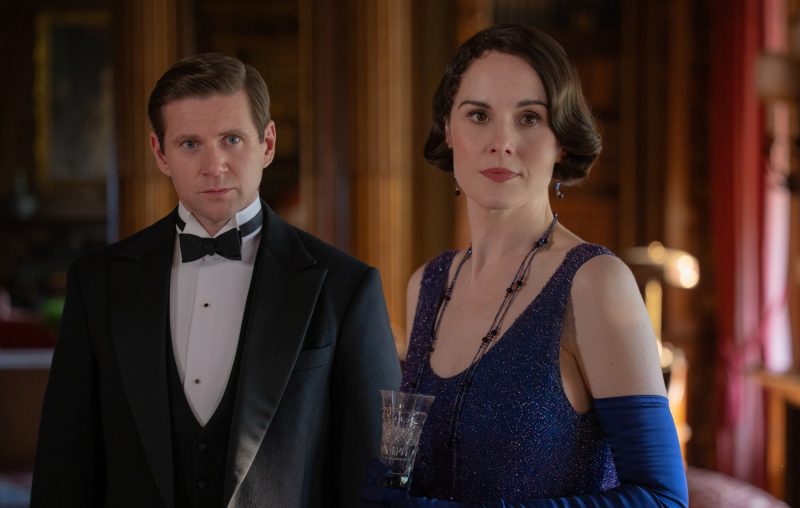
Mary, enriched by Dockery’s integrity-boasting, level-headed take, continues to steer the family towards progress simply by living how she wants. Her divorce calls the entire social contract the family and Downton neighbors are bound to into question, especially in terms of its strict lost love guidelines: “Have you ever been thrown out of a house? It’s quite an experience,” an unsmiling Mary explains to a housemaid. She’s not allowed any of her old luxuries—even to be seen, really—shaking up the entire family plan for generations to come. Cracks understandably form in their faith in the system, especially for Lord Grantham who refuses to give up power out of his fear of the family’s giving up what they’ve built: “You know the system wouldn’t work if you hold on to power,” Lord Grantham and Mary’s long-since dead sister Sybil’s husband, Tom Branson (Allen Leech), calmly reminds a furiously red-faced Robert who replies, “I’m surprised the system works at all.” While not opposed to the transition—the entire series literally revolves around getting Mary prepared to take over—he denies the massive changes Mary sees as necessary.
Family matters aside, Robert and Mary conversely represent the rough transition away from British monarchical importance towards the slightly closer-to-modern, income-based measure of progress and power. By streamlining and selling off, Lady Mary adapts Downton Abbey for the money heavy future laden with the world’s earliest cars and new norms of social responsibility—at the cost of many of the luxuries, niceties and normalcies Robert was raised to expect as Lord. But, as also retiring longtime head cook of the house Beryl Patmore (Lesley Nichol) says to new head cook and Beryl’s close underling Daisy Parker (Sophie McShera), “Our lives are lived in chapters. And nothing is wrong when an old one ends and a new one begins. I’m proud yours is about to begin.” Mary’s reign is inevitable, and for Downton Abbey to live on, Robert must come to recognize the need for updates.
Part of Robert’s initial reluctance comes from Mary’s post-divorce ostracization. While The Grand Finale treads lightly on Lady Mary’s divorce troubles in relation to her being a woman, which would’ve made things that much more complicated given her husband-losing history, it certainly demonstrates the constrictive, narrowmindedness of high-class English society. Mary’s first kicked out by Lady Sarah Petersfield (Joely Richardson) with a tone of disgust and sudden dirtiness at her divorce: “As you well know, miss Mary, divorce renders you stripped of your titles. You must leave this house immediately… without letting the bride [her daughter] see you.” Mary’s initially left feeling as disgusted with herself, even if she disagrees and with the overarching reasoning especially given her divorce’s being caused by her husband having an affair: “They’re all very proper in their prim dishonesty,” she sighs after explaining who her ex-husband paid off. As insane as it sounds today, it was a heartbreaking reality for many who lived such constricting lives of superficiality and supposed refinement (or lots, lots, LOTS of money) back in those times. Especially as the U.S. and its sociopolitical perspectives come into play, Lady Mary and many other royals see how life can improve by changing the rules, or relaxing them.
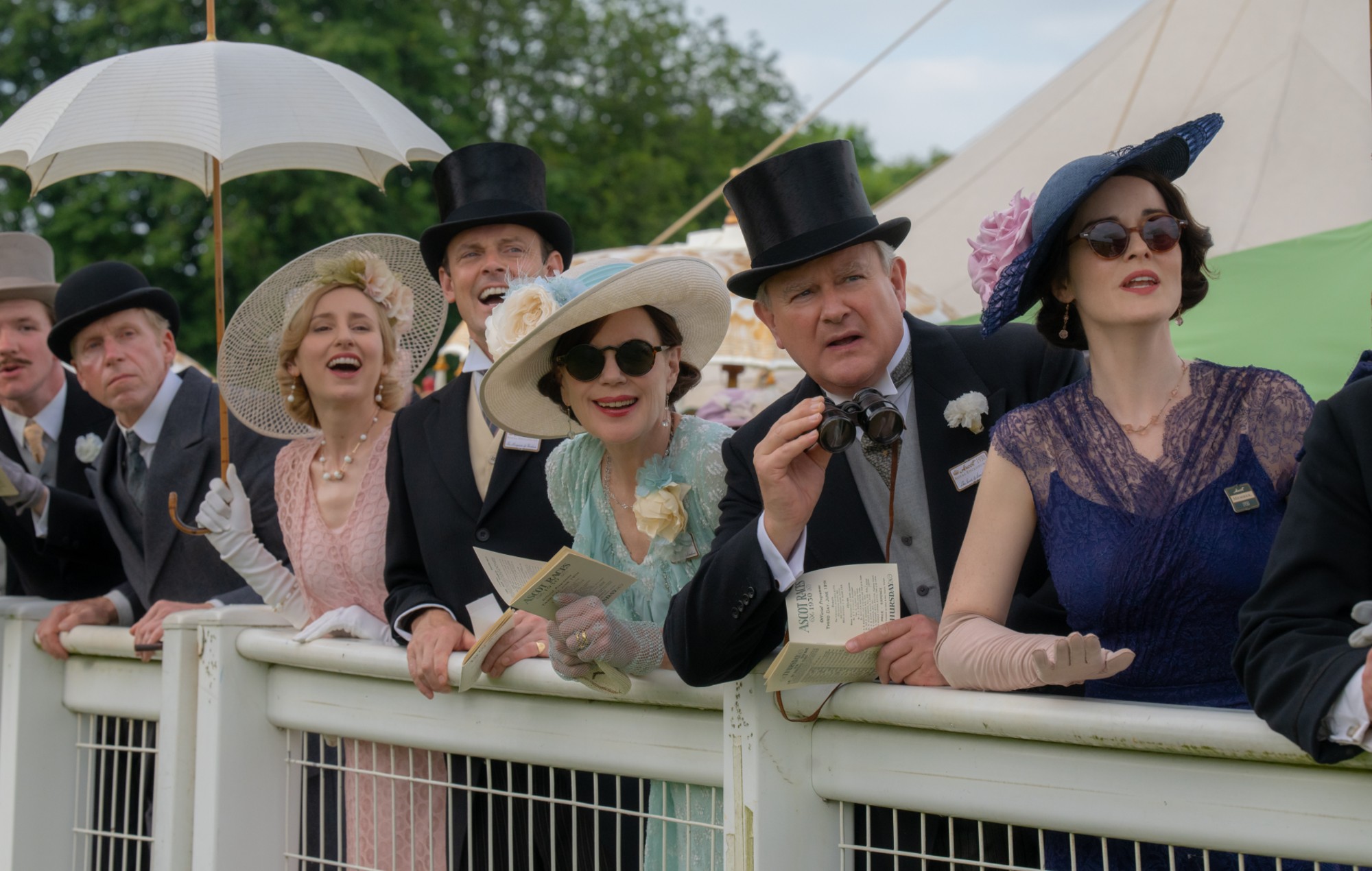
The promise the U.S. characters bring—no judgment about the divorce, freedom from its social consequences—is tempting: “You should try America, you know. We don’t care about divorce there,” Gus Sambrook relents to Mary. However, with such social progress, at least in terms of the U.S.’s hand in it, comes financial bankruptcy at the least and fraudulence at most, as represented by the very same businessman who eventually flirts and sleeps with Mary. While others like Coward continue the same moral insistence about her divorce, Sambrook is both a solution and a curse upon the family. The house is already bubbling tensely because of the divorce, Harold’s missteps, the ebb and flow of British royal influence, and their wavering reputation amongst other elitist locals. Sambrook throws an entire new stone in Downton’s wheels, representing the U.S.’s oft fraudulent, profit-savvy standards of living and ideas of what defines accomplishment (not just get filthy rich but get filthy rich fast) disguised by promises of progress and opportunity. While others like Harold and Noël Coward benefit from such ideas without visible amorality, Gus is a bloodless grifter. As soon as he and Mary sleep together, for example, he immediately blackmails her for benefits: “What would happen if I told them [Mary’s family and the press] were lovers the day we met?” Even though Mary eventually tells him off after finding his well-known past of stealing off the very rich, Gus still gets away with a family fortune. Present-day Americans supportive of the supposedly business-boastful presidential administration should love Gus, but anyone decent and a fan of Lady Mary will surely see the red in Gus’s American flag.
All this to say that, along with the proof of internal family drama and endless trust issues, Downton Abbey: The Grand Finale proves while royalty should stick to fiction: it’s needlessly tense, fast-moving for no reason, and all about appearances. On screen, when powered by the likes of this impeccable cast, centered around the humanity in all walks of life, and resoundingly soothing dialogue reminiscent of Downton‘s earliest and strongest seasons, royalty is enticing even when soapy. In 2025, real world royalty shouldn’t sell, even if it still unfortunately does.
Thus, along with satiatingly laugh-out-loud jokes about the joys of living—”Besides, it’s terrific fun!” Mr. Carson’s wife and fellow housekeeper Elsie Hughes (Phyllis Logan) says to retiring cook Beryl in answer to her questions about sex, cracking a gigglesome smile at life’s vulgar joys—heartwarming proof of bond between everyone as one big family, and a terrifically optimistic end that honors Downton‘s lost family members to boost the future’s happy potential, The Grand Finale provides exactly what fans want: a high-class end to this charming era of filmed royalty. Not every joke flew, pacing needs work, and some not-dead characters who left earlier could’ve used some closure, but for longtime Downton Abbey fans, Julian Fellowes fans, British drama fans and period piece fans, The Grand Finale is a grand time at the movies.
2025
dir. Simon Curtis
125 min.
Now playing @ Coolidge Corner Theatre, Kendall Square Cinema, Capitol Theatre Arlington, Apple Cinemas Cambridge, Alamo Drafthouse Boston Seaport, and all local AMCs