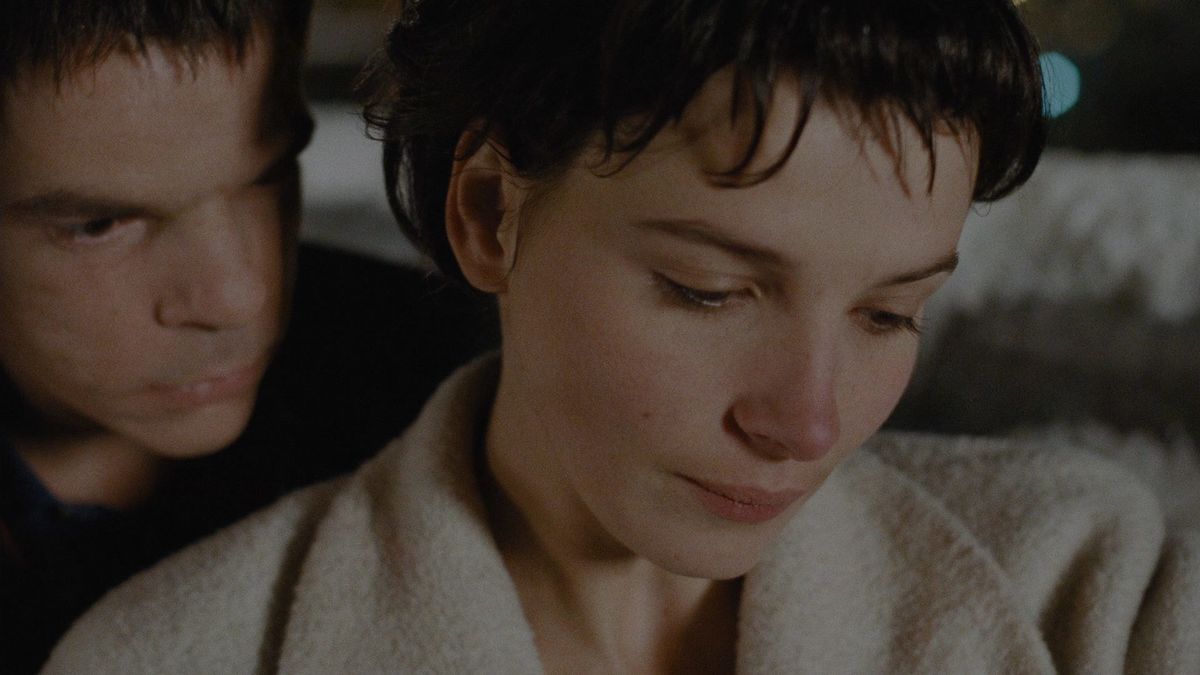
The Lovers on the Bridge (Les Amants du Pont-Neuf) is an enriching, gritty love story about a pair rising above Paris, France’s slums, with and through each other. Director-writer Leos Carax captures a sort of layman’s Before Sunset, with two French-born vagrants—an alcoholic, sedative-addicted, wannabe circus performer named Alex (Denis Lavant) and a militarily brought-up painter who is losing her vision, Michèle (Juliette Binoche)—explore themselves and each other in life’s lowest point through conversation, substance abuse, and lawlessness in snoozing Parisian streets. Living on the Pont Neuf bridge, then under a two-year reparation effort that shut it off from the public, Alex drinks and uses downers to sleep in the company of his older vagrant friend and dealer, Hans (Klaus Michael Grüber). One night, when drunk, he passes out in the street near an increasingly visionless Michèle, who paints his portrait after presuming his death from a car running over him that very night. She eventually takes refuge on the bridge, and through a strangely romantic series of slummily poetic efforts by Alex, they get together. As they wander and steal, they bring out the best and worst parts of each other, especially as Michèle’s family looks for her—homelessness, emotional manipulation, substance abuse, and infrastructural neglect become their lives, whether they want to leave it or get forced out of it. Love is their cure and their curse.
Love is indescribable. While many people try at love and fail—whether that be through romance, family, or friends—true love of any shape between any pairing is beautiful and powerful. It is the warmth obtained from the presence of our loved ones, the hurt caused by their drama, and the goodness that comes from quality time with these special people in our lives. With Paris often remembered as the city of love, Carax doesn’t waste any time romanticizing what is already polished. Dashing through corners of shadowy, piss-soaked alleyways, cigarette littered curbs and rain-beaten roads, Bridge‘s filmmakers ensure the dirtiest parts of Paris—which, in reality, aren’t exactly hidden from view anyway—emerge as The Lovers‘ most remembered.
Alex’s choice to live in the dirty French fringes renders Alex the personification of such French filth. Only a Frenchman could find something suave in pavement and rust, and Alex does. As he goes between his three fundamental habits—incessant drinking, bothering Hans with a “give me my downer. I need to sleep,” every night, and scraping enough money from it all by parkour dancing around parks spewing alcohol-soaked fire breaths—his simple nature combined with Lavant’s soulfully absent performance fills France’s dirt with decorative depression. He goes through life thinking his pleasures are easy and simple, no matter how aimless, unshowered, or dirty he gets. He even romanticizes love, having never been in love before, when he learns of Michèle’s past relationship with Julien: “What’s it mean: ‘First Love?’” he asks, skipping rocks across the road. “I don’t get it. I don’t get it. ‘First Love.’ She drew him, over and over… only him. He played music for her… only her.” For him, love and openness are still adolescent, so finding her breaks his cycle. Even so, people are creatures of habit, and only in France can the most disgusting habits be normalized under imagery of the Seine. “I want to go back to the bridge,” repeats Alex throughout as new, unfamiliar activities eventually bore him from his comforting, familiar nest of misery. He is the epitome of a comfort seeker, even if that comfort is detrimental to his mental and physical health—detriments that seep into Alex’s everyday life and relationship with Michèle.
Michèle, though deep in her own rock-bottom misery, has greater purpose and meaning to her life. Throughout, her paintings capture images she refuses to forget, whether because they serve a greater purpose or because the memory’s importance could fade if left unnoted. She memorializes the dead, for example, as she did with Alex “From memory… [because] I thought you were dead.” Losing her vision only propels her to seek her wants out sooner, despite losing everything from a past troubling relationship with a certain Julian that ended fatally. As she insists to Alex, “There’s something you don’t know, about me…. You have to be patient with me. It takes time,” she rapidly chases artistic dreams like seeing famous paintings and getting closure to her past relationship’s foul end. Her bond with Alex, though initially reluctant, becomes one of unspoken understanding; cut from different cloths, their shared experiences (or, instead, her past reflecting his future choices later in the movie) and vandalistic or thieving acts come from the same source of emptiness and pain. Only Michèle has people looking for her to help her, which Alex mistakes for forced separation. Out of fear that she might learn how much better she is than he, he tears down missing posters, dumps her money, and does everything he can to keep her in his league—a reaction of a child unfamiliar with the differences between love and possession. “You must open up, or I can’t do anything with you,” a pleading Michèle begs of a facepalmed, silently crying Alex after he hit her over paranoia. Love means trust, companionship, and parallel growth, not control.
Fortunately, with some French dances, poetry, celebrations, fireworks, and a political atmosphere as a backdrop to the pair’s low-love story, love keeps them together even after years apart. As Michèle’s past mirrors Alex’s later present, they reunite as better versions of their dumpster-diving past selves, still in love: “I thought I’d forgotten you. But every night for weeks, images of you,” a nearly tear-jerked Michèle admits to an imprisoned Alex. “That’s why I’m here. My dreams sent me.… Love woke me.” While not every spectacle intellectually arouses, and Alex can feel unlikable in his occasional sexism and manipulative tactics (and thus perhaps undeserving of Michèle’s affections), love’s awakening qualities flourish in Bridge’s many supports and morose dips. For French film fans, romance fans, slice-of-sad-life enthusiasts, and those looking for something a bit less action-oriented and more emotionally inclined, The Lovers on the Bridge is a sure-fire way to learn of love, feelings, and homelessness in Europe’s most romantic city.
1991
dir. Leos Carax
125 min.
New 4k Restoration screens Friday, 9/5 through Sunday, 9/7 @ The Brattle Theatre