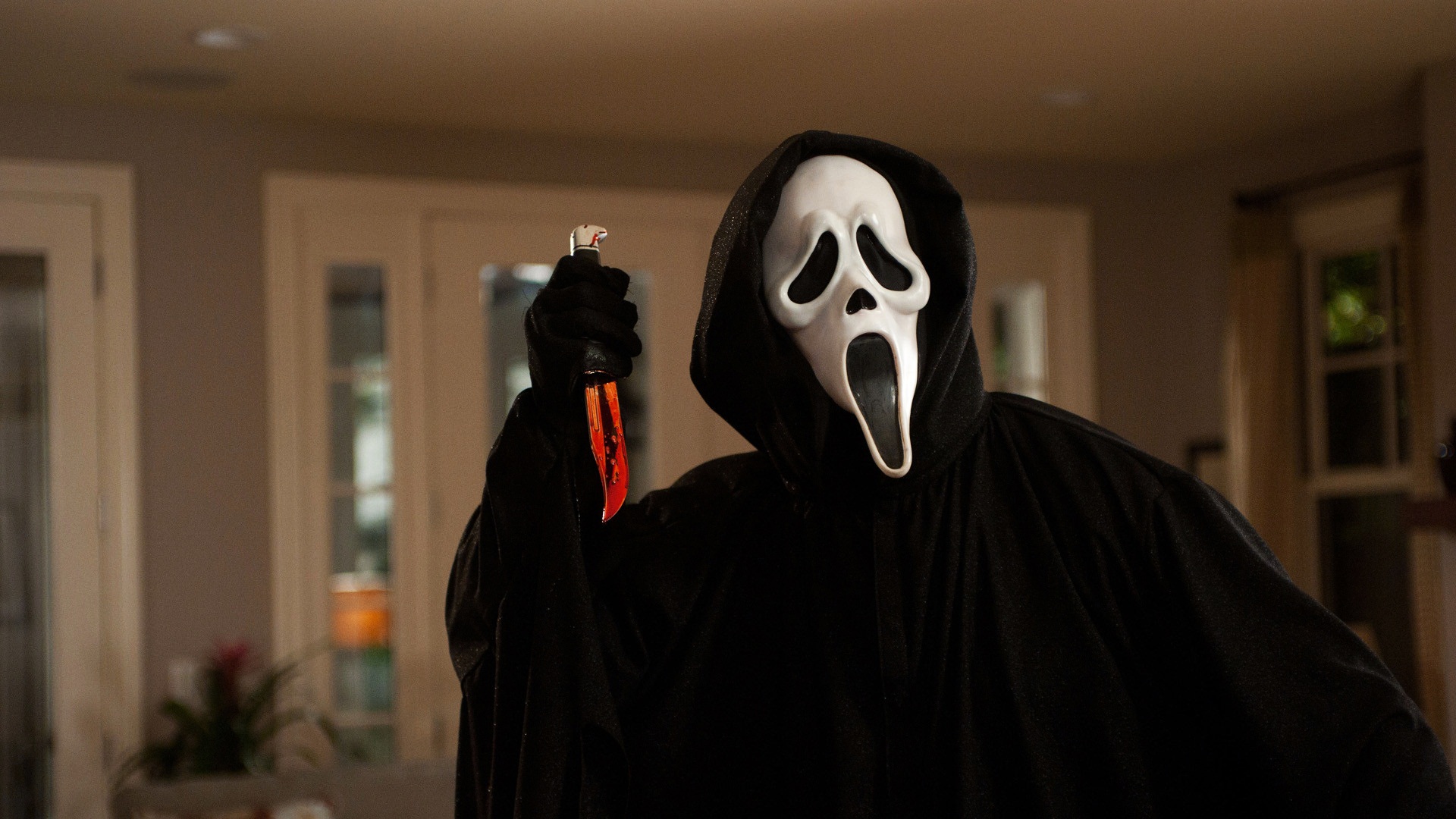
Wes Craven’s original Scream is a cleverly jubilant, meta, and entertainingly jolting thriller about high school kids getting hunted and killed. As the start of a now six-movie series (with a seventh on the way), Craven’s cinematically cultured original still holds as the franchise’s best, brimming with self-aware characters, a snappy cast, a striking balance between horror and comedy, chilling references that reinforce the villains’ insanity and subvert trope-y expectations, and enough genuine scares to make Scream a fun fright.
Sidney Prescott (Neve Campbell), a teenager based in Woodsboro, California, leads a quiet, average life: she lives at home with her single father, Neil (Lawrence Hecht), attends school, and has an enticing boyfriend named Billy Loomis (Skeet Ulrich) who sneaks into her window out of longing. Nothing seemingly out of the ordinary. However, elsewhere, fellow Woodsboro High student Casey Becker (Drew Barrymore) is brutally murdered by an unknown assailant in a ghostly white mask and black cloak who refers to themself as Ghostface (voiced by Roger L. Jackson) and terrorizes their next victims over the phone: “Do you want to play a game?” Ghostface demands Casey, before asking her various things like “What’s your favorite scary movie?” chasing her down and stringing her gutted corpse up on her parents’ front lawn.
While almost everyone becomes terrified as Ghostface gets sensationalized in the media, thanks in no small part to relentless reporter Gale Weathers (Courtney Cox), Sidney becomes especially so as Ghostface begins calling her and, worse, ripping open past wounds about her own mother’s similarly brutal murder a year prior. Getting help from her best friend, Tatum Riley (Rose McGowan), Tatum’s good-hearted goof of a police officer brother, Dewey Riley (David Arquette), and a fellow horror-obsessed friend, Randy (Jamie Kennedy), Sidney starts uncovering Ghostface’s direct connection to her mother’s murder, refusing to shy away from the horror movie-obsessed danger she now faces. With little beyond proof of violence and psychopathy and the killer’s obsession with tropes to help, Sidney must find the suspect before the suspect slices her—especially with those of her friend group, like her own boyfriend Billy and Tatum’s boyfriend, Stu Macher (Matthew Lillard), considered suspects.
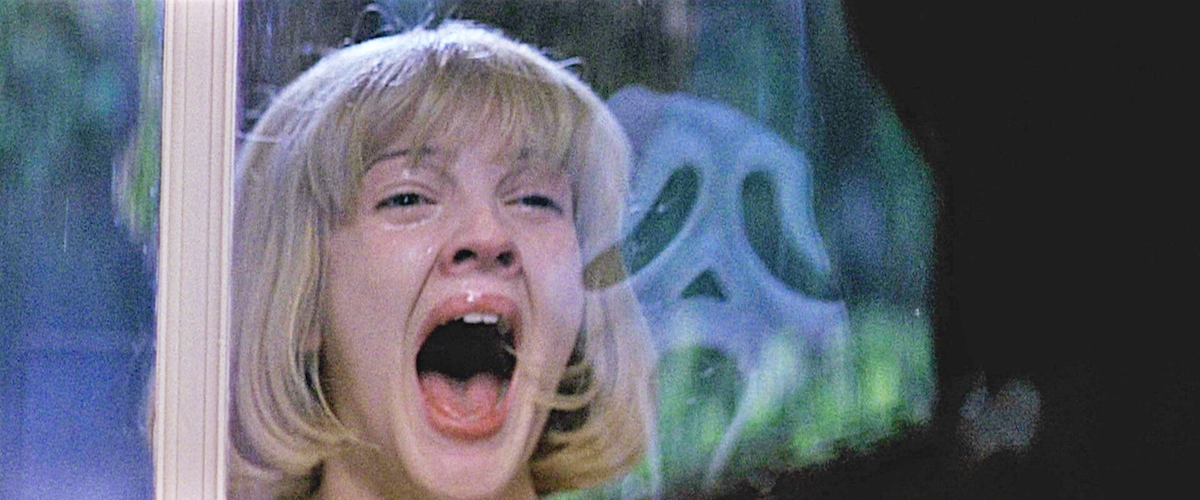
Wes Craven is nothing short of a classic horror figure. From the endless Nightmare on Elm Street entries to Scream‘s own long run (we don’t talk about Scream 3 or 4, though), Craven’s capability for directing impressively quippy, scary, and damn near surreal meta flicks shines through brilliantly here, thanks in no small part to his collaboration with Kevin Williamson and Williamson’s drawing inspiration from the Gainesville Ripper college murders in 1990 Florida. From the squeakiness of West Coast school corridors and well-paved roads to the lived-in feeling each filled “house” translates—plus a smattering of convincingly Californian dumbasses, rebels, and do-gooders like Lillard’s zany character Stu, Ulrich’s James Dean-like suave and subtle instability, and Sidney herself, respectively—Craven and co. set up a quaint little world in which Ghostface can slash and sting for generations to come. Balancing oft meta humor with terror—”God, look at this place. It’s The Town That Dreaded Sundown,” Sid says as she, Tatum and Dewey approach another crime scene, starting banter that leads into Sid accepting that, if a movie were made on Sidney’s story, her part would be filled by Tori Spelling instead over Meg Ryan—Scream screams from laughter, jumps, and enough references to other ideas to throw viewers off the scent of the real killer’s identity.
Most of Scream‘s characters feel like above-average charming kids as well; each teen comes with their own traumatizing backstory waiting to be cut open. Sidney, of course, experiences and changes the most, starting with the shockwave of her maternal loss once Ghostface enters the scene and continuing with her response to Ghostface’s scary movie question: “I don’t watch that shit [horror movies]…. It’s just, what’s the point? It’s all the same. Some stupid killer stalking some big-breasted girl who can’t act, who’s always running up the stairs when she should be going out the front door. It’s insulting,” Sidney retorts. While that comment only infuriates Ghostface in the moment, she backs up her initially unthreatening scoffs at movie tropes with a sense of survivability and preparedness, running in all the opposite places she once scoffed at before getting cornered—only to outsmart Ghostface yet again. Her preparedness demonstrates how much her mother’s death changed her perspective on the world; she’s come almost face-to-face with death itself before through her mother, so she prepared for any eventual recurrence.
Her trauma also leaves her sexually repressed, driving a wedge between her and Billy: “Billy’s right, you know. Whenever he touches me, I just can’t relax,” she confesses to Tatum, whose healthy response is, “So you have a few intimacy issues as a result of your mother‘s untimely death. It’s no big deal, Sid.” In, again, healthier circumstances, Tatum’s right, but as Billy becomes increasingly impatient—and unstable once as he starts coincidentally being in the same places where Sidney had just been attacked—the sexual tension spills into their relationship, ticking off Billy’s insecurities. The warmth of his rounded eyes and the only slightly slimy smile he portrays at the beginning evaporates as he becomes more glaring, uncertain, and off-kilter with each new buildup in suspicion or distance between him and Sid. Their traumas become, in some ways, indistinguishable from each other, especially as their ensuing fates only force everyone’s true colors to the surface. As kids around them only vaguely understand through the news what actually happened—rendering some to use sickly humor as a coping mechanism and others to stop going outside their homes as much—Sid and Billy become that much more isolated in their sexual and fatal problems.
Add in Gale Weathers’ incessant story-grabbing tendency that initially shapes public perspective and only pushes Sidney to the point of knocking Gale on her ass—who then fleshes out into a justice-chasing character as she becomes the source revealing the killer’s true connection to her mother’s death (and grows a lovingly lighthearted romance with Dewey)—and consistently agile performances all around, and Scream is a delightfully well balanced horror-comedy. Not every gag and twist works, and some horror stupidity can ooze through, but nothing to take down the swiftness Scream otherwise boasts. For horror-humor fans, Neve Campbell fans, Wes Craven fans, and meta-humor fans, Scream offers an angsty experience of blood, guts, trauma, and plenty of “She’s behind you!” moments screamed at TV screens by new victims as Ghostface pulls the same trick on them.
1996
dir. Wes Craven
111 min.
Screens Saturday, 10/18, 11:59 p.m. @ Coolidge Corner Theatre
Part of the ongoing repertory series: Slashics