Professor Marston and the Wonder Women—despite some significant factual errors—is a mind-widening, bittersweet, and direct biographical film about scientist, professor, and Wonder Woman comic creator William Moulton Marston (Luke Evans) and his two lovers, legal wife Elizabeth Holloway Marston (Rebecca Hall) and Olive Byrne (Bella Heathcote). The film starts with Elizabeth and Marston as university psychology professors studying both the key to the lie detector test’s invention and the DISC theory, a sexually charged psycho-behavioral theory and precursor to BDSM that stands for “Dominance, Inducement, Submission, Compliance,” which theorizes these four terms as how human society functions and everyone interprets their environments. As bright, young Olive expresses interest in their studies after being a student in Professor Marston’s classes, the three grow close—Olive falls for both Marstons, and they for her. They surreptitiously explore their sexual desires in this new three-way dynamic, struggling against the 1930s and ’40s U.S. viewpoints on lesbianism and polyamory whilst eventually raising a large family together (or apart, regretfully!).
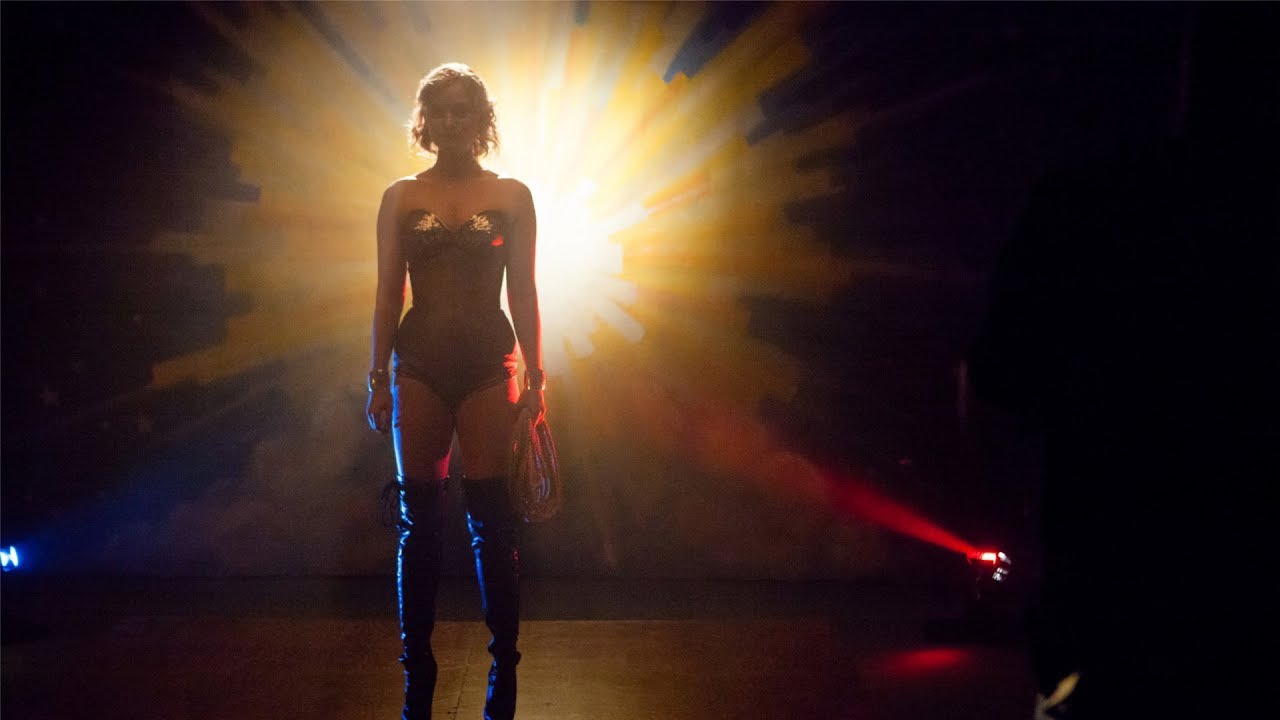
Olive and Elizabeth, in Professor Marston’s mind, through all their kinky escapades and near dynamic-shattering issues, are perfect: “Together, you make the perfect woman,” he tells the pair, to hesitant reactions. When one understands them and Marston’s then-progressive (but still backward) outlook, Wonder Woman is easier to understand as a combination of Elizabeth and Olive’s greatest strengths. Ripping into these dynamics with bleak comedy and direct emotional confrontation, director Angela Robinson makes Wonder Women equally funny, revealing, and sad. Watching the sheer amount of bondage and surprisingly sexualized comics and storylines that ultimately got Marston in trouble come to life is ecstatic. Seeing how the three coped with and without each other in a backwards mid-20th-century USA and their performers’ equally riveting takes on these real people further enhances the gentleness in Wonder Women’s sexual welcoming and normalization of such “unusual” lifestyles.
It’s rare for a dramedy-romance to be as sexually provocative as Professor Marston and the Wonder Women is without feeling vulgar or detached from an otherwise thinly veiled narrative. But this film pulls it off; sex is essential for understanding these people and Wonder Woman’s creation. Partly because of societal pressure and partly because of each of their dysfunctions, the trio’s relationship’s consistent instability, including the sex, is a significant part of their lives—and thus is central to the viewing experience. Take Elizabeth and Olive. Both are fascinated with science—”I’ve read all your books. You’re brilliant,” Olive admits to Elizabeth, referring to her past socio-behavioral-focused essays and other works—but they’re staunchly different, as Professor Marston himself astutely (and misogynistically) observes: “She [Olive] is beautiful, guileless, kind, and pure of heart. You are brilliant, ferocious, hilarious, and a grade A bitch.” While the pair get held down by their femininity regardless of their talents to the rest of the world, their somewhat contradictory reactions to that world rock their personal lives further—Elizabeth’s “grade A bitch” nature when people deny her practicability no matter how cruel cuts deeply into Olive’s purely nurturing and committed persona. Elizabeth gives into surrounding conventionality pressures, insisting their desires are frowned upon impossibilities: “We have to live in reality. And in this world in these lives, love… it doesn’t matter,” rendering her feeling valuable only when she’s a traditionally monogamous wife and secretary. But love, in all its form, is all that matters, as demonstrated by this trio’s on-off again relationship that holds strong when in motion because of their kinky, pleasurably primal role play with ropes, costumes, paddles and other sadistic tools.
Thus, while Marston and the Wonder Women abandons the Professor part of itself in bending reality significantly—the trio’s children and grandchildren have stated on-record that the real Elizabeth and Olive had a no romantic relationship but instead one of codependency and friendship, for example, amongst other dramatic reality ignoring choices—it demonstrates why love is enough, and shouldn’t get hindered for any reason. Brothers, sisters, parents, friends, boyfriends, girlfriends and/or other relationships make life worth living. Even the most corrupted politicians have people they care for: Hitler had his mistress. The U.S. is moving backward at least on a political level towards greedy financial focus. However, the rest of us fortunate enough to be open-minded, still know the reality: money mentally kills, even if you have a lot. Only love is powerful enough to make it bearable to chase, considering its ever-increasing importance in this late-stage capitalist country, which was felt even in the ’40s. That’s why so many current politicians choose hatred—much to the dismay of the on-screen Marston-Byrne love triangle. To truly succeed when the powerful work hard to ensure you don’t, there’s no room for love—so is it really success? “I thought I knew everything. I thought love wasn’t enough. But… it has to be enough. Because we cannot… live without you, I cannot live without you,” Elizabeth pleads to a shattered Olive on her knees, hands enmeshed with Professor Marston’s. Success and love are not and shouldn’t be mutually exclusive, nor encouraged to be; polyamory, homosexuality, and just existing but not as a straight Christian white personal are not issues in a world where wage gaps, inaffordability, corporate lobbying, unjustifiable labor-wage imbalances and greedy CEOs run amock on the planet with little resistance.
2017
dir. Angela Robinson
108 min.
Screens Saturday, 3/8, 9:30 pm @ The Brattle Theatre
Part of the ongoing repertory series: True Tales of Wonder Women