
The Boston Baltic Film Festival runs from Friday, 2/28 through Sunday, 3/2 at the Emerson Paramount Center, and through 3/17 virtually. Click here for the schedule and ticket info, and watch the site for Joshua Polanski’s continuing coverage!
The following dispatch features reviews of Is It Easy to Be Young?, Is It Easy to Be… After Ten Years, and Is It Easy…? After 20 Years.
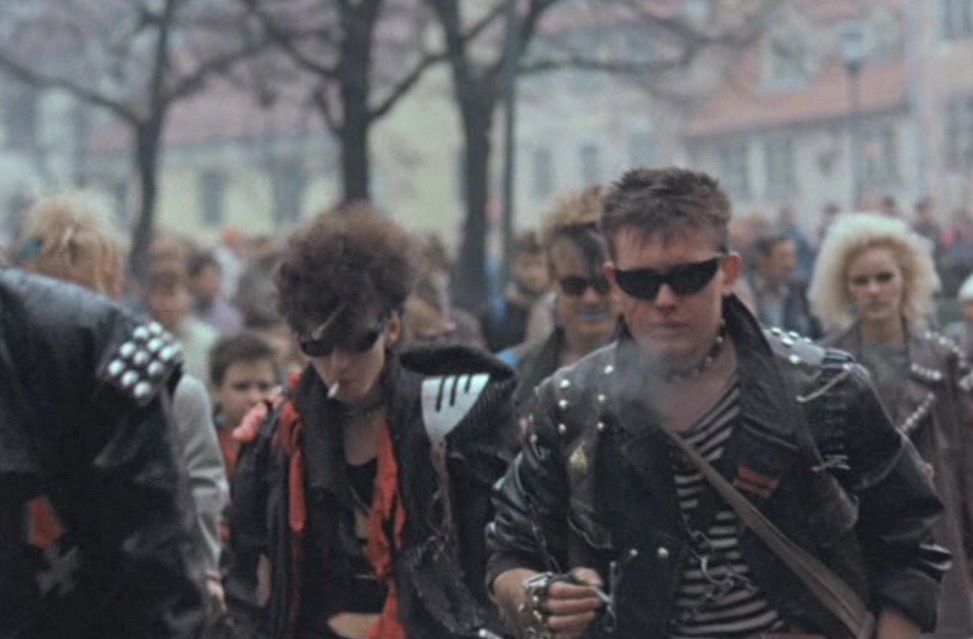
An easy way to evaluate the impact of the original Is It Easy to Be Young?, the documentary that Juris Podnieks finished in 1986, is with a quick look at its two sequels, directed by Antra Cilinska ten and twenty years after the original. Very few documentaries receive sequels, and of the ones that do, it would be surprising if the original film were as discursive as this one, refusing the New York Times house-style voice-of-God approach so dominant in mainstream documentaries. Not only did Podnieks’ original film documenting the lives of brave and confidently incorrigible young adults in Latvia during perestroika and a growing national awakening movement (Atmoda) generate two sequels, it is also a key part of his larger legacy that resulted in the bio-pic Podnieks on Podnieks: A Witness to History, which opens this year’s BBFF and will be playing online from 3/3 through 3/17. That makes Is It Easy to Be Young—showing at the festival in its beautiful 2023 restoration—a staple in Baltic cinema.
Podnieks doesn’t narrate or even introduce his interview subjects, let alone follow a “plot” from start to finish, a point where the sequels diverge. Is It Easy to Be Young? collects and uplifts the voices of Latvia’s youth in 1986, moving in and out of topic as quickly as the subjects do. From a young filmmaker (Igors Linga) to a kerfuffle-inducing band and a young mother, no facets of life hide from relevancy. Podnieks and his crew don’t reduce their influence on their interviewees, and can often be spotted and heard as they ask questions to the young adults about impermissible topics. Exceeding any sociological interest regarding life in Latvia on the heels of glasnost and perestroika, Podnieks’ political salience excavates a rebellious hopefulness in the Latvian youth of the times and establishes itself as one of the most important Latvian films of all time. After all, how many documentaries can you think of that have two sequels?
As a product of the Riga Film Studio, Podnieks shouldered the lessons and influence of the Riga School of Poetic Documentary that exercised its impulse to find beauty in reality and avoided straightforward answers in favor of ambiguity. He meanders, and that’s part of the point: life is not about going from Point A to Point B. The poetic documentary’s influence also helps to explain why he asks more questions than can possibly be answered, and why the ten young people live life in contradiction to one another. Some see it this way, others see it that way. Podnieks’ inclination to the poetic is felt most strongly with the concluding transcendent scene, a non-sequitur and hope-laden visual poem, from a lake lifted from Linga’s student film. All three films return to this mysterious realm in their final minutes and always end on a note of hope.
The most remarkable thing about Podnieks’ film isn’t the questions he puts forward, but the empowered way in which he imagines the youth of Latvia. The ten young men and women exert ownership over their lives and independence over their choices. The state barely even hovers on the edges, more or less a non-factor in the way individuals decide to build their lives as far as Podnieks makes privy. The interviewees reflect this interest in freedom and iconoclasm: the rock band Pērkons, an amateur film group, a religious convert (where the emphasis is placed on the act of choosing a religion), and even a solider. Their occupations and personalities reflect a rich “marketplace of ideas” in 1980s Latvia. That the youth of Riga would find Krishna would be improbable before the thawing of the Soviet Union, where the freedom of religion was largely treated as a capitalistic fantasy.
Even when the state does appear in the minds of the subjects, as when the soldier glazes over the fact of their perpetual surveillance, the young people do not let the state dictate the terms. The soldier brings up the surveillance and in the same breath appraises how effective he was in achieving mastery over the system and made it as unintrusive as possible. Podnieks asks the new mother what she wants for her baby — life, she answers, and a healthy one — and he asks her what she can do to ensure that. The youth are the actors and only rarely the object of action. The biggest exception is when the university opens for registration and the documentary crew can only seem to find parents present in the lines at the school instead of the would-be students themselves. This is also telling though. It is the parents, the older generation, worried about the future; the students are caught up in the crisis of the present.
The title emphasizes the difficulty and even misery of the youth. It is not easy, in fact, to be young, and no viewer of this 83-minute documentary would ever walk away answering that question in the affirmative. The most heartbreaking negation of the question comes with the premature death of one of the interviewees, where, upon hearing the news, the filmmakers step over any remnant of the Third Wall leftover in their documentary approach. The devastation of Chernobyl is fresh and hangs over the region, and the growing unrest radiates instability. The mother went into labor as news of the meltdown reached Latvia, making her daughter one of the firstborn in to a post-Chernobyl Soviet Union. That also makes her and her generation the parents of the generation to emerge from the collapse of the USSR.
Mikhail Gorbachev called the film “the first bird of perestroika” and unshackled it from the censors. The film then became too big to control, regardless of its inflammatory potential. One scholar recognizes the film as “the advent of a new era for Latvian and Soviet documentary filmmaking.” It broke box office records across the Soviet Union and eventually became the first-ever Latvian film to show at the heralded Cannes Film Festival. A remarkable 28 million people saw the film within its first year. I’d wager that most Latvians from this time would recognize that thematic musical cue with only a few notes and that’s because Is It Easy To Be Young? is a film that matters.
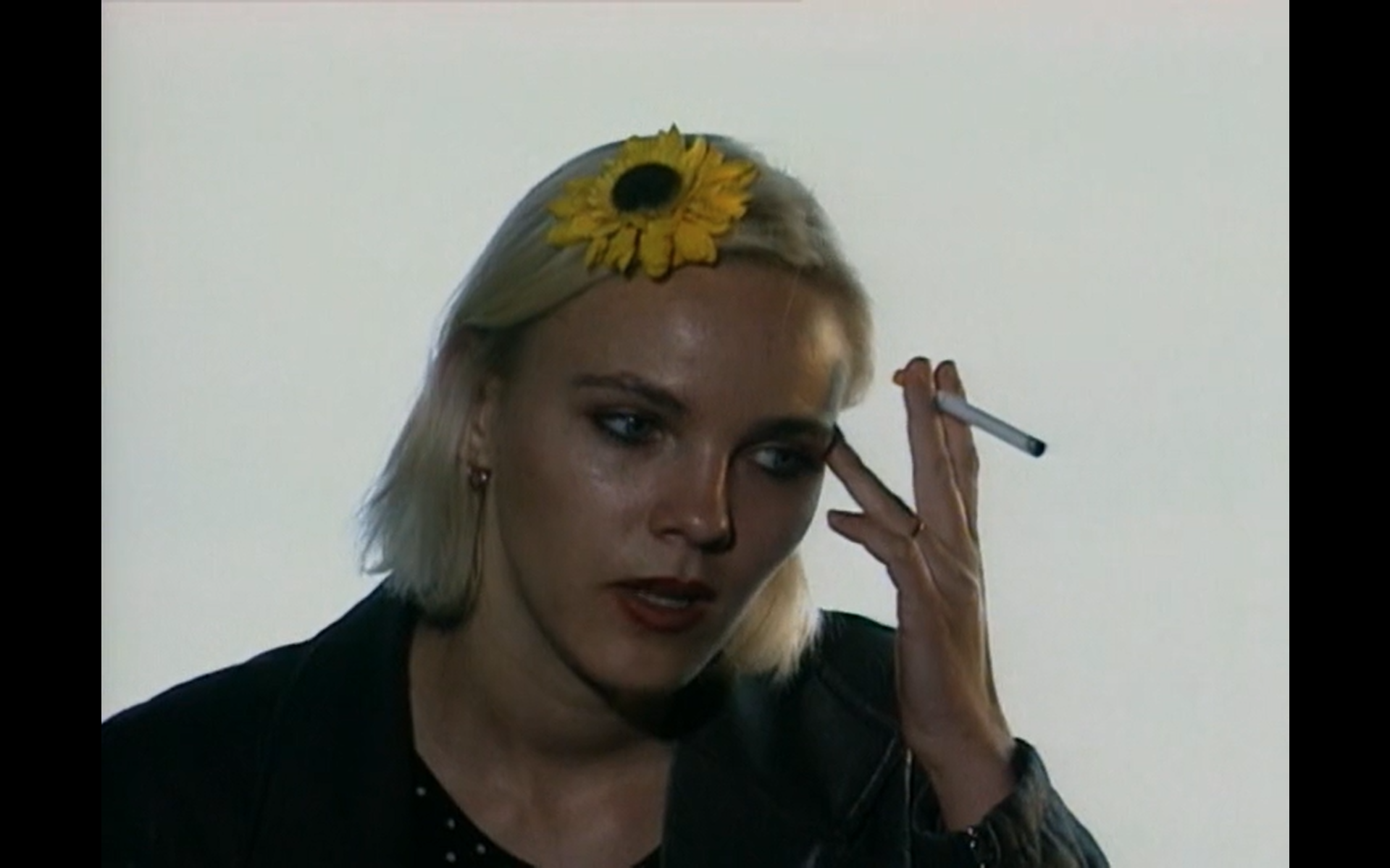
After Podnieks’ death in 1992, his plans to revisit the ten people in the original film were not abandoned by his colleagues. His colleagues created the Juris Podnieks Studio, and his editor and colleague Antra Cilinska oversaw their productions. Two films to come out of the independent studio bearing his name were Is It Easy to Be… After Ten Years and Is It Easy…? After 20 Years, the latter of which mysteriously drops the “to be” from the shared title. Both follow up with the interviewees from Podnieks’ Is It Easy to Be Young?
The main fascination is watching these young people transform into middle-aged adults. There were ten years between their releases, but they work best as a package absorbed altogether. Their lives move between tragedy and success in a flash. The baby in the first one grows up before our eyes and becomes a young adult herself, a shockingly touching testament to the fleeting brevity of life. The saddest development might be the way the still-developing capitalism transforms many of their relationships to their jobs. One woman, a cake baker in the first film, now has to sell her body to make ends meet; another forsakes his citizenship and disappears. Others find themselves making good on the promise of capitalism for better, self-made lives. My favorite of these is the filmmaker Igors Linga, who by the third entry is an award-winning music video director.
One of the biggest departures from the original in the sequels is their flashiness. From the fonts to the fancy title cards that transition between interviewees, Cilinska’s sequels pronounce their formal strengths more than the first film. The shots are more controlled and the music is even more emotive. The technological changes between the two, including an MTV-style on-screen text in the third that introduces us to each person, give the series a sense of formal change to match the changing lives of the aging protagonists.
Both sequels react to Podnieks’ original, and even his death, explicitly as well. He becomes a character in a way that he wasn’t in the first, even if he was never “hidden” from the process. The third, After 20 Years, concludes with a letter tying him into the national narrative and catching him up on what he has missed. Cilinska also includes footage from the first film in both of the sequels as a bit of memory recall—who is this person again?—and also to drum up the big emotions audiences felt with the original.
Cilinska’s contributions to documentary cinema impress, even if she is working at a less opportune time compared to the original, a time that screenwriter Ābrams Kleckins later observed was integral to its legacy. Had the film come out any earlier it would have been banned indefinitely and any later the film’s diluted temporal resonance would have dramatically affected the film’s reception. The historical stakes aren’t as high in After Ten Years or After 20 Years and that limits the ability of the films to live up to the first one which didn’t just document history but helped shape it.
Is It Easy to Be Young?
1986
dir. Juris Podnieks
83 min.
Is It Easy to Be… After Ten Years
1997
dir. Antra Cilinska
66 min.
Is It Easy…? After 20 Years
2010
dir. Antra Cilinska
84 min.
All three films will stream via the Boston Baltic Film Festival’s virtual platform from Monday, 3/3 through Monday, 3/17