
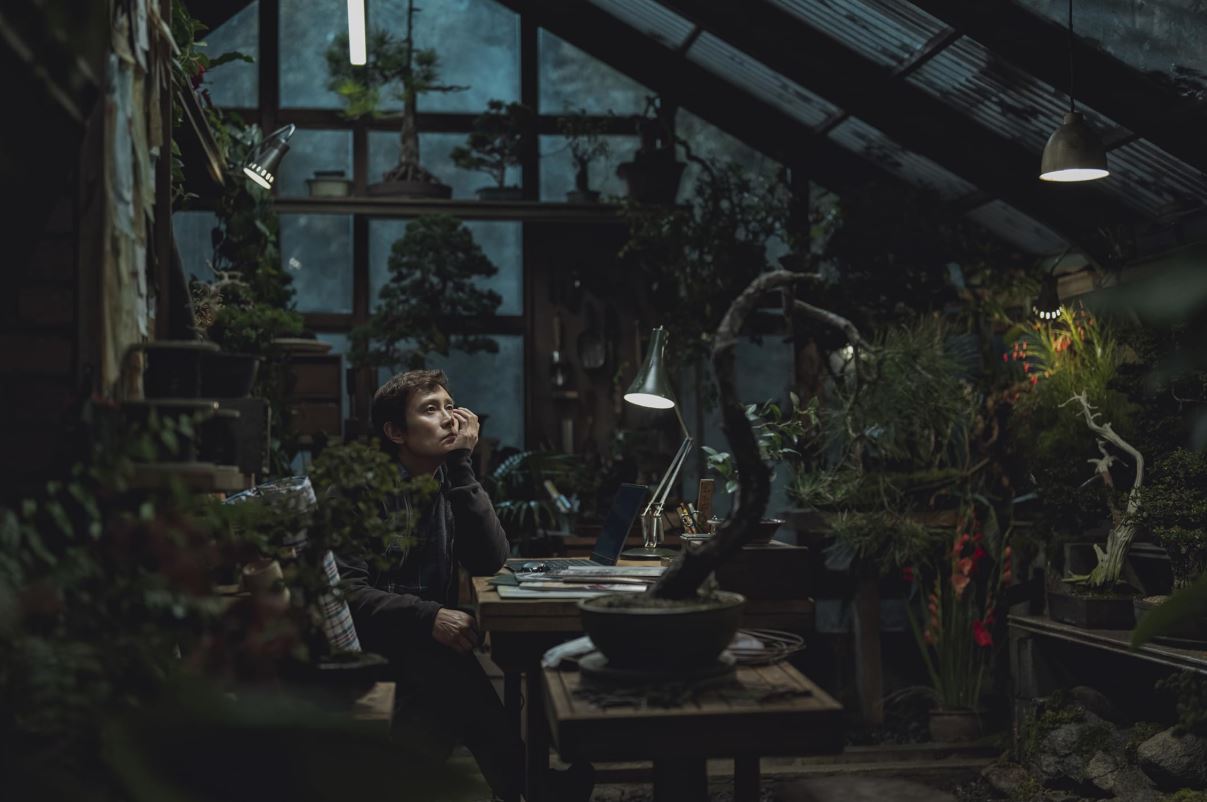
As I’ve been told by state employees, the greatest job benefit one can receive is a pension. Put in the minimum requirement of years to a company (and we’re talking decades), and you’ll receive a generous monthly payment after retirement. But even rarer than people I know that have pensions are the company men (non-gendered) in today’s United States. Between capitalist corporation-swallowing and jobforce “reorganization,” it does not seem like it’s possible or logical to stay loyal to a corporation at any given state other than utopian.
Still, reali-pessimism doesn’t make these outcomes feel better, especially for Man-su (Lee Byung-hun). His sufficient, family-oriented life can be envied as a rich man’s, and he is unabashedly proud. But following the American buyout of the Solar Paper Company, Man-su loses his job as a supervisor through the expected reduction in staff. Though he is initially upended, Man-su immediately gets down to business by joining an unemployment wellness clinic where members realign their missions and fulfillment once they lose their jobs. “My family will support me,” the men pledge. “I will find a job in three months.”
Over a year goes by and Man-su is unable to find a job. Unsurprisingly, there aren’t a lot of papermaking positions available. His wife Miri (Son Ye-jin) supports his efforts with bright confidence, even when she shows her other side of somber practicality by cutting down the family’s expenses, including their teenage son Si-one (Woo Seung-kim)’s Netflix access, shuttling their dogs to her parents’ home, and operating the sale of their house — the childhood home that Man-su had recently bought and renovated. In a sort of twisted logic shortly after, Man-su realizes that there are candidates that he may have to eliminate in order to get his job of his dreams (if this man dreams at all).
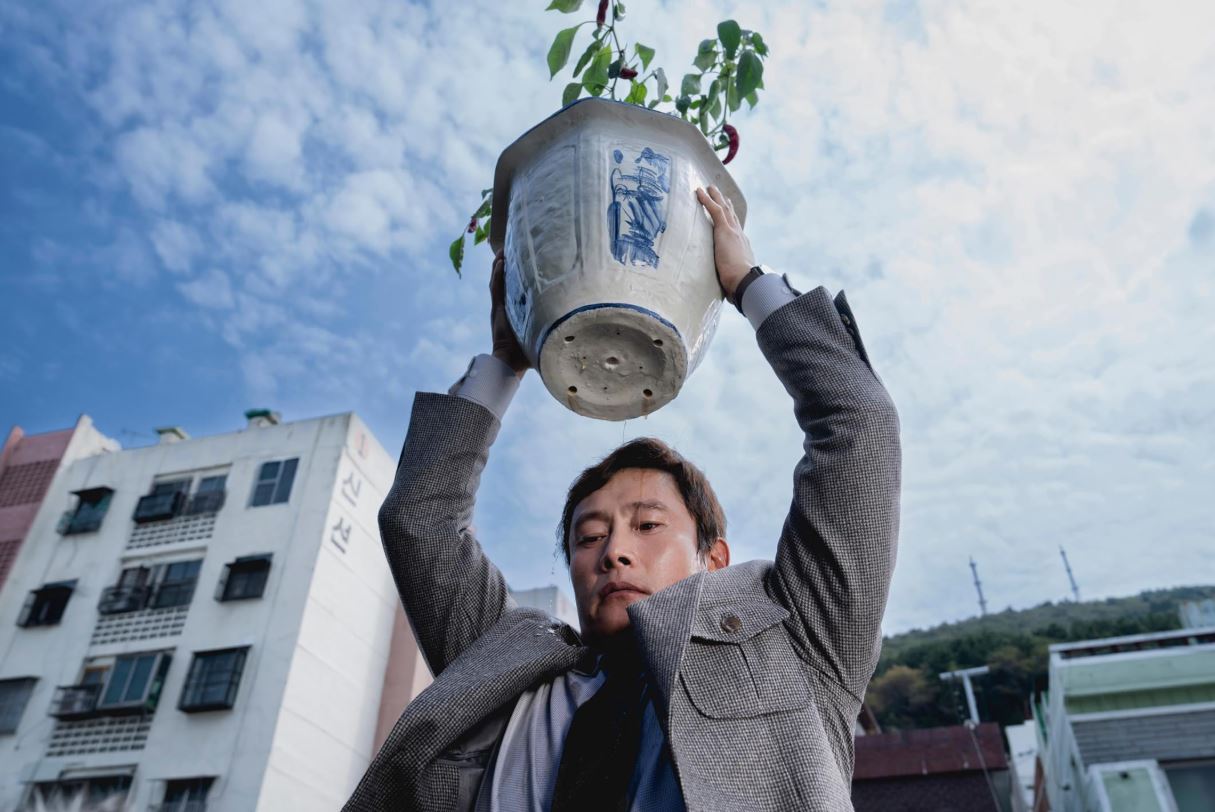
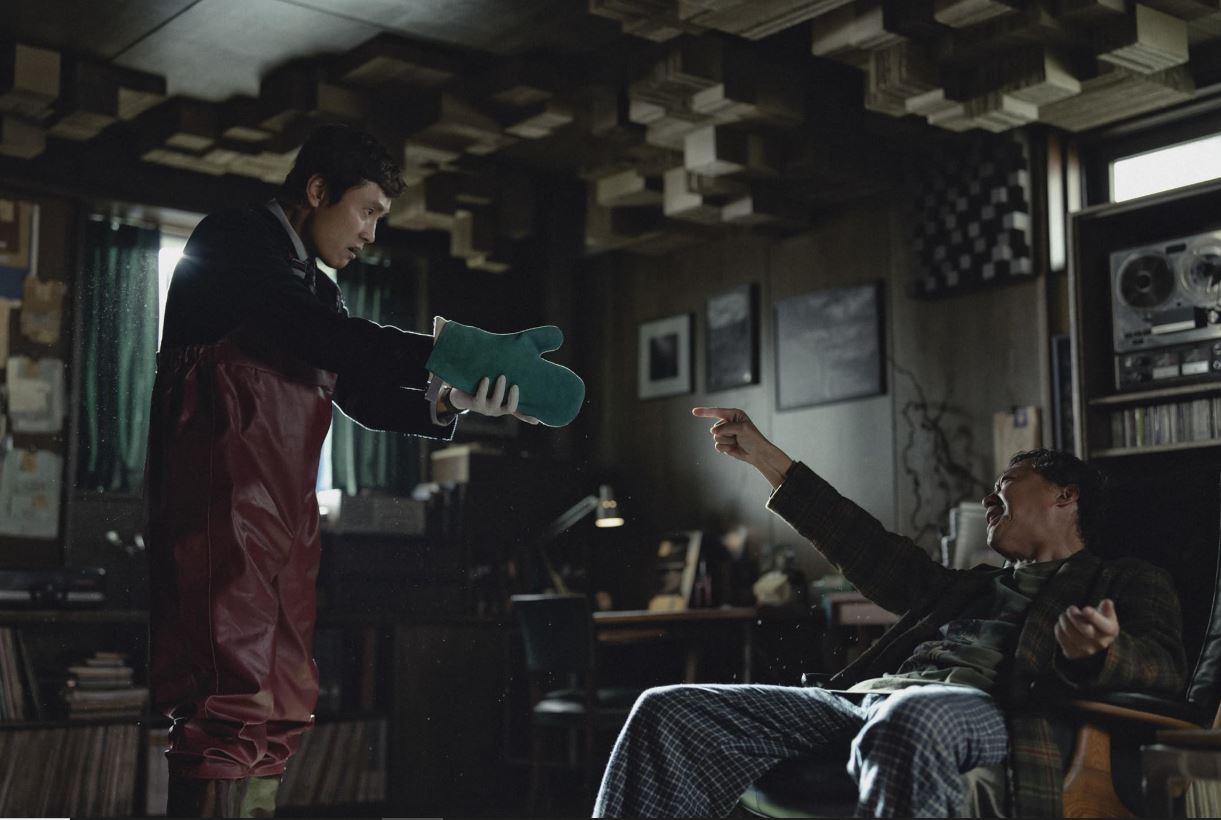
The circumstances in No Other Choice are part of Park’s nefarious repertoire of bleak comedy, and at this point of the game, Park is having fun. Most of his longtime collaborators, from Jo Yeong-wook’s reliable orchestral incisions during plot reveals and production designer Ryu Seong-hie’s matured reds and greens, are devoted allies to Park’s vision. The absence of cinematographer Chung Chung-hoon since The Handmaiden is notable, as the fanciful inklings of Decision to Leave come in full scale here. The camerawork in this goes absolutely wild where, with little setup, the camera will zoom in closer for the shocked soap-opera expressions and pull out for the dollhouse tableau of character ruin in gorgeous foliage and storybook sunlight. Fans of this movie will excitedly place “Red Dragonfly” in their playlist rotation, which is sure to help reconjure the film’s funniest scene and Mansu’s attempt to murder his candidate-competitor. I think there are a lot of bits to chew over, like the toxic masculine-provider role or the seeded side of unspoken trauma, but I found the “why-not?” technicality to be a lot more fun.
Personally, I feel that Park’s cleverness shines best in boiling pots, where we can distribute our feelings within the few selected characters. No Other Choice expends empathy onto Man-su’s competitors, which is natural since joblessness is a blanket misfortune that can happen to anyone. Just like Man-su, who Lee performs to ensure that he’s not a natural-born killer, the hesitation before the kill is one of the human aspects that happen in this cold world.
Still, it’s a little difficult to feel that gravitational pull that I tend to feel with Park’s other characters. Even though Decision to Leave wasn’t my favorite, the impact of Tang Wei’s good/wrong character was everlasting once the credits roll (and that ending — sometimes Park needs to remind us that he wrote Oldboy). Man-su’s characterization is intentionally “bland”; he parrots lines and sentiments that he hears from others and writes conversational prompts on his palm (“Talk about vacation”). But his paper-man personality is both sad and dark. Although it doesn’t get completely explained, Man-su’s reluctance to consider a different change of job or pace can be examined in his nonverbal, sensory-sensitive daughter Ri-one (Choi So-yul). The resources and love that Ri-one receives seem to be devoid or out of the realm of possibility for Man-su’s upbringing, which is hinted through his own father’s physical labor and internalized torture. But because Man-su didn’t develop anything to lean on, his desperation is a bottomless void rather than a temporary trough.
It’s a depressing set of consequences that becomes more depressing when you become numb to the story right away. Man-su’s determination falters when he listens to his competitors talk about their love for paper (a passion for the job that Man-su had never articulated), accompanied by their secondary loves, whether it’s living an analog life or family. It seemed like that in a different world, these guys would grab a drink and connect through their occupational specialty, but for Man-su, he may have become the job he seeks after.
No Other Choice
2025
dir. Park Chan-wook
139 min.
Now playing @ Coolidge Corner Theatre and AMC Boston Common