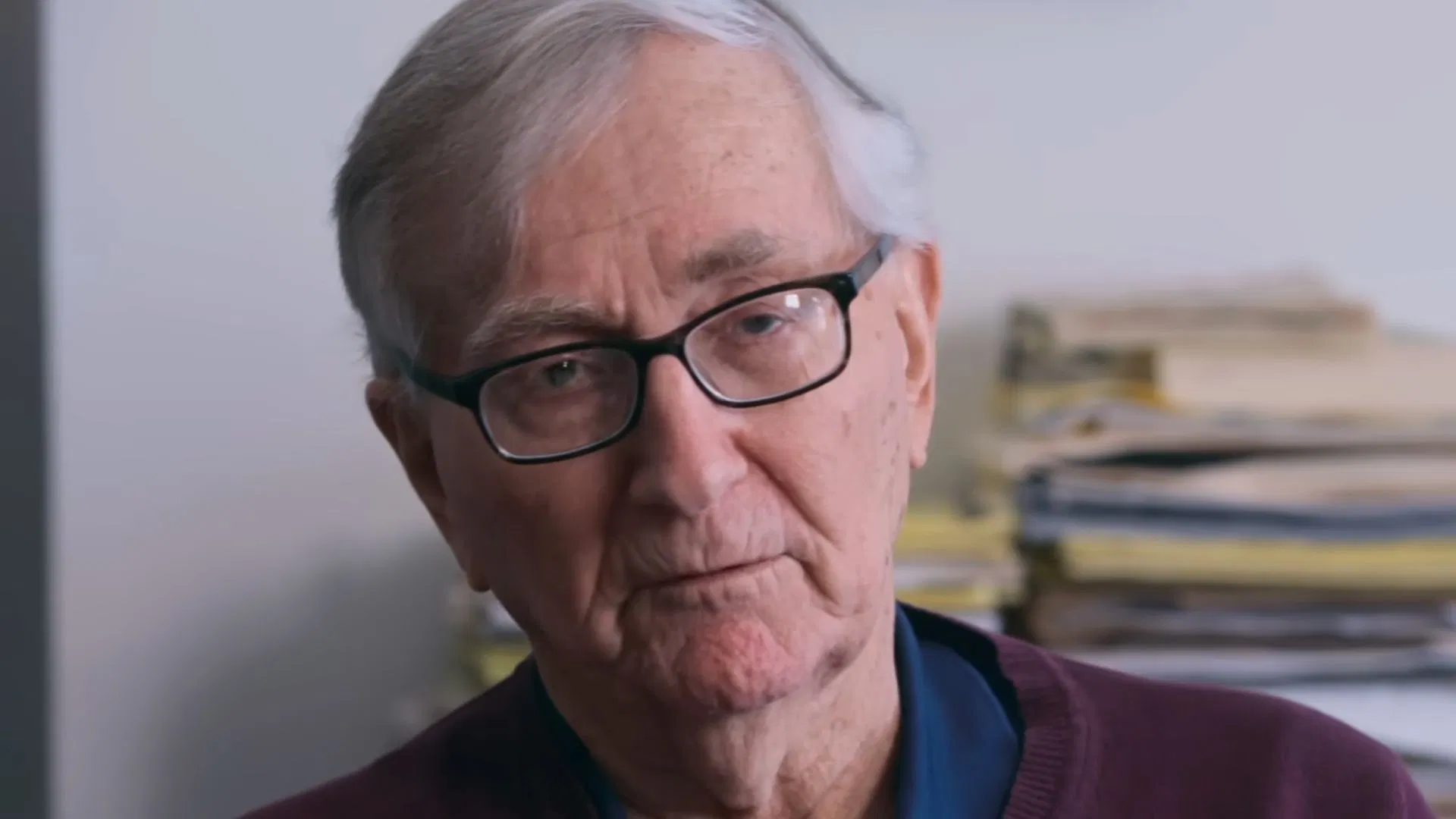
Cover-Up is an alarming, poignant, and sharply composed documentary exploring both the career of (in)famous investigative journalist Seymour Hersh and the U.S.’s shadiest international military and CIA operations. As an avid, unshakable truth-chaser since his youth, Hersh exposed many capital-Ts of the U.S. Army’s abusive practices during the Vietnam War and others through the Iraq War. Maintaining an active Substack page where he covers similarly shocking stories about the Israel-Palestine conflict and amoral presidential decisions (regardless of administration), Hersh continues fighting because the U.S. is “… a culture of enormous violence. It’s just so brutal. There’s a level you just can’t get to…, [and] you can’t have a country that does that.” Cover-Up precisely unCovers the brutality of this nation’s past through Hersh’s work, ringing alarm bells for rational viewers able to recognize—and worry about—how our bastardized past parallels these unprecedented political and sociocultural times at least inside the U.S. Tactful editing, raw interviews, and unexpected information surfacing make Cover-Up a must-see for all old enough to handle it—demonstrating the vitality of Hersh and the work he and others undertake to expose dirty secrets.
The United States has always been a country of conquest and greed, and Cover-Up demonstrates, through Sy Hersh’s personal experiences, what it takes—institutionally and personally—to see actual, systemic change. Time and again, Sy, as a “very complicated and unpredictable [journalist]” who “could be quiet and tame, or he could be bouncing off the wall,” opposed a government of shady secrets, undisclosed cruelty supposedly conducting such operations in the name of freedom. With so many governmental branches and departments dedicated to intelligence collection, national security, and other country-specific goals, Sy continued to encounter problems of bureaucratic concealment, inconsistent communication among officials, and a general lack of accountability. When a Lieutenant Calley gets quietly charged with mass manslaughter in Vietnam, where he supposedly “went mad” and killed 109 villagers, Hersh investigated to find a very sane man getting screwed over by his own general: “He [Calley] called his general saying, ‘General, I’m here with a reporter right now. Tell him I was just following orders. Tell him.’ The general belts, ‘I have no idea what you’re talking about,’ and slams the phone down. The look this kid gave me was one of, ‘Oh, I think I’m the fall guy.'” The U.S. military was forcing its soldiers to slaughter innocent villagers—”… and I emptied about four clips into them…. Men, women, children, and babies,” one soldier admits on a clip from a ’70s talk show—and abandoning them when attention got raised. Such brutal, concealing behaviors “plague the entire U.S. government,” according to Hersh, and have since the country’s inception. Hersh’s work and investigative journalism as a whole are thus vital to the health of the nation, as time and again, regardless of the political party in power, new truths about the U.S. government’s consistent, hushed barbarism eventually come to light for all to see.
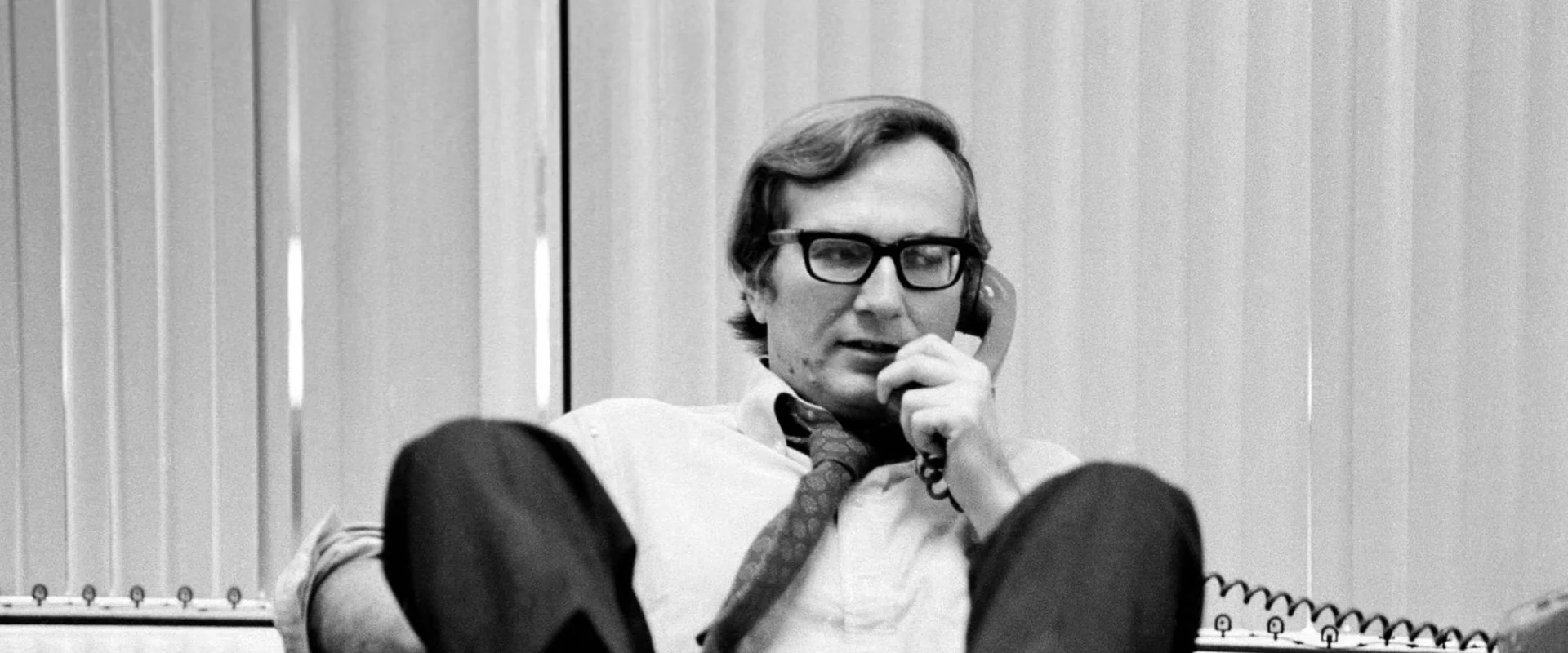
Such work, of course, is hazardous. Throughout this documentary, Hersh makes it clear how hard it is to know whom to trust and how much information can be revealed or known at any given time. In fact, “I barely trust you guys,” he says at the beginning to director-producers Laura Poitras and Mark Obenhaus. There’s even a point where he decides to cut cameras entirely: “You guys, you know too much about what I’m doing. You have too many people. There’s people there you don’t even realize who they are, some of them, but they’re in it, and I don’t… I’m in a position now, I’m not telling you stuff. So I’d like to quit.”
Investigating any institution of power, regardless of its source country or region, requires extreme caution; no world leader wants their self-dealing habits known, and with a narcissistic, increasingly senile, and very orange dictator wannabe in office, it’s even harder now. So, to do it, you have to be a bit of a wild card yourself and understand how to get people to talk—both of which Sy clearly had. Amongst his many “notes in something unintelligible,” as one editor who worked with Sy says, is information from army generals, career politicians, and other hard-to-reach individuals. Sy learned early major components vital to his work: that “People want to talk about stuff they did that was wrong and stupid,” and that “I [have] to be very friendly with a source” to get them to open up. From the Vietnam War and Abu Ghraib abuses by U.S. soldiers during the Iraq War to the current-day Israel-Palestine and Russia-Ukraine conflicts, he learned how valuable just “getting to know… a source” eventually comes to be. But doing all this comes with a cost: “I’ve been married 60 years, I don’t just leave everything… [but] it’s complicated to know who to trust,” so staying on the job and away from those who could be endangered is unfortunately the way to go. But because of it, Hersh has been on a self-described “warpath” ever since, and, like soldiers, once the “warpath” is started, it doesn’t stop until the job is done. Spoiler: it never is.
Thus, Cover-Up is as much a deep dive into one specific journalist’s life and the cost of his work as it is an investigative journalist’s guidebook and a piece of horrific revelations kept from the American public too long. The doc warns of the future as much as it digs up the country’s tragic past, as journalism and news become increasingly controlled (or scoffed at) by the current presidential administration. Some scenes feel too scripted, but most of Cover-Up is a damning, concerning, and nerve-wracking gaze at U.S. governance, history, and journalism as they clash. For future investigative journalists, documentary lovers, Sy Hersh devotees, and those (justifiably) concerned for the future of American freedom, democracy, prosperity, and security, Cover-Up is a tense must-watch.
2025
dir. Laura Poitras and Mark Obenhaus
118 min.
Streaming now on Netflix