
The Boston Baltic Film Festival ran from Friday, 2/28 through Sunday, 3/2 at the Emerson Paramount Center, and runs virtually through 3/17. Click here for the schedule and screening info, and watch the site for Joshua Polanski’s continuing coverage!
The following dispatch features reviews of Southern Chronicles & Maria’s Silence.
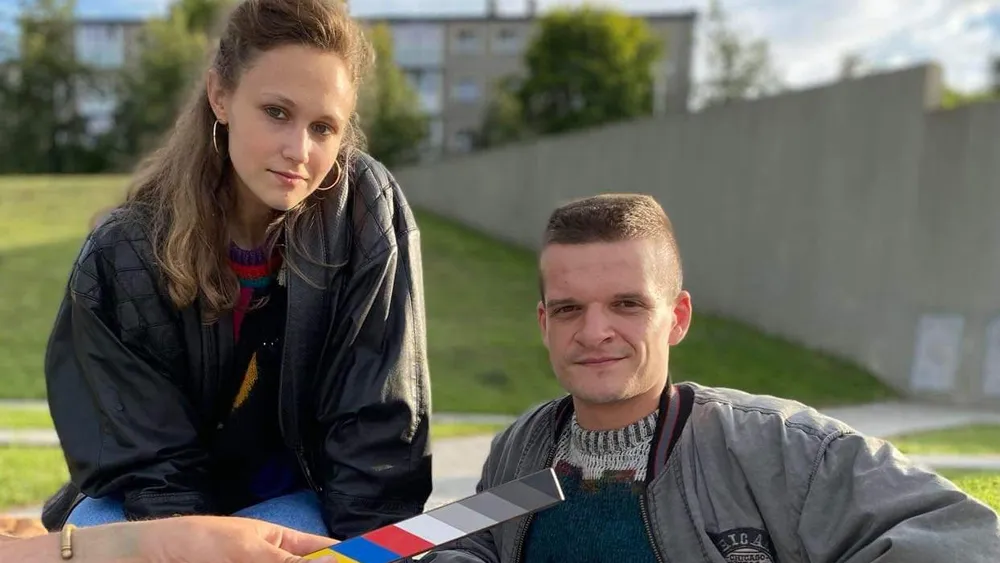
Latvia’s Flow just became the first ever Baltic film to bring home an Academy Award, but it’s not the only film from the region making waves this year. Southern Chronicles, a multi-genre period piece set in the Southern city of Šiauliai, became the most seen film in the history of (independent) Lithuanian cinemas. In the very early post-Soviet years, high school rugby player Rimants (Džiugas Grinys) balances his sports success, first loves, and normal small city problems while his city and country navigate rapid social change.
An adaptation of a popular book by Rimantas Kmita and a major achievement in Lithuanian cinema for using the local dialect rather than the standardized language, Southern Chronicles wears its literary origins on its sleeves. Rimants’s biggest romantic interest, Monika (Digna Kulionytė), is the smartest girl in Šiauliai, and she has a bright future—one too bright for a “dumb” jock. The Rimants we meet at the story’s beginning reads, too… erotica, that is. To impress Monika, he picks up reading more serious literature as a hobby and gradually learns to appreciate books for their own sake.
The way his love and longing for Monika transform him is the highlight of the feature. She, and his feelings for her, makes him quite the man: expanding his priorities beyond rugby, teaching him responsibility, and bringing out his gentleness even if she never refines his immature humor. The impressionable young man embodies the rapid changes in Lithuania while transitioning from Soviet individual restrictions and officialdom to a country of individual liberty and personal dreams.
One of Southern Chronicles’ great assets is its period piece production values and score. Šiauliai is a city of cool cats—a city of Bruce Lees and Arnold Schwarzeneggers, a cheesy narrated introduction testifies—and this comes across most strongly in the post-Soviet emphasis on Western name-brand fashion (and knock-offs) and a grungy ’90s score and soundtrack coming in a flavor of languages and musical styles. The cinematography switches between what looks like 35mm and consumer cameras or 16mm, highlighting the fresh new feel of the early post-Soviet years. The authenticity of its period feel was reaffirmed by the majority Lithuanian and Lithuanian-American audience at the BBFF.
The actors don’t look anywhere near the age they play, and that makes the scenes of a more sexual nature possible. It also pulls one out of the story when the characters react to the world around them with immaturity and hastiness in a seeming mismatch with their appearances. This particularly comes up for Rimants. Grinys is about a decade older than the part, and no one would blink if the gap were even larger. The actors all do a good job with the parts they are given though, and their behavior is believable for their age even when their more post-pubescent appearances work against them.
The Lithuanian audience at the BBFF’s closing screening on Sunday eagerly embraced the film, making it one of the most interactive viewing experiences of the festival. “That’s where my parents used to hang out!” one Lithuanian-American woman sitting next to me whispered to her non-Lithuanian partner. It wasn’t my favorite Lithuanian film from this year’s festival, but there is no denying its popular appeal—and in a regional cinema industry defined by smaller and more arthouse affairs, it’s no wonder a well-done multi-quadrant adaptation of a popular book became something of a phenomenon. Visibility on screen matters, and for many people from Lithuania, particularly Šiauliai, it’s never been bigger than Southern Chronicles. Experiencing that representational ecstasy vicariously through the Baltic audience was a remarkable experience and one of my highlights from this year’s BBFF.
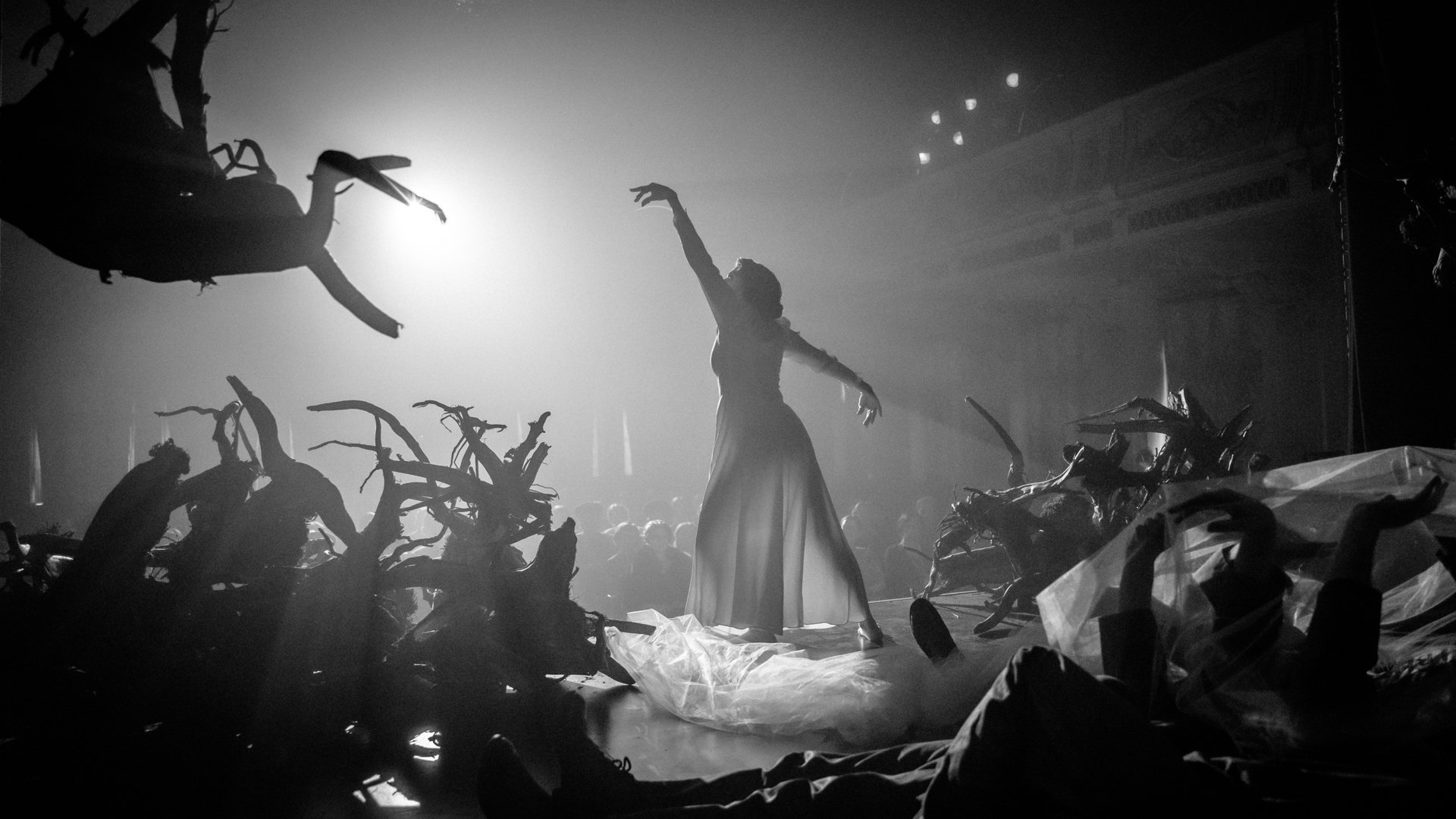
Marija Leiko became an international silver screen star in the Weimar Republic and continued her success through the early Nazi years. She was the biggest Latvian actor in the movies of the time, and had even been in F.W. Murnau’s Satan. In 1937, a retired Marija (or Maria) traveled to the Soviet Union to identify the body of her daughter. On arrival, she learned that she was a grandmother, and that her daughter died in childbirth. It would take quite some time for her granddaughter’s paperwork to be ready for her travel back to Germany. She stayed in Moscow while she waited, working in the Latvian State Theatre (Skatuve). Marija was never permitted to leave the USSR, her passport invalidated, and on February 3, 1938, Marija was executed at the age of 49 as part of a Stalinist purge of political opponents and buried in a mass grave outside Moscow. This is the true story that Dāvis Sīmanis Jr. (The Mover; Escaping Riga) brings to the screen for the first time in Maria’s Silence.
A relatively unknown Olga Šepicka plays Marija during the infamous final years of her life. She plays Marija with an irony of confidence and hesitancy fitting for a foreign movie star held hostage in another country. Gļebs Beļikovs, another newer face in Latvian cinema, plays Nikolai Yezhov (or Nikolajs Jezovs), an officer of the secret police and one of the bigwigs behind the Great Purge, and he captivates in his short screen time. His onscreen personality is reminiscent of Daniel Brühl, only in Latvian and Russian. One more scene and Sīmanis Jr would risk the actor stealing the show. Hopefully we will see more of him in the future.
It’s a fascinating episode of history, and Sīmanis does great work in bringing it to a more general audience. It’s also work he is used to. His Shoah drama The Mover previously introduced the Jew-saving Jānis Lipke to an audience well beyond Latvia. And it comes at a time in which Balts and citizens of other countries formerly part of the USSR worry about Russified tyranny and threats to their national sovereignty once again. Maria’s Silence was supposed to shoot in Kharkiv, Ukraine as a stand-in for Moscow, but the war broke out shortly before production. According to Sīmanis Jr., many of the sites they planned to shoot no longer exist. The past broke into the present during production and created a new urgency for the work with key themes of Russian dominance, surveillance, and the role of art during war.
Following a recent period-picture trend, the film is shot in crisp black and white. In the Q&A following the film at the BBFF, the director gave three reasons for the choice to go colorless: to match the aesthetic of Marija Leiko’s silent films; to lean into the film noir elements; and to rip the color from the past. The first and third reasons work quite well, though I don’t believe Maria’s Silence makes for a good film noir. Maria bores as a femme fatale, and there is very little seduction relevant to her part. She does mention that theater should be “like sex,” though not too much comes from this comment. She is subversive in the tradition of that genre, and if that’s all a femme fatale is, then sure.
It’s an incredibly pretty film. Dangerously so. The black and white cinematography combined with unimpeachable lighting makes for dramatic contrasts and powerful shadows. The imagery recalls old German expressionists more than contemporary Soviet filmmakers of the time, fitting given the type of formalist theater work Marija participated in. (The Soviet propaganda wing criticized the Skatuve’s performance of a classical Latvian play, in the lineage of Berhtold Brecht, for being too “formalist”). It might be the prettiest film of this year’s BBFF.
Ironically, it is the cinematography more than anything that locks Maria’s Silence in the past despite the attempt to relativize it to the current conflict in Ukraine. Ripping the color from the past to make things less happy also has the unfortunate consequence of removing it from the present. This is why a certain wing of pedagogically minded Leftist activists are always eager (and correct) to critique the dominance of black and white images of the American Civil Rights Movement in classrooms and news footage. Sometimes these images and videos have even been decolorized as if to intentionally make the Civil Rights Movement an untouchable event of the distant past rather than a justice movement that many of our parents and grandparents remember with clarity. This is the same predicament Maria’s Silence puts on the viewer. How much more powerful would the imagery have been had it been used to funnel the film to the present rather than to avoid it intentionally?
The theater goes on a propaganda tour with a pit-stop in Ukraine that doesn’t make much of an effort to slow and tie Baltic and Ukrainian sovereignty together (beyond a brief skirmish following the arrest of an audience member) in a fumbled opportunity. There is also the curious question of Marija’s own politics as a Latvian desperately trying to get back not to Riga but to Nazi Germany; with the information provided, audiences can only assume she fights for self-survival and not for any greater political cause. (The sources I found contradict themselves about whether or not the real Leiko had left Germany during the rise of Nazism and came to Moscow from elsewhere or whether she left directly from the Reich; regardless, the film is rather clear with all of the German language on the train, shots of her passport, and Nazi paraphernalia.) She is a victim, yes; do we have reason to believe her cause to heroism? I wouldn’t be so sure.
Maria’s Silence
2024
dir. Dāvis Sīmanis Jr.
100 min.
Southern Chronicles
2024
dir. Ignas Miškinis
120 min.