
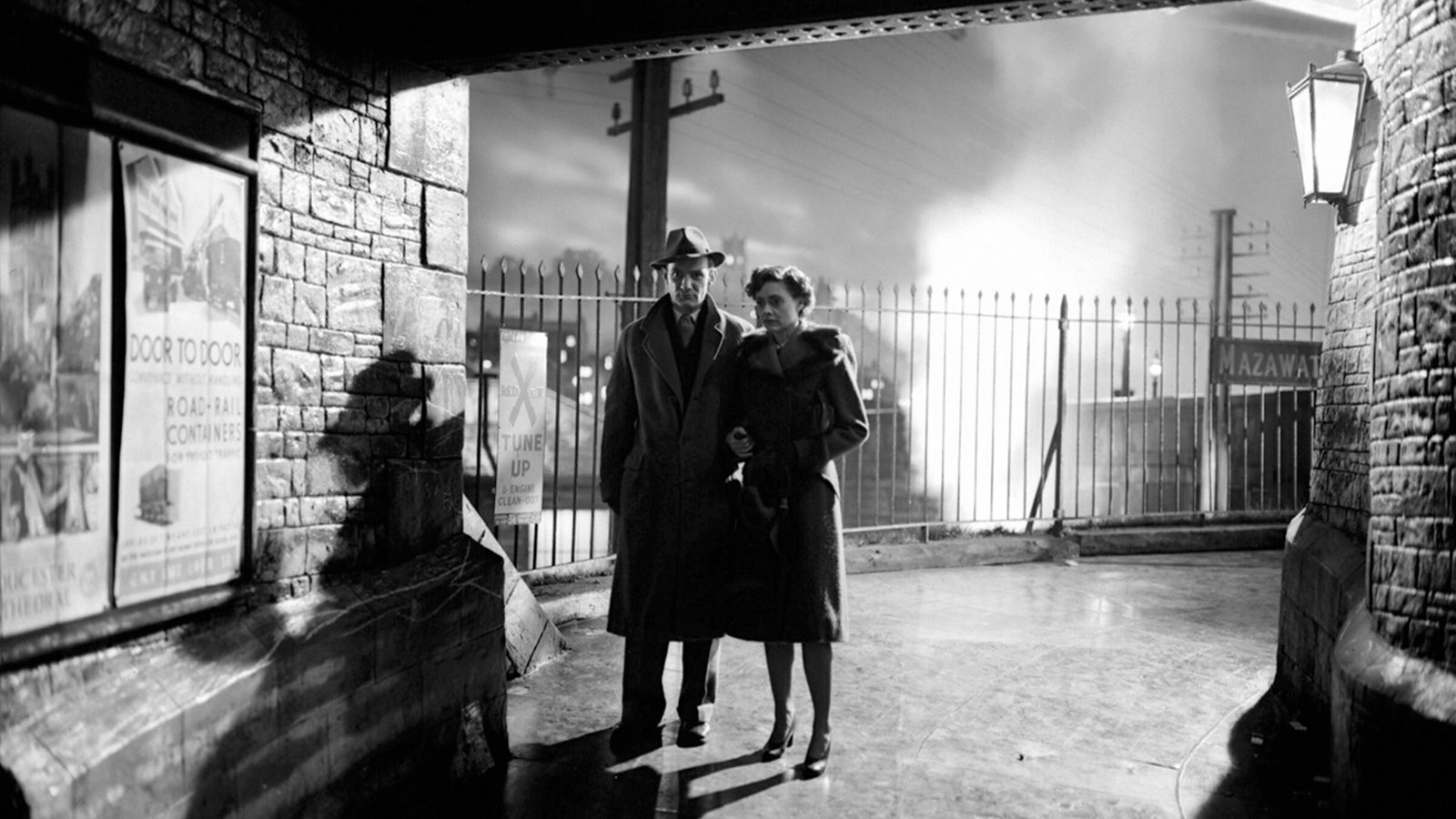
Brief Encounter is a heart-shattering, bittersweet love story about loving despite knowing it cannot last. Housewife Laura (Celia Johnson), presumed happy in her typical married life with her husband Fred (Cyril Raymond), gets her world turned upside down at a train station cafe when she meets Dr. Alec Harvey (Trevor Howard). After a few brief coincidental meetings, the pair get to know each other and reluctantly fall in love. So they spend a few weeks secretly loving each other, ensuring they are not seen by Fred, Alec’s wife, Madeleine, or anybody else. They laugh, talk, and explore what love can do to the mind and spirit as it gives them a rejuvenating youthfulness despite their ages. Unfortunately for them, though, walking away from their current lives is not easy, and they must choose between happiness and social/professional shame or acceptance and inner misery. Happiness and love sometimes do not fit the lives we lead.
Love is complicated. Just about everyone experiences its romantic angle in one way or another (minus those few asexuals, of course!), and with it, everyone knows, comes a wave of complicated emotions, actions, and experiences that can either make or break a love bond. Though Celia and Alec realize they’re doomed from the start, they continue loving anyway. Despite their separate marriages and Laura having an entire family, they cannot resist their feelings: “You suddenly look much younger. Almost like a little boy,” a doe-eyed Laura, with a daintily wristed hand lightly supporting her face as she surreptitiously ogles Alec’s explanation for why he became a doctor. It becomes clear these intimate moments are absent in their other lives. Thus, with these scant moments together at the train station, passions oozing simply because they’re encouraged by each other’s presence, they come to understand what at least Laura (but presumably Alex as well, but more on that later) is missing: getting heard and getting loved at the same time.
At home, Laura has a pretty mundane life. While Fred is far from abusive, let alone neglectful, the monotony of their routine has become so concrete that they’re more co-parents than husband and wife parenting together; they don’t kiss, they barely talk, and intimacy is nowhere to be seen. In some cases, it’s almost like Laura’s there solely for parenting: “Thank goodness you’ve come back,” Fred pants off-screen in his first lines of the film. “Bobby and Margaret have been fighting again. They won’t go in to sleep until you go and talk to them about it.” It’s no wonder that, especially after seeing the children make demanding remarks to their trying mother after Fred ushers her off to them, Laura feels miserable—she’s not truly seen in her own house. With a rare use of mostly inner monologues to flesh out Laura’s experiences and almost hidey-holed cinematography like the audience is a private investigator in this affair in many instances, director David Lean and co. fully display what it feels like to be the “stranger in the house,” as Laura describes herself, making the love-struck, very publicly affectionate Alec all the more appealing and their end all the more heart-fracturing.
Alec, on top of Raymond’s optimistic and encouraging portrayal that near-perfectly bubbles off Johnson’s shyness as Laura, is everything one would want in a partner: charming, considerate, well-mannered, and sharp. He always ensures that Laura knows how much she’s loved as they explore the city or go to some secret meeting location—“I love you with all my heart and soul,” he says five or six times, usually caressing a leaning, tear-jerked Laura to reassure her. Alec runs up to her every time they meet, unaffected by others’ opinions. He even ensures they get the same out of everything they do together: “We even halved the tip,” Laura explains as they each put two of the same sized coins down for their cafe bill. Their happiness is magnetic—but alas, the shame and guilt of it all is ultimately too much.
Laura is deeply troubled by her and Alec’s actions throughout. Every time they meet, a pang of sadness is involved: “… We must stop it here talking like this. We’re neither of us free to love each other. There’s too much in the way”—the “too much” being her husband and children, Alec’s wife, his career, and the nosy friends she has scattered throughout. Even if they run away together, at least Laura’s past would haunt them eternally, making it a painful happiness to endure—perhaps too painful. Such turmoil creates dramatic sadness that stings the heart with Laura’s tears, regardless of how this pair’s story ends.
Unfortunately, while Brief Encounter is fatally impactful, it’s not perfect. Laura’s monologues feel repetitive after a while; Celia Johnson deserves credit for substantial facial variation and emotional resonance, but watching anyone just talk with a sad, pouty face for half a movie gets old. Even if the Noël Coward novel Brief adapts takes the same route, it waters down the intrigue because there’s too much introspection from a single person. If even just a little time were given for Alec’s thoughts to flood ears, the filmmakers would have provided enough variation to elevate Brief much further. Instead, it’s slightly lopsided, with too much about the female cheater getting revealed and not enough about her male counterpart. Fortunately, Brief still harbors a lot of introspective weight, giving viewers a look at predestined heartbreak and self-discovery in a rare subversion to the Hollywood happy endings of the early-to-mid 20th century. For fans of any cast and crew, drama-romance fans, or old cinema fans, there’s plenty more here for watchers to observe and feel than Brief Encounter titularly suggests.
1945
dir. David Lean
86 min.
Screens Monday, 4/7, 7:15 p.m. @ Coolidge Corner Theatre
Part of the ongoing repertory series: Big Screen Classics